Showing posts with label Parallel Programming. Show all posts

Wednesday, November 23, 2011

Handbook of Parallel Computing Models, Algorithms and Applications


Contents
Preface . . . . . . . . . . . . . . . . . . . . . . . . . . . . . . . . . . . . . . . xiii
Acknowledgments . . . . . . . . . . . . . . . . . . . . . . . . . . . . . . . . . xxi
Editors . . . . . . . . . . . . . . . . . . . . . . . . . . . . . . . . . . . . . . . xxiii
Contributors . . . . . . . . . . . . . . . . . . . . . . . . . . . . . . . . . . . . xxv
Models
1 Evolving Computational Systems
Selim G. Akl . . . . . . . . . . . . . . . . . . . . . . . . . . . . . . . . . . 1-1
2 Decomposable BSP: A Bandwidth-Latency Model for Parallel and Hierarchical
Computation
Gianfranco Bilardi, Andrea Pietracaprina, and Geppino Pucci . . . . . . . . . . 2-1
3 Membrane Systems: A “Natural” Way of Computing with Cells
Oscar H. Ibarra and Andrei P ˇ aun . . . . . . . . . . . . . . . . . . . . . . . . 3-1
4 Optical Transpose Systems: Models and Algorithms
Chih-Fang Wang and Sartaj Sahni . . . . . . . . . . . . . . . . . . . . . . . 4-1
5 Models for Advancing PRAM and Other Algorithms into Parallel Programs for
a PRAM-On-Chip Platform
Uzi Vishkin, George C. Caragea, and Bryant C. Lee . . . . . . . . . . . . . . . 5-1
6 Deterministic and Randomized Sorting Algorithms for Parallel Disk Models
Sanguthevar Rajasekaran . . . . . . . . . . . . . . . . . . . . . . . . . . . . 6-1
7 A Programming Model and Architectural Extensions for Fine-Grain
Parallelism
Alex Gontmakher, Assaf Schuster, Gregory Shklover, and Avi Mendelson . . . . . 7-1
8 Computing with Mobile Agents in Distributed Networks
Evangelos Kranakis, Danny Krizanc, and Sergio Rajsbaum . . . . . . . . . . . . 8-1
9 Transitional Issues: Fine-Grain to Coarse-Grain Multicomputers
Stephan Olariu . . . . . . . . . . . . . . . . . . . . . . . . . . . . . . . . . 9-1
10 Distributed Computing in the Presence of Mobile Faults
Nicola Santoro and Peter Widmayer . . . . . . . . . . . . . . . . . . . . . . . 10-1
11 A Hierarchical Performance Model for Reconfigurable Computers
Ronald Scrofano and Viktor K. Prasanna . . . . . . . . . . . . . . . . . . . . 11-1
12 Hierarchical Performance Modeling and Analysis of Distributed Software
Systems
Reda A. Ammar . . . . . . . . . . . . . . . . . . . . . . . . . . . . . . . . 12-1
13 Randomized Packet Routing, Selection, and Sorting on the POPS Network
Jaime Davila and Sanguthevar Rajasekaran . . . . . . . . . . . . . . . . . . . 13-1
14 Dynamic Reconfiguration on the R-Mesh
Ramachandran Vaidyanathan and Jerry L. Trahan . . . . . . . . . . . . . . . 14-1
15 Fundamental Algorithms on the Reconfigurable Mesh
Koji Nakano . . . . . . . . . . . . . . . . . . . . . . . . . . . . . . . . . . 15-1
16 Reconfigurable Computing with Optical Buses
Anu G. Bourgeois . . . . . . . . . . . . . . . . . . . . . . . . . . . . . . . . 16-1
Algorithms
17 Distributed Peer-to-Peer Data Structures
Michael T. Goodrich and Michael J. Nelson . . . . . . . . . . . . . . . . . . . 17-1
18 Parallel Algorithms via the Probabilistic Method
Lasse Kliemann and Anand Srivastav . . . . . . . . . . . . . . . . . . . . . . 18-1
19 Broadcasting on Networks of Workstations
Samir Khuller, Yoo-Ah Kim, and Yung-Chun (Justin) Wan . . . . . . . . . . . . 19-1
20 Atomic Selfish Routing in Networks: A Survey
Spyros Kontogiannis and Paul G. Spirakis . . . . . . . . . . . . . . . . . . . . 20-1
21 Scheduling in Grid Environments
Young Choon Lee and Albert Y. Zomaya . . . . . . . . . . . . . . . . . . . . . 21-1
22 QoS Scheduling in Network and Storage Systems
Peter J. Varman and Ajay Gulati . . . . . . . . . . . . . . . . . . . . . . . . 22-1
23 Optimal Parallel Scheduling Algorithms in WDM Packet Interconnects
Zhenghao Zhang and Yuanyuan Yang . . . . . . . . . . . . . . . . . . . . . . 23-1
24 Real-Time Scheduling Algorithms for Multiprocessor Systems
Michael A. Palis . . . . . . . . . . . . . . . . . . . . . . . . . . . . . . . . 24-1
25 Parallel Algorithms for Maximal Independent Set and Maximal Matching
Yijie Han . . . . . . . . . . . . . . . . . . . . . . . . . . . . . . . . . . . 25-1
26 Efficient Parallel Graph Algorithms for Multicore and Multiprocessors
David A. Bader and Guojing Cong . . . . . . . . . . . . . . . . . . . . . . . 26-1
27 Parallel Algorithms for Volumetric Surface Construction
Joseph JaJa, Amitabh Varshney, and Qingmin Shi . . . . . . . . . . . . . . . . 27-1
28 Mesh-Based Parallel Algorithms for Ultra Fast Computer Vision
Stephan Olariu . . . . . . . . . . . . . . . . . . . . . . . . . . . . . . . . . 28-1
29 Prospectus for a Dense Linear Algebra Software Library
James Demmel, Beresford Parlett, William Kahan, Ming Gu, David Bindel, Yozo
Hida, E. Jason Riedy, Christof Voemel, Jakub Kurzak, Alfredo Buttari, Julie
Langou, Stanimire Tomov, Jack Dongarra, Xiaoye Li, Osni Marques, Julien
Langou, and Piotr Luszczek . . . . . . . . . . . . . . . . . . . . . . . . . . . 29-1
30 Parallel Algorithms on Strings
Wojciech Rytter . . . . . . . . . . . . . . . . . . . . . . . . . . . . . . . . . 30-1
31 Design of Multithreaded Algorithms for Combinatorial Problems
David A. Bader, Kamesh Madduri, Guojing Cong, and John Feo . . . . . . . . . 31-1
32 Parallel Data Mining Algorithms for Association Rules and Clustering
Jianwei Li, Wei-keng Liao, Alok Choudhary, and Ying Liu . . . . . . . . . . . . 32-1
33 An Overview of Mobile Computing Algorithmics
Stephan Olariu and Albert Y. Zomaya . . . . . . . . . . . . . . . . . . . . . . 33-1
Applications
34 Using FG to Reduce the Effect of Latency in Parallel Programs Running on
Clusters
Thomas H. Cormen and Elena Riccio Davidson . . . . . . . . . . . . . . . . . 34-1
35 High-Performance Techniques for Parallel I/O
Avery Ching, Kenin Coloma, Jianwei Li, Wei-keng Liao, and Alok Choudhary . . . 35-1
36 Message Dissemination Using Modern Communication Primitives
Teofilo F. Gonzalez . . . . . . . . . . . . . . . . . . . . . . . . . . . . . . . 36-1
37 Online Computation in Large Networks
Susanne Albers . . . . . . . . . . . . . . . . . . . . . . . . . . . . . . . . . 37-1
38 Online Call Admission Control in Wireless Cellular Networks
Ioannis Caragiannis, Christos Kaklamanis, and Evi Papaioannou . . . . . . . . 38-1
39 Minimum Energy Communication in Ad Hoc Wireless Networks
Ioannis Caragiannis, Christos Kaklamanis, and Panagiotis Kanellopoulos . . . . . 39-1
40 Power Aware Mapping of Real-Time Tasks to Multiprocessors
Dakai Zhu, Bruce R. Childers, Daniel Mossé, and Rami Melhem . . . . . . . . . 40-1
41 Perspectives on Robust Resource Allocation for Heterogeneous Parallel and
Distributed Systems
Shoukat Ali, Howard Jay Siegel, and Anthony A. Maciejewski . . . . . . . . . . . 41-1
42 A Transparent Distributed Runtime for Java
Michael Factor, Assaf Schuster, and Konstantin Shagin . . . . . . . . . . . . . . 42-1
43 Scalability of Parallel Programs
Ananth Grama and Vipin Kumar . . . . . . . . . . . . . . . . . . . . . . . . 43-1
44 Spatial Domain Decomposition Methods in Parallel Scientific Computing
Sudip Seal and Srinivas Aluru . . . . . . . . . . . . . . . . . . . . . . . . . 44-1
45 Game Theoretical Solutions for Data Replication in Distributed Computing
Systems
Samee Ullah Khan and Ishfaq Ahmad . . . . . . . . . . . . . . . . . . . . . . 45-1
46 Effectively Managing Data on a Grid
Catherine L. Ruby and Russ Miller . . . . . . . . . . . . . . . . . . . . . . . 46-1
47 Fast and Scalable Parallel Matrix Multiplication and Its Applications on
Distributed Memory Systems
Keqin Li . . . . . . . . . . . . . . . . . . . . . . . . . . . . . . . . . . . . 47-1


Another Paralel Programming Books

Another Grid Computing Node
Download

Wednesday, October 5, 2011

Cost Optimization of Structures


Contents
Preface xi
Acknowledgments xiii
About the Authors xv
1 Introduction 1
1.1 The Case for Cost Optimization 1
1.2 Cost Optimization of Concrete Structures 2
1.2.1 Concrete Beams and Slabs 3
1.2.2 Concrete Columns 11
1.2.3 Concrete Frame Structures 12
1.2.4 Bridge Structures 14
1.2.5 Water Tanks 16
1.2.6 Folded Plates and Shear Walls 17
1.2.7 Concrete Pipes 17
1.2.8 Concrete Tensile Members 17
1.2.9 Cost Optimization Using the Reliability Theory 18
1.2.10 Concluding Comments 20
1.3 Cost Optimization of Steel Structures 20
1.3.1 Deterministic Cost Optimization 20
1.3.2 Cost Optimization Using the Reliability Theory 31
1.3.3 Fuzzy Optimization 33
1.3.4 Concluding Comments 35
2 Evolutionary Computing and the Genetic Algorithm 37
2.1 Overview and Basic Operations 37
2.2 Coding and Decoding 39viii Contents
2.3 Basic Operations in Genetic Algorithms 40
2.4 GA with the Penalty Function Method 43
2.4.1 Problem Formulation for Axial Force (Truss)
Structures 43
2.4.2 Genetic Algorithm with the Penalty Function
Method 45
2.5 Augmented Lagrangian Method 47
2.6 GA with the Augmented Lagrangian Method 48
2.6.1 Problem Formulation for Axial Force (Truss)
Structures 48
2.6.2 Genetic Algorithm with the Augmented Lagrangian
Method 49
3 Cost Optimization of Composite Floors 53
3.1 Introduction 53
3.2 Minimum Cost Design of Composite Beams 54
3.2.1 Cost Function 54
3.2.2 Constraints 55
3.2.3 Problem Formulation as a Mixed Integer–Discrete
Nonlinear Programming Problem 61
3.3 Solution by the Floating-Point Genetic Algorithm 62
3.3.1 Binary Versus Floating-Point GA 62
3.3.2 Crossover Operation for the Floating-Point GA 62
3.3.3 Mutation Operation for the Floating-Point GA 63
3.3.4 Floating-Point GA for Cost Optimization
of Composite Floors 63
3.4 Solution by the Neural Dynamics Method 65
3.5 Counter Propagation Neural (CPN) Network for Function
Approximations 68
3.6 Examples 71
3.6.1 Example 1 71
3.6.2 Example 2 72
4 Fuzzy Genetic Algorithm for Optimization of Steel Structures 77
4.1 Introduction 77
4.2 Fuzzy Set Theory and Structural Optimization 79
4.3 Minimum Weight Design of Axially Loaded Space
Structures 82
4.4 Fuzzy Membership Functions 85
4.5 Fuzzy Augmented Lagrangian Genetic Algorithm 87Contents ix
4.6 Implementation and Examples 92
4.6.1 Example 1 93
4.6.2 Example 2 93
4.7 Conclusion 98
5 Fuzzy Discrete Multi-criteria Cost Optimization of Steel
Structures 101
5.1 Cost of a Steel Structure 101
5.2 Primary Contributing Factors to the Cost of a Steel
Structure 102
5.3 Fuzzy Discrete Multi-criteria Cost Optimization 105
5.4 Membership Functions 110
5.4.1 Membership Function for Minimum Cost 110
5.4.2 Membership Function for Minimum Weight 110
5.4.3 Membership Function for Minimum Number of
Section Types 110
5.5 Fuzzy Membership Functions for Criteria with Unequal
Imortance 112
5.6 Pareto Optimality 112
5.7 Selection of Commercially Available Discrete Shapes 114
5.8 Implementation and a Parametric Study 117
5.9 Application to High-Rise Steel Structures 118
5.9.1 Example 1 118
5.9.2 Example 2 119
5.10 Concluding Comments 123
6 Parallel Computing 125
6.1 Multiprocessor Computing Environment 125
6.2 Parallel Processing Implementation Environment 128
6.2.1 OpenMP Data Parallel Application Programming
Interface (API) 128
6.2.2 Message Passing Interface (MPI) 130
6.3 Performance Optimization of Parallel Programs 130
7 Parallel Fuzzy Genetic Algorithms for Cost Optimization of
Large Steel Structures 133
7.1 Genetic Algorithm and Parallel Processing 133
7.2 Cost Optimization of Moment-Resisting Steel Space
Structures 135
7.3 Data Parallel Fuzzy Genetic Algorithm for Optimization
of Steel Structures Using OpenMP 136
7.4 Distributed Parallel Fuzzy Genetic Algorithm for
Optimization of Steel Structures Using MPI 138
7.4.1 Processor Farming Scheme 138
7.4.2 Migration Scheme 140
7.5 Bilevel Parallel Fuzzy GA for Optimization of Steel
Structures Using OpenMP and MPI 142
7.5.1 Bilevel Parallel Fuzzy GA with the Processor
Farming Scheme 145
7.5.2 Bilevel Parallel Fuzzy GA with the Migration Scheme 146
7.6 Application to High-Rise Building Steel Structures 147
7.6.1 Example 1 147
7.6.2 Example 2 149
7.7 Parallel Processing Performance Evaluation 155
7.7.1 Data Parallel Fuzzy GA Using OpenMP 155
7.7.2 Distributed Parallel Fuzzy GA Using MPI 157
7.7.3 Bilevel Parallel Fuzzy GA Using OpenMP and MPI 160
7.8 Concluding Comments 164
8 Life-Cycle Cost Optimization of Steel Structures 165
8.1 Introduction 165
8.2 Life-Cycle Cost of a Steel Structure and the Primary
Contributing Factors 167
8.3 Formulation of the Total Life-Cycle Cost 170
8.4 Fuzzy Discrete Multi-criteria Life-Cycle Cost Optimization 171
8.5 Application to a High-Rise Building Steel Structure 174
Appendix A 177
Appendix B 181
References 185
Index 201


Another Fuzzy Logic Books
Another Genetic Algorithm Books
Another Parallel Programming Books
Download

Wednesday, July 27, 2011

Parallel Scientific Computing in C ++ and MPI


Contents
1 Scientific Computing and Simulation Science 2
1.1 What is Simulation? . . . . . . . . . . . . . . . . . . . . . . . . . . . . . . . 2
1.2 A Seamless Approach Path . . . . . . . . . . . . . . . . . . . . . . . . . . . . 4
1.3 The Concept of Programming Language . . . . . . . . . . . . . . . . . . . . 6
1.4 Why C++ and What is MPI? . . . . . . . . . . . . . . . . . . . . . . . . . . 8
1.5 What About OpenMP? . . . . . . . . . . . . . . . . . . . . . . . . . . . . . . 10
1.6 Algorithms and Top Ten List . . . . . . . . . . . . . . . . . . . . . . . . . . 10
2 Basic Concepts and Tools 12
2.1 Introduction to C++ . . . . . . . . . . . . . . . . . . . . . . . . . . . . . . . 13
2.1.1 Two Basic Concepts in C++ . . . . . . . . . . . . . . . . . . . . . . . 14
2.1.2 Learning the Syntax and Other Basic Commands . . . . . . . . . . . 21
2.1.3 Learning to Print . . . . . . . . . . . . . . . . . . . . . . . . . . . . . 34
2.1.4 Learning to Read . . . . . . . . . . . . . . . . . . . . . . . . . . . . . 35
2.1.5 How to Program in Style . . . . . . . . . . . . . . . . . . . . . . . . . 37
2.2 Mathematical and Computational Concepts . . . . . . . . . . . . . . . . . . 41
2.2.1 Notation . . . . . . . . . . . . . . . . . . . . . . . . . . . . . . . . . . 41
2.2.2 Binary Numbers and Round-off . . . . . . . . . . . . . . . . . . . . . 41
2.2.3 Condition Number . . . . . . . . . . . . . . . . . . . . . . . . . . . . 44
2.2.4 Vector and Matrix Norms . . . . . . . . . . . . . . . . . . . . . . . . 44
2.2.5 Eigenvalues and Eigenvectors . . . . . . . . . . . . . . . . . . . . . . 46
2.2.6 Memory Management . . . . . . . . . . . . . . . . . . . . . . . . . . . 48
2.2.7 Basic Linear Algebra - BLAS . . . . . . . . . . . . . . . . . . . . . . 52
2.2.8 Exploiting the Structure of Sparse Matrices . . . . . . . . . . . . . . 61
2.2.9 Gram-Schmidt Vector Orthogonalization . . . . . . . . . . . . . . . . 62
2.3 Parallel Computing . . . . . . . . . . . . . . . . . . . . . . . . . . . . . . . . 70
2.3.1 From Supercomputing to Soupercomputing . . . . . . . . . . . . . . . 70
2.3.2 Mathematical Parallelism and Recursive-Doubling . . . . . . . . . . . 76
2.3.3 Amdahl’s Law . . . . . . . . . . . . . . . . . . . . . . . . . . . . . . . 79
2.3.4 MPI - Message Passing Interface . . . . . . . . . . . . . . . . . . . . 80
2.4 Homework Problems . . . . . . . . . . . . . . . . . . . . . . . . . . . . . . . 91
3 Approximation 94
3.1 Polynomial Representation . . . . . . . . . . . . . . . . . . . . . . . . . . . . 95
3.1.1 Vandermonde and Newton Interpolation . . . . . . . . . . . . . . . . 95
3.1.2 Arrays in C++ . . . . . . . . . . . . . . . . . . . . . . . . . . . . . . 98
3.1.3 Lagrangian Interpolation . . . . . . . . . . . . . . . . . . . . . . . . . 114
3.1.4 The Runge Phenomenon . . . . . . . . . . . . . . . . . . . . . . . . . 117
3.1.5 Chebyshev Polynomials . . . . . . . . . . . . . . . . . . . . . . . . . . 120
3.1.6 Hermite Interpolation and Splines . . . . . . . . . . . . . . . . . . . . 126
3.1.7 Least-Squares Approximation . . . . . . . . . . . . . . . . . . . . . . 131
3.1.8 Introduction to Classes . . . . . . . . . . . . . . . . . . . . . . . . . . 142
3.1.9 Multi-Dimensional Interpolations . . . . . . . . . . . . . . . . . . . . 153
3.1.10 Simple Domains . . . . . . . . . . . . . . . . . . . . . . . . . . . . . . 154
3.1.11 Curvilinear Domains . . . . . . . . . . . . . . . . . . . . . . . . . . . 160
3.2 Fourier Series Representation . . . . . . . . . . . . . . . . . . . . . . . . . . 163
3.2.1 Convergence . . . . . . . . . . . . . . . . . . . . . . . . . . . . . . . . 163
3.2.2 Periodic Extension of Functions . . . . . . . . . . . . . . . . . . . . . 166
3.2.3 Differentiation and the Lanczos Filter . . . . . . . . . . . . . . . . . . 168
3.2.4 Trigonometric Interpolation . . . . . . . . . . . . . . . . . . . . . . . 171
3.2.5 Noisy Data . . . . . . . . . . . . . . . . . . . . . . . . . . . . . . . . 173
3.2.6 Matrix Representation . . . . . . . . . . . . . . . . . . . . . . . . . . 174
3.2.7 The Fast Fourier Transform (FFT) . . . . . . . . . . . . . . . . . . . 176
3.2.8 The Fastest Fourier Transform in the West - FFTW . . . . . . . . . . 178
3.3 Wavelet Series Representation . . . . . . . . . . . . . . . . . . . . . . . . . . 181
3.3.1 Basic Relations . . . . . . . . . . . . . . . . . . . . . . . . . . . . . . 181
3.3.2 Dilation Equation . . . . . . . . . . . . . . . . . . . . . . . . . . . . . 185
3.3.3 Discrete Wavelet Transform: Mallat’s Algorithm . . . . . . . . . . . . 188
3.3.4 Some Orthonormal Wavelets . . . . . . . . . . . . . . . . . . . . . . . 190
3.4 Back to Parallel Computing: Send and Receive . . . . . . . . . . . . . . . . 197
3.5 Homework Problems . . . . . . . . . . . . . . . . . . . . . . . . . . . . . . . 201
3.5.1 Homework Problems for Section 3.1 . . . . . . . . . . . . . . . . . . . 201
3.5.2 Homework Problems for Section 3.2 . . . . . . . . . . . . . . . . . . . 205
3.5.3 Homework Problems for Section 3.3 . . . . . . . . . . . . . . . . . . . 206
4 Roots and Integrals 207
4.1 Root Finding Methods . . . . . . . . . . . . . . . . . . . . . . . . . . . . . . 208
4.1.1 Polynomial Equations . . . . . . . . . . . . . . . . . . . . . . . . . . 210
4.1.2 Fixed Point Iteration . . . . . . . . . . . . . . . . . . . . . . . . . . . 213
4.1.3 Newton-Raphson Method . . . . . . . . . . . . . . . . . . . . . . . . 217
4.1.4 Passing Functions to Functions in C++ . . . . . . . . . . . . . . . . . 221
4.1.5 Secant Method . . . . . . . . . . . . . . . . . . . . . . . . . . . . . . 226
4.1.6 Systems of Nonlinear Equations . . . . . . . . . . . . . . . . . . . . . 227
4.1.7 Solution via Minimization:
Steepest Descent and Conjugate Gradients . . . . . . . . . . . . . . . 230
4.2 Numerical Integration Methods . . . . . . . . . . . . . . . . . . . . . . . . . 240
4.2.1 Simple Integration Algorithms . . . . . . . . . . . . . . . . . . . . . . 240
4.2.2 Advanced Quadrature Rules . . . . . . . . . . . . . . . . . . . . . . . 248
4.2.3 Multi-Dimensional Integration . . . . . . . . . . . . . . . . . . . . . . 265
4.3 Back to Parallel Computing: Reduction . . . . . . . . . . . . . . . . . . . . . 268
4.4 Homework Problems . . . . . . . . . . . . . . . . . . . . . . . . . . . . . . . 275
4.4.1 Homework Problems for Section 4.1 . . . . . . . . . . . . . . . . . . . 275
4.4.2 Homework Problems for Section 4.2 . . . . . . . . . . . . . . . . . . . 279
5 Explicit Discretizations 281
5.1 Explicit Space Discretizations . . . . . . . . . . . . . . . . . . . . . . . . . . 282
5.1.1 Basics . . . . . . . . . . . . . . . . . . . . . . . . . . . . . . . . . . . 282
5.1.2 Uniform Grids . . . . . . . . . . . . . . . . . . . . . . . . . . . . . . . 285
5.1.3 MPI Parallel Implementation of Finite Differences . . . . . . . . . . . 296
5.1.4 Multi-Dimensional Arrays in C++ . . . . . . . . . . . . . . . . . . . 304
5.1.5 Non-Uniform Grids . . . . . . . . . . . . . . . . . . . . . . . . . . . . 308
5.1.6 One-Dimensional Boundary Value Problem . . . . . . . . . . . . . . . 314
5.1.7 Multi-Dimensional Discretizations . . . . . . . . . . . . . . . . . . . . 316
5.2 Explicit Time Discretizations . . . . . . . . . . . . . . . . . . . . . . . . . . 323
5.2.1 Multi-Step Schemes . . . . . . . . . . . . . . . . . . . . . . . . . . . . 323
5.2.2 Convergence: Consistency and Stability . . . . . . . . . . . . . . . . . 326
5.2.3 Stability and Characteristic Polynomials . . . . . . . . . . . . . . . . 328
5.2.4 Runge-Kutta Methods . . . . . . . . . . . . . . . . . . . . . . . . . . 334
5.2.5 Stability of Runge-Kutta Methods . . . . . . . . . . . . . . . . . . . . 338
5.3 Homework Problems . . . . . . . . . . . . . . . . . . . . . . . . . . . . . . . 340
6 Implicit Discretizations 345
6.1 Implicit Space Discretizations . . . . . . . . . . . . . . . . . . . . . . . . . . 346
6.1.1 Difference Operators . . . . . . . . . . . . . . . . . . . . . . . . . . . 346
6.1.2 Method of Undetermined Coefficients . . . . . . . . . . . . . . . . . . 349
6.1.3 One-Dimensional Boundary Value Problem . . . . . . . . . . . . . . . 357
6.1.4 Thomas Algorithm for Tridiagonal Systems . . . . . . . . . . . . . . . 359
6.1.5 Parallel Algorithm for Tridiagonal Systems . . . . . . . . . . . . . . . 367
6.2 Implicit Time Discretizations . . . . . . . . . . . . . . . . . . . . . . . . . . 378
6.2.1 Fundamental Theorems for Multi-Step Methods . . . . . . . . . . . . 381
6.2.2 Stability of Stiff ODEs . . . . . . . . . . . . . . . . . . . . . . . . . . 381
6.2.3 Second-Order Initial Value Problems . . . . . . . . . . . . . . . . . . 384
6.2.4 How to March in Time . . . . . . . . . . . . . . . . . . . . . . . . . . 386
6.3 Homework Problems . . . . . . . . . . . . . . . . . . . . . . . . . . . . . . . 387
7 Relaxation: Discretization
and Solvers 390
7.1 Discrete Models of Unsteady Diffusion . . . . . . . . . . . . . . . . . . . . . 391
7.1.1 Temporal and Spatial Discretization . . . . . . . . . . . . . . . . . . 392
7.1.2 Accuracy of Difference Equation . . . . . . . . . . . . . . . . . . . . . 393
7.1.3 Stability of Difference Equation . . . . . . . . . . . . . . . . . . . . . 394
7.1.4 Spectrum of the Diffusion Operator . . . . . . . . . . . . . . . . . . . 403
7.1.5 Multi-Dimensional Time-Space Stencils . . . . . . . . . . . . . . . . . 409
7.2 Iterative Solvers . . . . . . . . . . . . . . . . . . . . . . . . . . . . . . . . . . 416
7.2.1 Jacobi Algorithm . . . . . . . . . . . . . . . . . . . . . . . . . . . . . 416
7.2.2 Parallel Jacobi Algorithm . . . . . . . . . . . . . . . . . . . . . . . . 422
7.2.3 Gauss-Seidel Algorithm . . . . . . . . . . . . . . . . . . . . . . . . . . 431
7.2.4 Parallel (Black-Red) Gauss-Seidel Algorithm . . . . . . . . . . . . . . 433
7.2.5 Successive Acceleration Techniques - SOR . . . . . . . . . . . . . . . 436
7.2.6 Symmetric Successive Acceleration Techniques - SSOR . . . . . . . . 438
7.2.7 SSOR with Chebyshev Acceleration . . . . . . . . . . . . . . . . . . . 439
7.2.8 Convergence Analysis of Iterative Solvers . . . . . . . . . . . . . . . . 441
7.2.9 Relaxed Jacobi and Gauss-Seidel . . . . . . . . . . . . . . . . . . . . 445
7.2.10 The Multigrid Method . . . . . . . . . . . . . . . . . . . . . . . . . . 449
7.3 Homework Problems . . . . . . . . . . . . . . . . . . . . . . . . . . . . . . . 462
8 Propagation: Numerical Diffusion and Dispersion 466
8.1 Advection Equation . . . . . . . . . . . . . . . . . . . . . . . . . . . . . . . . 467
8.1.1 Dispersion and Diffusion . . . . . . . . . . . . . . . . . . . . . . . . . 467
8.1.2 Other Advection Equations . . . . . . . . . . . . . . . . . . . . . . . 469
8.1.3 First-Order Discrete Schemes . . . . . . . . . . . . . . . . . . . . . . 470
8.1.4 High-Order Discrete Schemes . . . . . . . . . . . . . . . . . . . . . . 482
8.1.5 Effects of Boundary Conditions . . . . . . . . . . . . . . . . . . . . . 493
8.2 Advection-Diffusion Equation . . . . . . . . . . . . . . . . . . . . . . . . . . 497
8.2.1 Discrete Schemes . . . . . . . . . . . . . . . . . . . . . . . . . . . . . 497
8.2.2 Effects of Boundary Conditions . . . . . . . . . . . . . . . . . . . . . 505
8.3 MPI: Non-Blocking Communications . . . . . . . . . . . . . . . . . . . . . . 509
8.4 Homework Problems . . . . . . . . . . . . . . . . . . . . . . . . . . . . . . . 514
9 Fast Linear Solvers 517
9.1 Gaussian Elimination . . . . . . . . . . . . . . . . . . . . . . . . . . . . . . . 518
9.1.1 LU Decomposition . . . . . . . . . . . . . . . . . . . . . . . . . . . . 520
9.1.2 To Pivot or Not to Pivot? . . . . . . . . . . . . . . . . . . . . . . . . 524
9.1.3 Parallel LU Decomposition . . . . . . . . . . . . . . . . . . . . . . . . 530
9.1.4 Parallel Back Substitution . . . . . . . . . . . . . . . . . . . . . . . . 534
9.1.5 Gaussian Elimination and Sparse Systems . . . . . . . . . . . . . . . 546
9.1.6 Parallel Cyclic Reduction for Tridiagonal Systems . . . . . . . . . . . 547
9.2 Cholesky Factorization . . . . . . . . . . . . . . . . . . . . . . . . . . . . . . 559
9.3 QR Factorization and Householder Transformation . . . . . . . . . . . . . . 560
9.3.1 Hessenberg and Tridiagonal Reduction . . . . . . . . . . . . . . . . . 568
9.4 Preconditioned Conjugate Gradient Method - PCGM . . . . . . . . . . . . . 572
9.4.1 Convergence Rate of CGM . . . . . . . . . . . . . . . . . . . . . . . . 572
9.4.2 Preconditioners . . . . . . . . . . . . . . . . . . . . . . . . . . . . . . 573
9.4.3 Toeplitz Matrices and Circulant Preconditioners . . . . . . . . . . . . 577
9.4.4 Parallel PCGM . . . . . . . . . . . . . . . . . . . . . . . . . . . . . . 578
9.5 Non-Symmetric Systems . . . . . . . . . . . . . . . . . . . . . . . . . . . . . 585
9.5.1 The Arnoldi Iteration . . . . . . . . . . . . . . . . . . . . . . . . . . . 586
9.5.2 GMRES . . . . . . . . . . . . . . . . . . . . . . . . . . . . . . . . . . 590
9.5.3 GMRES(k) . . . . . . . . . . . . . . . . . . . . . . . . . . . . . . . . 594
9.5.4 Preconditioning GMRES . . . . . . . . . . . . . . . . . . . . . . . . . 597
9.5.5 Parallel GMRES . . . . . . . . . . . . . . . . . . . . . . . . . . . . . 597
9.6 What Solver to Choose? . . . . . . . . . . . . . . . . . . . . . . . . . . . . . 598
9.7 Available Software for Fast Solvers . . . . . . . . . . . . . . . . . . . . . . . 601
9.8 Homework Problems . . . . . . . . . . . . . . . . . . . . . . . . . . . . . . . 602
10 Fast Eigensolvers 608
10.1 Local Eigensolvers . . . . . . . . . . . . . . . . . . . . . . . . . . . . . . . . 609
10.1.1 Basic Power Method . . . . . . . . . . . . . . . . . . . . . . . . . . . 609
10.1.2 Inverse Shifted Power Method . . . . . . . . . . . . . . . . . . . . . . 612
10.2 Householder Deflation . . . . . . . . . . . . . . . . . . . . . . . . . . . . . . 616
10.3 Global Eigensolvers . . . . . . . . . . . . . . . . . . . . . . . . . . . . . . . . 623
10.3.1 The QR Eigensolver . . . . . . . . . . . . . . . . . . . . . . . . . . . 623
10.3.2 The Hessenberg QR Eigensolver . . . . . . . . . . . . . . . . . . . . . 625
10.3.3 Shifted QR Eigensolver . . . . . . . . . . . . . . . . . . . . . . . . . . 625
10.3.4 The Symmetric QR Eigensolver: Wilkinson Shift . . . . . . . . . . . 627
10.3.5 Parallel QR Eigensolver: Divide-and-Conquer . . . . . . . . . . . . . 627
10.3.6 The Lanczos Eigensolver . . . . . . . . . . . . . . . . . . . . . . . . . 635
10.4 Generalized Eigenproblems . . . . . . . . . . . . . . . . . . . . . . . . . . . . 638
10.4.1 The QZ Eigensolver . . . . . . . . . . . . . . . . . . . . . . . . . . . . 639
10.4.2 Singular Eigenproblems . . . . . . . . . . . . . . . . . . . . . . . . . 639
10.4.3 Polynomial Eigenproblems . . . . . . . . . . . . . . . . . . . . . . . . 640
10.5 Arnoldi Method: Non-Symmetric Eigenproblems . . . . . . . . . . . . . . . . 640
10.6 Available Software for Eigensolvers . . . . . . . . . . . . . . . . . . . . . . . 641
10.7 Homework Problems . . . . . . . . . . . . . . . . . . . . . . . . . . . . . . . 643
A A. C++ Basics 646
A.1 Compilation Guide . . . . . . . . . . . . . . . . . . . . . . . . . . . . . . . . 646
A.2 C++ Basic Data Types . . . . . . . . . . . . . . . . . . . . . . . . . . . . . 647
A.3 C++ Libraries . . . . . . . . . . . . . . . . . . . . . . . . . . . . . . . . . . 647
A.3.1 Input/Output Library – iostream.h . . . . . . . . . . . . . . . . . . . 647
A.3.2 Input/Output Manipulation Library – iomanip.h . . . . . . . . . . . 648
A.3.3 Mathematics Library – math.h . . . . . . . . . . . . . . . . . . . . . 648
A.4 Operator Precedence . . . . . . . . . . . . . . . . . . . . . . . . . . . . . . . 649
A.5 C++ and BLAS . . . . . . . . . . . . . . . . . . . . . . . . . . . . . . . . . . 649
B B. MPI Basics 651
B.1 Compilation Guide . . . . . . . . . . . . . . . . . . . . . . . . . . . . . . . . 651
B.2 MPI Commands . . . . . . . . . . . . . . . . . . . . . . . . . . . . . . . . . . 652
B.2.1 Predefined Variable Types in MPI . . . . . . . . . . . . . . . . . . . . 652
B.2.2 Predefined Reduction Operators in MPI . . . . . . . . . . . . . . . . 653
B.2.3 MPI Function Declarations . . . . . . . . . . . . . . . . . . . . . . . . 653
B.2.4 MPI Constants and Definitions . . . . . . . . . . . . . . . . . . . . . 672


Another Parallel Programming Books
Download

Monday, July 25, 2011

Parallel and Distributed Programming Using C++


Parallel and Distributed Programming Using C++
By Cameron Hughes, Tracey Hughes

Publisher : Addison Wesley
Pub Date : August 25, 2003
ISBN : 0-13-101376-9
Pages : 720

Parallel and Distributed Programming Using C++ provides an up-close look at how to build software that can take advantage of multiprocessor computers. Simple approaches for programming parallel virtual machines are presented, and the basics of cluster application development are explained. Through an easy-to-understand overview of multithreaded programming, this book also shows you how to write software components that work together over a network to solve problems and do work.

Parallel and Distributed Programming Using C++ provides an architectural approach to parallel programming for computer programmers, software developers, designers, researchers, and software architects. It will also be useful for computer science students.

Copyright
Preface
The Challenges
The Approach
Why C++?
Libraries for Parallel and Distributed Programming
The New Single UNIX Specification Standard
Who is This Book For?
Development Environments Supported
Ancillaries
Acknowledgments

Chapter 1. The Joys of Concurrent Programming
Section 1.1. What is Concurrency?
Section 1.2. The Benefits of Parallel Programming
Section 1.3. The Benefits of Distributed Programming
Section 1.4. The Minimal Effort Required
Section 1.5. The Basic Layers of Software Concurrency
Section 1.6. No Keyword Support for Parallelism in C++
Section 1.7. Programming Environments for Parallel and Distributed Programming
Summary—Toward Concurrency

Chapter 2. The Challenges of Parallel and Distributed Programming
Section 2.1. The Big Paradigm Shift
Section 2.2. Coordination Challenges
Section 2.3. Sometimes Hardware Fails and Software Quits
Section 2.4. Too Much Parallelization or Distribution Can Have Negative Consequences
Section 2.5. Selecting a Good Architecture Requires Research
Section 2.6. Different Techniques for Testing and Debugging are Required
Section 2.7. The Parallel or Distributed Design Must Be Communicated
Summary

Chapter 3. Dividing C++ Programs into Multiple Tasks
Section 3.1. Process: A Definition
Section 3.2. Anatomy of a Process
Section 3.3. Process States
Section 3.4. Process Scheduling
Section 3.5. Context Switching
Section 3.6. Creating a Process
Section 3.7. Terminating a Process
Section 3.8. Process Resources
Section 3.9. What are Asynchronous and Synchronous Processes?
Section 3.10. Dividing the Program into Tasks
Summary

Chapter 4. Dividing C++ Programs into Multiple Threads
Section 4.1. Threads: A Definition
Section 4.2. The Anatomy of a Thread
Section 4.3. Thread Scheduling
Section 4.4. Thread Resources
Section 4.5. Thread Models
Section 4.6. Introduction to the Pthread Library
Section 4.7. The Anatomy of a Simple Threaded Program
Section 4.8. Creating Threads
Section 4.9. Managing Threads
Section 4.10. Thread Safety and Libraries
Section 4.11. Dividing Your Program into Multiple Threads
Summary

Chapter 5. Synchronizing Concurrency between Tasks
Section 5.1. Coordinating Order of Execution
Section 5.2. Synchronizing Access to Data
Section 5.3. What are Semaphores?
Section 5.4. Synchronization: An Object-Oriented Approach
Summary

Chapter 6. Adding Parallel Programming Capabilities to C++ Through the PVM
Section 6.1. The Classic Parallelism Models Supported by PVM
Section 6.2. The PVM Library for C++
Section 6.3. The Basic Mechanics of the PVM
Section 6.4. Accessing Standard Input (stdin) and Standard Output (stdout) within PVM Tasks
Summary

Chapter 7. Error Handling, Exceptions, and Software Reliability
Section 7.1. What is Software Reliability?
Section 7.2. Failures in Software Layers and Hardware Components
Section 7.3. Definitions of Defects Depend on Software Specifications
Section 7.4. Recognizing Where to Handle Defects versus Where to Handle Exceptions
Section 7.5. Software Reliability: A Simple Plan
Section 7.6. Using Map Objects in Error Handling
Section 7.7. Exception Handling Mechanisms in C++
Section 7.8. Event Diagrams, Logic Expressions, and Logic Diagrams
Summary

Chapter 8. Distributed Object-Oriented Programming in C++
Section 8.1. Decomposition and Encapsulation of the Work
Section 8.2. Accessing Objects in Other Address Spaces
Section 8.3. The Anatomy of a Basic CORBA Consumer
Section 8.4. The Anatomy of a CORBA Producer
Section 8.5. The Basic Blueprint of a CORBA Application
Section 8.6. The Naming Service
Section 8.7. A Closer Look at Object Adapters
Section 8.8. Implementation and Interface Repositories
Section 8.9. Simple Distributed Web Services Using CORBA
Section 8.10. The Trading Service
Section 8.11. The Client/Server Paradigm
Summary

Chapter 9. SPMD and MPMD Using Templates and the MPI
Section 9.1. Work Breakdown Structure for the MPI
Section 9.2. Using Template Functions to Represent MPI Tasks
Section 9.3. Simplifying MPI Communications
Summary

Chapter 10. Visualizing Concurrent and Distributed System Design
Section 10.1. Visualizing Structures
Section 10.2. Visualizing Concurrent Behavior
Section 10.3. Visualizing the Whole System
Summary

Chapter 11. Designing Components That Support Concurrency
Section 11.1. Taking Advantage of Interface Classes
Section 11.2. A Closer Look at Object-Oriented Mutual Exclusion and Interface Classes
Section 11.3. Maintaining the Stream Metaphor
Section 11.4. User-Defined Classes Designed to Work with PVM Streams
Section 11.5. Object-Oriented Pipes and fifos as Low-Level Building Blocks
Section 11.6. Framework Classes Components for Concurrency
Summary

Chapter 12. Implementing Agent-Oriented Architectures
Section 12.1. What are Agents?
Section 12.2. What is Agent-Oriented Programming?
Section 12.3. Basic Agent Components
Section 12.4. Implementing Agents in C++
Section 12.5. Multiagent Systems
Summary

Chapter 13. Blackboard Architectures Using PVM, Threads, and C++ Components
Section 13.1. The Blackboard Model
Section 13.2. Approaches to Structuring the Blackboard
Section 13.3. The Anatomy of a Knowledge Source
Section 13.4. The Control Strategies for Blackboards
Section 13.5. Implementing the Blackboard Using CORBA Objects
Section 13.6. Implementing the Blackboard Using Global Objects
Section 13.7. Activating Knowledge Sources Using Pthreads
Summary

Appendix A. Diagrams
Section A.1. Class and Object Diagrams
Section A.2. Interaction Diagrams
Section A.3. State Diagrams
Section A.4. Package Diagrams

Appendix B. System Interfaces
Bibliography


Another C++ Books
Another Parallel Programming Books
Download

Thursday, April 7, 2011

Interprocess Communications in Linux


Interprocess Communications in Linux®: The Nooks & Crannies
By John Shapley Gray

Publisher : Prentice Hall PTR
Pub Date : January 13, 2003
ISBN : 0-13-046042-7


Copyright
Introduction
Acknowledgments
Chapter 1. Programs and Processes
Section 1.1. Introduction
Section 1.2. Library Functions
Section 1.3. System Calls
Section 1.4. Linking Object Code
Section 1.5. Managing Failures
Section 1.6. Executable File Format
Section 1.7. System Memory
Section 1.8. Process Memory
Section 1.9. The u Area
Section 1.10. Process Memory Addresses
Section 1.11. Creating a Process
Section 1.12. Summary
Section 1.13. Key Terms and Concepts

Section 2.1. Introduction
Section 2.2. Process ID
Section 2.3. Parent Process ID
Section 2.4. Process Group ID
Section 2.5. Permissions
Section 2.6. Real and Effective User and Group IDs
Section 2.7. File System Information
Section 2.8. File Information
Section 2.9. Process Resource Limits
Section 2.10. Signaling Processes
Section 2.11. Command-Line Values
Section 2.12. Environment Variables
Section 2.13. The /proc Filesystem
Section 2.14. Summary
Section 2.15. Key Terms and Concepts

Chapter 3. Using Processes
Section 3.1. Introduction
Section 3.2. The fork System Call Revisited
Section 3.3. exec's Minions
Section 3.4. Using fork and exec Together
Section 3.5. Ending a Process
Section 3.6. Waiting on Processes
Section 3.7. Summary
Section 3.8. Key Terms and Concepts

Chapter 4. Primitive Communications
Section 4.1. Introduction
Section 4.2. Lock Files
Section 4.3. Locking Files
Section 4.4. More About Signals
Section 4.5. Signal and Signal Management Calls
Section 4.6. Summary
Section 4.7. Key Terms and Concepts

Chapter 5. Pipes
Section 5.1. Introduction
Section 5.2. Unnamed Pipes
Section 5.3. Named Pipes
Section 5.4. Summary
Section 5.5. Key Terms and Concepts

Chapter 6. Message Queues
Section 6.1. Introduction
Section 6.2. IPC System Calls: A Synopsis
Section 6.3. Creating a Message Queue
Section 6.4. Message Queue Control
Section 6.5. Message Queue Operations
Section 6.6. A Client–Server Message Queue Example
Section 6.7. Message Queue Class
Section 6.8. Summary
Section 6.9. Key Terms and Concepts

Chapter 7. Semaphores
Section 7.1. Introduction
Section 7.2. Creating and Accessing Semaphore Sets
Section 7.3. Semaphore Control
Section 7.4. Semaphore Operations
Section 7.5. Semaphore Class
Section 7.6. Summary
Section 7.7. Key Terms and Concepts

Chapter 8. Shared Memory
Section 8.1. Introduction
Section 8.2. Creating a Shared Memory Segment
Section 8.3. Shared Memory Control
Section 8.4. Shared Memory Operations
Section 8.5. Using a File as Shared Memory
Section 8.6. Shared Memory Class
Section 8.7. Summary
Section 8.8. Key Terms and Concepts

Chapter 9. Remote Procedure Calls
Section 9.1. Introduction
Section 9.2. Executing Remote Commands at a System Level
Section 9.3. Executing Remote Commands in a Program
Section 9.4. Transforming a Local Function Call into a Remote Procedure
Section 9.5. Debugging RPC Applications
Section 9.6. Using RPCGEN to Generate Templates and a MAKEFILE
Section 9.7. Encoding and Decoding Arbitrary Data Types
Section 9.8. Using Broadcasting to Search for an RPC Service
Section 9.9. Summary
Section 9.10. Key Terms and Concepts

Chapter 10. Sockets
Section 10.1. Introduction
Section 10.2. Communication Basics
Section 10.3. IPC Using Socketpair
Section 10.4. Sockets: The Connection-Oriented Paradigm
Section 10.5. Sockets: The Connectionless Paradigm
Section 10.6. Multiplexing I/O with select
Section 10.7. Peeking at Data
Section 10.8. Out of Band Messages
Section 10.9. Summary
Section 10.10. Key Terms and Concepts

Chapter 11. Threads
Section 11.1. Introduction
Section 11.2. Creating a Thread
Section 11.3. Exiting a Thread
Section 11.4. Basic Thread Management
Section 11.5. Thread Attributes
Section 11.6. Scheduling Threads
Section 11.7. Using Signals in Threads
Section 11.8. Thread Synchronization
Section 11.9. Thread-Specific Data
Section 11.10. Debugging Multithreaded Programs
Section 11.11. Summary
Section 11.12. Nomenclature and Key Concepts

Appendix A. Using Linux Manual Pages
Section A.1. Manual Page Sections
Section A.2. Manual Page Format
Section A.3. Standard Linux System Calls

Appendix B. UNIX Error Messages
Appendix C. RPC Syntax Diagrams
Section C.1. Introduction
Section C.2. RPC Definitions
Section C.3. RPC Keywords
Section C.4. Some RPC Examples

Appendix D. Profiling Programs
Section D.1. Introduction
Section D.2. Sample Program for Profiling
Section D.3. Generating Profile Data
Section D.4. Viewing and Interpreting Profile Data

Appendix E. Bibliography

Another Linux Books
Another Open Source Books
Another Parallel Programming Books
Download

Wednesday, April 6, 2011

Linux Clustering Building and Maintaining Linux Clusters


Table of Contents
Copyright
About the Author
About the Technical Reviewers
Acknowledgments
Tell Us What You Think
Introduction
Part I: An Overview of Clustering for Linux, Preparing Your Network, and Linux Servers
Chapter 1. Clustering Fundamentals
Clustering for the Enterprise
Clusters Aren’t Just for High Performance Anymore
SMP and the Primary Processor Paradigm
Quick and Dirty Clustering
Alternate File Systems
Networking 101 for Clusters
Summary
ownload ChapterDownload Chapter
Chapter 2. Preparing Your Linux Cluster
Planning the Topology
Select the Right Distribution
Planning the Environment
A Few Words About Security
Developing a Backup Policy
Summary
Chapter 3. Installing and Streamlining the Cluster
Setting Up the DHCP Server
Unattended Red Hat Install with Kickstart
SystemImager
Post-Installation Procedures
Summary

Chapter 4. Alternative File Systems
Ext2 Under a Microscope
Loopback File Systems
The Ext3 File System
ReiserFS
The Logical Volume Manager
Summary
Part II: Building Clusters

Chapter 5. High Availability and Fault-Tolerant Clusters
Haven’t We Heard of This Somewhere Before?
Heartbeat Connectivity
Houston: We Have a Problem
Putting It All Together
Summary

Chapter 6. Load Balancing
What Is This Load Balancing Thing, Anyway?
Balance
Eddie Mission
Configuring the Enhanced DNS Server
Linux Virtual Server
Summary

Chapter 7. Distributed Computing
One For All, and All For One
Distributed File Sharing
Distributed Denial of Service
Condor
Mosix, Kernel-Based Distributed Computing
Using Diskless Clients with Mosix
Summary

Chapter 8. Parallel Computing
Parallel Computing in a Nutshell
Cluster Installation
Summary
Part III: The Care and Feeding of a Cluster

Chapter 9. Programming a Parallel Cluster
Coarse Granularity in a Finely Granular World
Programming in a Clustered Environment
MPI
Summary

Chapter 10. Cluster Management
Learn to Use the Right Tools
Configuring syslogd for Your Cluster
General-Purpose Reporting with mon
Big Brother Is Watching
Summary
Chapter 11. Recovering When Disaster Str ikes
Troubleshooting Through Layers
Helpful Tools to Diagnose Your Cluster
When Worse Comes to Worst
This Too Shall Pass
Summary
Part IV: Appendixes
Appendix A. Cluster Resources
Designing a Cluster
Linux File Systems
Monitors
High Availability Clusters
Parallel Clusters
Load Balanced Clusters
Distributed Clusters
Appendix B. Kickstart Options

Another Parallel Prograamming Books
Download

Thursday, March 24, 2011

Distributed and Parallel Systems From Cluster to Grid Computing


Contents
Preface ix
Program Committee and Additional Reviewers xi
Part I: Parallel and distributed algorithms
The Wandering Token: Congestion Avoidance of a Shared Resource 3
Augusto Ciuffoletti
A Locality Optimizing Algorithm for Developing
Stream Programs in Imagine 13
Jing Du, Xuejun Yang, Canqun Yang, Xiaobo Yan, Yu Deng
Granular SSOR Preconditioning Placed on Dynamic SMP Clusters
with Communication on the Fly 23
Boguslaw Butrylo, Marek Tudruj, Lukasz Masko
Bulk Synchronous Parallel ML with Exceptions 33
Louis Gesbert, Fr´ed´eric Gava, Fr´ed´eric Loulergue, Fr´ed´eric Dabrowski
Part II: Networking and communication
A New Approach to MPI Collective Communication Implementations 45
Torsten Hoefler, Jeffrey M. Squyres, Graham Fagg, George Bosilca,
Wolfgang Rehm, Andrew Lumsdaine
Supporting MPI applications in P-GRADE Portal 55
Zolt´an Farkas, Zolt´an Balaton, P´eter Kacsuk
Tuned: An Open MPI Collective Communications Component 65
Graham E. Fagg, George Bosilca, Jelena Pjeˇsivac-Grbovi´c,
Thara Angskun, Jack J. Dongarra
Self-Healing Network for Scalable Fault Tolerant Runtime Environments 73
Thara Angskun, Graham E. Fagg, George Bosilca,
Jelena Pjeˇsivac-Grbovi´c, Jack J. Dongarra
Supporting Seamless Remote I/O Using a Parallel NetCDF Interface 81
Yuichi Tsujita
Part III: Grid and web services
Generating Semantic Descriptions of Web and Grid Services 93
Marian Babik, Ladislav Hluchy, Jacek Kitowski, Bartosz Kryza
Legacy Code Support for Service-oriented Production Grids 103
Thierry Delaitre, Tam´as Kiss, G´abor Tersty´anszky,
Stephen Winter, P´eter Kacsuk
Client-Side Task Support in Matlab for Concurrent Distributed Execution 113
Christian Hoge, Dan Keith, Allen D. Malony
Message Level Security For Grid Services Using S/MIME 123
Daniel Kouˇril, Ondˇrej Kraj´ıˇcek, Martin Kuba, Michal Proch´azka
Part IV: Grid infrastructure
Fault Tolerant Grid Registry 135
Marek Kasztelnik, Marian Bubak, Cezary Górka,
Maciej Malawski, Tomasz Gubala
Secure application deployment in the Hierarchical Local Desktop Grid 145
Attila Marosi, G´abor Gomb´as, Zolt´an Balaton
Designing Distributed Mediator Component for the
C-GMA Monitoring Architecture 155
Ondˇrej Kraj´ıˇcek, Andrea Ceccanti, Aleˇs Kˇrenek,
Ludˇek Matyska, Miroslav Ruda
User Oriented Grid Testing 165
Mikl´os Kozlovszky, Kriszti´an Kar´oczkai, Istv´an M´arton,
Andr´as Schnautigel, P´eter Kacsuk, G´abor Hermann,
Ramon Harrington, Danielle Martin, Carsten Winsnes, Thomas Strodl
Part V: Advanced grid techniques
Application and Middleware Transparent Checkpointing
with TCKPT on Clustergrid 179
J´ozsef Kov´acs, Rafal Mikolajczak,
Radoslaw Januszewski, Gracjan Jankowski
UML based Grid Workflow Modeling under ASKALON 191
Jun Qin, Thomas Fahringer, Sabri Pllana
A Taxonomy of Grid Resource Brokers 201
Attila Kert´esz, P´eter Kacsuk
Towards an Agent Integrated Speculative Scheduling Service 211
L´aszl´o Csaba L ˝ orincz, Attila Ulbert, Zolt´an Horv´ath, Tam´as Kozsi
Author Index 223

Another Parallel Programming Books
Another Grid Computing Books
Download

Sunday, March 20, 2011

Advances in Fuzzy Clustering and its Applications


Contents
List of Contributors xi
Foreword xv
Preface xvii
Part I Fundamentals 1
1 Fundamentals of Fuzzy Clustering 3
Rudolf Kruse, Christian Do¨ring and Marie-Jeanne Lesot
1.1 Introduction 3
1.2 Basic Clustering Algorithms 4
1.3 Distance Function Variants 14
1.4 Objective Function Variants 18
1.5 Update Equation Variants: Alternating Cluster Estimation 25
1.6 Concluding Remarks 27
Acknowledgements 28
References 29
2 Relational Fuzzy Clustering 31
Thomas A. Runkler
2.1 Introduction 31
2.2 Object and Relational Data 31
2.3 Object Data Clustering Models 34
2.4 Relational Clustering 38
2.5 Relational Clustering with Non-spherical Prototypes 41
2.6 Relational Data Interpreted as Object Data 45
2.7 Summary 46
2.8 Experiments 46
2.9 Conclusions 49
References 50
3 Fuzzy Clustering with Minkowski Distance Functions 53
Patrick J.F. Groenen, Uzay Kaymak and Joost van Rosmalen
3.1 Introduction 53
3.2 Formalization 54
3.3 The Majorizing Algorithm for Fuzzy C-means with Minkowski Distances 56
3.4 The Effects of the Robustness Parameter l 60
3.5 Internet Attitudes 62
3.6 Conclusions 65
References 66
4 Soft Cluster Ensembles 69
Kunal Punera and Joydeep Ghosh
4.1 Introduction 69
4.2 Cluster Ensembles 71
4.3 Soft Cluster Ensembles 75
4.4 Experimental Setup 78
4.5 Soft vs. Hard Cluster Ensembles 82
4.6 Conclusions and Future Work 90
Acknowledgements 90
References 90
Part II Visualization 93
5 Aggregation and Visualization of Fuzzy Clusters Based on Fuzzy
Similarity Measures 95
Ja´nos Abonyi and Bala´zs Feil
5.1 Problem Definition 97
5.2 Classical Methods for Cluster Validity and Merging 99
5.3 Similarity of Fuzzy Clusters 100
5.4 Visualization of Clustering Results 103
5.5 Conclusions 116
Appendix 5A.1 Validity Indices 117
Appendix 5A.2 The Modified Sammon Mapping Algorithm 120
Acknowledgements 120
References 120
6 Interactive Exploration of Fuzzy Clusters 123
Bernd Wiswedel, David E. Patterson and Michael R. Berthold
6.1 Introduction 123
6.2 Neighborgram Clustering 125
6.3 Interactive Exploration 131
6.4 Parallel Universes 135
6.5 Discussion 136
References 136
Part III Algorithms and Computational Aspects 137
7 Fuzzy Clustering with Participatory Learning and Applications 139
Leila Roling Scariot da Silva, Fernando Gomide and Ronald Yager
7.1 Introduction 139
7.2 Participatory Learning 140
7.3 Participatory Learning in Fuzzy Clustering 142
7.4 Experimental Results 145
7.5 Applications 148
7.6 Conclusions 152
Acknowledgements 152
References 152
8 Fuzzy Clustering of Fuzzy Data 155
Pierpaolo D’Urso
8.1 Introduction 155
8.2 Informational Paradigm, Fuzziness and Complexity
in Clustering Processes 156
8.3 Fuzzy Data 160
8.4 Fuzzy Clustering of Fuzzy Data 165
8.5 An Extension: Fuzzy Clustering Models for Fuzzy Data Time Arrays 176
8.6 Applicative Examples 180
8.7 Concluding Remarks and Future Perspectives 187
References 189
9 Inclusion-based Fuzzy Clustering 193
Samia Nefti-Meziani and Mourad Oussalah
9.1 Introduction 193
9.2 Background: Fuzzy Clustering 195
9.3 Construction of an Inclusion Index 196
9.4 Inclusion-based Fuzzy Clustering 198
9.5 Numerical Examples and Illustrations 201
9.6 Conclusions 206
Acknowledgements 206
Appendix 9A.1 207
References 208
10 Mining Diagnostic Rules Using Fuzzy Clustering 211
Giovanna Castellano, Anna M. Fanelli and Corrado Mencar
10.1 Introduction 211
10.2 Fuzzy Medical Diagnosis 212
10.3 Interpretability in Fuzzy Medical Diagnosis 213
10.4 A Framework for Mining Interpretable Diagnostic Rules 216
10.5 An Illustrative Example 221
10.6 Concluding Remarks 226
References 226
11 Fuzzy Regression Clustering 229
Mikal Sato-Ilic
11.1 Introduction 229
11.2 Statistical Weighted Regression Models 230
11.3 Fuzzy Regression Clustering Models 232
11.4 Analyses of Residuals on Fuzzy Regression Clustering Models 237
11.5 Numerical Examples 242
11.6 Conclusion 245
References 245
12 Implementing Hierarchical Fuzzy Clustering in Fuzzy Modeling
Using the Weighted Fuzzy C-means 247
George E. Tsekouras
12.1 Introduction 247
12.2 Takagi and Sugeno’s Fuzzy Model 248
12.3 Hierarchical Clustering-based Fuzzy Modeling 249
12.4 Simulation Studies 256
12.5 Conclusions 261
References 261
13 Fuzzy Clustering Based on Dissimilarity Relations Extracted from Data 265
Mario G.C.A. Cimino, Beatrice Lazzerini and Francesco Marcelloni
13.1 Introduction 265
13.2 Dissimilarity Modeling 267
13.3 Relational Clustering 275
13.4 Experimental Results 280
13.5 Conclusions 281
References 281
14 Simultaneous Clustering and Feature Discrimination
with Applications 285
Hichem Frigui
14.1 Introduction 285
14.2 Background 287
14.3 Simultaneous Clustering and Attribute Discrimination (SCAD) 289
14.4 Clustering and Subset Feature Weighting 296
14.5 Case of Unknown Number of Clusters 298
14.6 Application 1: Color Image Segmentation 298
14.7 Application 2: Text Document Categorization and Annotation 302
14.8 Application 3: Building a Multi-modal Thesaurus from Annotated Images 305
14.9 Conclusions 309
Appendix 14A.1 310
Acknowledgements 311
References 311
Part IV Real-time and Dynamic Clustering 313
15 Fuzzy Clustering in Dynamic Data Mining – Techniques and Applications 315
Richard Weber
15.1 Introduction 315
15.2 Review of Literature Related to Dynamic Clustering 315
15.3 Recent Approaches for Dynamic Fuzzy Clustering 317
15.4 Applications 324
15.5 Future Perspectives and Conclusions 331
Acknowledgement 331
References 331
16 Fuzzy Clustering of Parallel Data Streams 333
Ju¨rgen Beringer and Eyke Hu¨llermeier
16.1 Introduction 333
16.2 Background 334
16.3 Preprocessing and Maintaining Data Streams 336
16.4 Fuzzy Clustering of Data Streams 340
16.5 Quality Measures 343
16.6 Experimental Validation 345
16.7 Conclusions 350
References 351
17 Algorithms for Real-time Clustering and Generation of Rules from Data 353
Dimitar Filev and Plamer Angelov
17.1 Introduction 353
17.2 Density-based Real-time Clustering 355
17.3 FSPC: Real-time Learning of Simplified Mamdani Models 358
17.4 Applications 362
17.5 Conclusion 367
References 368
Part V Applications and Case Studies 371
18 Robust Exploratory Analysis of Magnetic Resonance Images using FCM
with Feature Partitions 373
Mark D. Alexiuk and Nick J. Pizzi
18.1 Introduction 373
18.2 FCM with Feature Partitions 374
18.3 Magnetic Resonance Imaging 379
18.4 FMRI Analysis with FCMP 381
18.5 Data-sets 382
18.6 Results and Discussion 384
18.7 Conclusion 390
Acknowledgements 390
References 390
19 Concept Induction via Fuzzy C-means Clustering in a
High-dimensional Semantic Space 393
Dawei Song, Guihong Cao, Peter Bruza and Raymond Lau
19.1 Introduction 393
19.2 Constructing a High-dimensional Semantic Space via Hyperspace
Analogue to Language 395
19.3 Fuzzy C-means Clustering 397
19.4 Word Clustering on a HAL Space – A Case Study 399
19.5 Conclusions and Future Work 402
Acknowledgement 402
References 402
20 Novel Developments in Fuzzy Clustering for the Classification
of Cancerous Cells using FTIR Spectroscopy 405
Xiao-Ying Wang, Jonathan M. Garibaldi, Benjamin Bird and Mike W. George
20.1 Introduction 405
20.2 Clustering Techniques 406
20.3 Cluster Validity 412
20.4 Simulated Annealing Fuzzy Clustering Algorithm 413
20.5 Automatic Cluster Merging Method 418
20.6 Conclusion 423
Acknowledgements 424
References 424
Index 427

Another Fuzzy Logic
Another Parallel Programming
Download

Parallel Computing Fundamentals, Applications and New Directions


CONTENTS
Preface v
Sponsors, Exhibitors and Participants in the Industrial Track vi
Committees vii
1. INVITED PAPERS
G.C. Fox, W. Furmanski 3
Parallel and Distributed Computing using Pervasive Web and Object
Technologies
A. Reuter 33
Parallel Database Techniques in Decision Support and Data Mining
A. Krikelis 45
Parallel Multimedia Computing
K. Stuben 61
Europort-D: Commercial Benefits of Using Parallel Technology
2. APPLICATIONS
D. Lavenier, J.-L. Pacherie 81
Parallel Processing for Scanning Genomic Data-Bases
G. Roscher, G. Pogrzeba, D. Emde, F. Neubauer 89
Application of a Multi-Processor System for Recognition of EEG-Activities in
Amplitude, Time and Space in Real-Time
P. Beraldi, L. Grandinetti, F. Guerriero 97
Solving Large-Scale Network Transportation Problems on a Cluster of
Workstations
A. Radenski, A. Vann, B. Norris 105
Parallel Probabilistic Computations on a Cluster of Workstations
D. Fellner, S. Schafer, M. Zens 113
Photorealistic Rendering in Heterogeneous Networks
J. Hammerle, A. Uhl 121
Fractal Compression of Satellite Images: Combining Parallel Processing and
Geometric Searching
E. Bucchignani, W.G. Diurno 129
Parallel computation of inviscid 3D flows with unstructured domain partitioning:
performance on SGI-Power Challenge Supercomputer
R. Dohmen, U. Schwenn I37
Performanee and Load Balancing of Diverse Parallel Implementations of the
Plasma Code HINT
M. Baum I45
Performing DNS of Turbulent Combustion with Detailed Chemistry on Parallel
Computers
F. Guidec, P. Kuonen, P. Calegari 155
Radio Wave Propagation Simulation on the Cray T3D
U. Jakobus 163
Parallel Computation of the Electromagnetic Field of Hand-Held Mobile
Telephones Radiating Close to the Human Head
B.A. Tanyi, B. Rustem, J. Darlington 171
Parallelization of a Nonlinear Robust Optimization Algorithm
S. Rathmayer, F. linger 179
Parallelizing CFX-TfC, a State of the Art Industrial CFD Package
G. Runger, R. Ruth 187
Parallel Simulation of Flows in Sewer Network Systems
U. Becker-Lemgau, M.G. Hackenberg, B. Steckel, R. Tilch 195
Parallel Multigrid in the Simulation of Metal Flow
Y. Takahashi, M. Sano, T. Inoue 203
An Enhancement of SIMD Machine for Executing SPMD Programs
M. Feil, A. Uhl, M. Vajtersic 207
Continuous Wavelet Transform on Massively Parallel Arrays
M.G. Hackenberg, W. Joppich, S. Mijalkovic 211
Parallel Simulation of Coupled Oxidation and Diffusion in VLSI Wafer-
Fabrication
P.-E. Bernard, D. Trystram 217
Report on a Parallel Molecular Dynamics Implementation
H. Zumaque, G.A. Kohring, J. Hormes 221
Simulation of Energy Deposition in Deep X-Ray Lithography
3. AUTOMATIC PARALLELISATION AND DATA DISTRIBUTION
F. Desprez, J. Dongarra, A. Petitet, C. Randriamaro, Y.Robert 227
Scheduling Block-Cyclic Array Redistribution
P. Brezany, A. Choudhary, M. Dang 235
Parallelization of Irregular Codes Including Out-of-Core Data and Index Arrays
C. Germain, F. Delaplace 243
Compiling the Block-Cyclic Distribution
M.Gerndt 251
Unstructured Templates for Programming Irregular Grid Applications on High
Performance Computers
F. de Dinechin, T. Risset, S. Robert 261
Hierarchical Static Analysis for Improving the Complexity of Linear Algebra
Algorithms
K. Birken 269
Semi-Automatic Parallelisation of Dynamic, Graph-based Applications
V. Gulzow, T. Diehl, F. Foelkel 277
About the Parallelization of Climate Models
M. Lange, D. Thevenin, U. Riedel, J. Warnatz 287
Direct Numerical Simulation of Turbulent Reactive Flows Using Massively
Parallel Computers
P. Walsh, C. Ryan 297
Automatic Parallelization for Distributed Memory Machines using Genetic
Programming
4. DEBUGGING
D. Kranzlmuller, A. Christanell, J. Volkert 303
Supporting Parallel Program Debugging through Control and Data Flow Analysis
B. Stein, J. Chassin de Kergommeaux 311
Interactive Visualization Environment of Multi-threaded Parallel Programs
K. Audenaert 319
Maintaining Concurrency Information for On-the-fly Data Race Detection
M. Ronsse, K. De Bosschere 327
J iT I: Tracing Memory References for Data Race Detection
G.-W. On, D.-H. Chi, S.-H. Yoon 335
An Integrated Dynamic and Visual Debugging for Parallel Applications
5 INDUSTRIAL PERSPECTIVE
J. Pareti 341
High Performance Technical Computing at DIGITAL
W. Krotz-Vogel, H.C. Hoppe 349
PALLAS Parallel Tools ~ A Uniform Programming Environment from
Workstations to Teraflop Computers
F.P.E. Baetke, H. V.A. StrauB 359
Architectural Overview of the HP Exemplar V-Class Technical Server
6. LANGUAGES
D.NJ.Clarke, J.M.Graham, R.J.Loader, S.A. Williams 369
Paradigms for the parallel programming of heterogeneous machines through an
interface compiler
R. Ebner, A. Pfaffinger 377
Higher Level Programming and Efficient Automatic Parallelization: A Functional
Data Flow Approach with FAS AN
O. Haan 385
On the Portability of Parallel Programs
K. Lee, J. Kim, Y. Woo 393
Design and Implementation of a Scalable Parallel C Language
T. Brandes, K. Krause 397
Porting to HPF: Experiences with DBETS Y3D within PHAROS
7. NETWORKS AND COMMUNICATION
B. Van Assche 403
IP Multicast for PVM on Bus Based Networks
T. Bonisch, M. Resch, H. Berger 411
Benchmark Evaluation of the Message-Passing Overhead on Modem Parallel
Architectures
E. Brakkee, K. Wolf, D.P. Ho, A. Schiiller 419
Coupling Industrial Simulation Codes on Parallel Computers using a
Communications Library
D. El Baz, D. Gazen, M. Jarraya, P. Spiteri, J.C. Miellou 429
Flexible Communication for Parallel Asynchronous Methods with Application to a
Nonlinear Optimization Problem
J. No, A. Choudhary 437
Runtime Library for Parallel I/O for Irregular Applications
K. Kubota, Y. Tanaka, M. Matsuda, M. Sato, H. Tezuka, A. Hori, Y. Ishikawa 441
Communication Performance of Gigabit LAN Workstation Cluster RWCAVSC
J. Giglmayr 445
Self-routing in 2-D shuffle networks with dimension-independent switches of size
>8x8
A. Hoferichter, Th. Lippert, K. Schilling, P. Palazzari 451
Hyper-Systolic Routing for SIMD Systems
J. Henrichs, M. Weber, W.E. Nagel, R. Volpel, H. Grund 455
Metacomputing in a Regional ATM-Testbed - Experience with Reality
M. Grammatikakis, N. Fideropoulos, S. Liesche, T. Thielke, A. Zachos, F. Howell 459
Network Simulation on the CM-5 by Sorting Integer Conflict Functions
T. Fink, M.M. Gutzmann, R. Weper 463
Distributed, Heterogeneous, Dynamic Computing--A Case Study
8. OPERATING SYSTEMS AND THREADS
R. Butenuth, W. Burke, C. De Rose, S. Gilles, R. Weber 469
Experiences in building Cosy - an Operating System for Highly Parallel
Computers
Y. Denneulin, R. Namyst, J.F. Mehaut 477
Architecture virtualization with mobile threads
C.J. Newburn, J.P. Shen 485
Compiler Support for Low-Cost Synchronization Among Threads
A. Backer, D. Ahr, O. Kramer-Fuhrmann, R. Lovas, H. Mierendorff, 495
H. Schwamborn, J.G. Silva, K. Wolf
WINPAR - Windows-based Parallel Computing
9. PARALLEL ALGORITHMS
A. Fijany, T. ^agin, A. Jaramillo-Botero, W. Goddard III 505
A Fast Algorithm for Massively Parallel, Long-Term, Simulation of Complex
Molecular Dynamics Systems
R. Ehrig, U. Nowak, P. Deuflhard 517
Massively Parallel Linearly-Implicit Extrapolation Algorithms as a Powerful Tool
in Process Simulation
J. Reid, A. Supalov, C.-A. Thole 525
PARASOL Interface to New Parallel Solvers for Industrial Applications
S. Bergmann, T. Rauber, G. Riinger 533
Parallel Execution of Embedded Runge-Kutta Methods
R. Trobec, F. Merzel, D. Janezic 541
Computational Complexity of Split Symplectic MD Integration Method
H.-Ch. Dahmen, U. Glaser, H. T. Vierhaus 549
A Parallel Approach Solving the Test Generation Problem for Synchronous
Sequential Circuits
N. Attig, S. Gusken, P. Lacock, Th. Lippert, K. Schilling, P. Ueberholz, J. Viehoff 557
Highly Optimized Code for Lattice Quantum Chromodynamics on the CRAY T3E
A. Basermann, B. Steffen 565
Preconditioned Solvers for Large Eigenvalue Problems on Massively Parallel
Computers and Workstation Clusters
N. Eicker, A. Frommer, H. Hoeber, Th. Lippert, B. Medecke, G. Ritzenhofer, 573
K. Schilling
A Scalable Parallel SSOR Preconditioner for Efficient Lattice Computations in
Gauge Theories
S.C. Allraaier, S. Dalibor, D. Kreische 581
Parallel Graph Generation Algorithms for Shared and Distributed Memory
Machines
M. Griebel, G. Zumbusch 589
Parallel Multigrid in an Adaptive PDE Solver Based on Hashing
S. Domas 601
A Parallel Implementation of a "Symmetric Matrix Product"
N. Fornasari, G. Gazzaniga, S. Rovida, G. Sacchi 607
A Parallel Implementation of the Three-Fields Algorithm on a HP-Convex
Exemplar SPP1600
S. Seeger, K.H.Hoffmann, P. Spaeth 615
Lattice-Boltzmann Methods for Thermohydrodynamics
M. Szularz, M. Clint, J.S. Weston 619
Lanczos Algorithms for Massively Parallel Processors
10. PARALLEL PROGRAMMING AND VISUALISATION TOOLS
E. Trichina 625
3D Visual Tool supporting Derivation of Distributed-Memory Massively Parallel
Programs by Stepwise Transformations
J.C. Yan, M.A. Schmidt 633
Constructing Space-Time Views from Fixed Size Trace Files ~ Getting the Best
of Both Worlds
M. Di Santo, F. Frattolillo, W. Russo, E. Zimeo 641
A Run-time Support for Object-Oriented Parallel Programming on Networks of
Workstations
P. Launay, J.-L. Pazat 649
Generation of Distributed Object-Oriented Programs
11. PERFORMANCE
A. Clematis, A. Corana 657
Performance analysis of SPMD algorithms on a network of workstations with
virtual shared memory
G.P. Jones, N.P. Topham 665
The Effect of Restricted Instruction Issue Width on an Access Decoupled
Architecture
C.-T. Chiang, Y. Liao, M. Lu 673
Performance Analysis of the Palindrome Network
B. Robic, J. Silc, R. Trobec 681
Reliability and throughput improvement in massively parallel systems
R. Suppi, E. Luque, J. Sorribes 685
Quality Assessment of a Parallel System Simulator
V. Blanco, F.F. Rivera, D.B. Heras, M. Amor, O.G. Plata, E.L. Zapata 689
Modelling Superlinear Speedup on Distributed Memory Multiprocessors
H. Mierendorff, H. Schwamborn 693
Generation of Performance Models
A. Espinosa, T. Margalef, E. Luque 697
Knowledge-based automatic performance analysis of parallel programs
12. SCHEDULING AND LOAD BALANCING
F.E. Sandnes, G.M. Megson 703
Improved Static Multiprocessor Scheduling using Cyclic Task Graphs: A Genetic
Approach
U. Maier, G. Stellner, I. Zoraja 711
Resource Allocation, Scheduling and Load Balancing based on the PVM
Resource Manager
M. Amor, J. Lopez, D.B. Heras, F. Argiiello 719
Mapping and Scheduling of r-arys Trees onto Arrays and Meshes
G.M. Megson, LM. Bland 723
Mapping a Generic Systolic Array for Genetic Algorithms onto FPGAs - Theory
and Practice
S. Manoharan 727
Effect of Task Duplication on the Assignment of Dependency Graphs
L Pardines, M. Martin, M. Amor, F.F. Rivera 731
Static Mapping of the Multifrontal Method Applied to the Modified Cholesky
Factorization for Sparse Matrices
A. Cortes, A. Ripoll, M.A. Senar, E. Luque 735
Dynamic Load Balancing Strategy for Scalable Parallel Systems
M. Backschat 739
A Novel Economic-Based Approach to Dynamic Load Distribution in Large
Heterogeneous Computer Networks
Author Index 743
Subject Index 746

Another Parallel Programming Books
Download

Parallel Programming in OpenMP


Contents
Foreward, by John L. Hennessy vii
Preface xiii
1.1 Performance with OpenMP 2
1.2 A First Glimpse of OpenMP 6
1.3 The OpenMP Parallel Computer 8
1.4 Why OpenMP? 9
1.5 History of OpenMP 13
1.6 Navigating the Rest of the Book 14
2.1 Introduction 15
2.2 OpenMP from 10,000 Meters 16
2.2.1 OpenMP Compiler Directives or Pragmas 17
2.2.2 Parallel Control Structures 20
2.2.3 Communication and Data Environment 20
2.2.4 Synchronization 22
2.3 Parallelizing a Simple Loop 23
2.3.1 Runtime Execution Model of an OpenMP Program 24
2.3.2 Communication and Data Scoping 25
Chapter 1 Introduction 1
Chapter 2 Getting Started with OpenMP 15
2.3.3 Synchronization in the Simple Loop Example 27
2.3.4 Final Words on the Simple Loop Example 28
2.4 A More Complicated Loop 29
2.5 Explicit Synchronization 32
2.6 The reduction Clause 35
2.7 Expressing Parallelism with Parallel Regions 36
2.8 Concluding Remarks 39
2.9 Exercises 40
3.1 Introduction 41
3.2 Form and Usage of the parallel do Directive 42
3.2.1 Clauses 43
3.2.2 Restrictions on Parallel Loops 44
3.3 Meaning of the parallel do Directive 46
3.3.1 Loop Nests and Parallelism 46
3.4 Controlling Data Sharing 47
3.4.1 General Properties of Data Scope Clauses 49
3.4.2 The shared Clause 50
3.4.3 The private Clause 51
3.4.4 Default Variable Scopes 53
3.4.5 Changing Default Scoping Rules 56
3.4.6 Parallelizing Reduction Operations 59
3.4.7 Private Variable Initialization and Finalization 63
3.5 Removing Data Dependences 65
3.5.1 Why Data Dependences Are a Problem 66
3.5.2 The First Step: Detection 67
3.5.3 The Second Step: Classification 71
3.5.4 The Third Step: Removal 73
3.5.5 Summary 81
3.6 Enhancing Performance 82
3.6.1 Ensuring Sufficient Work 82
3.6.2 Scheduling Loops to Balance the Load 85
3.6.3 Static and Dynamic Scheduling 86
3.6.4 Scheduling Options 86
3.6.5 Comparison of Runtime Scheduling Behavior 88
3.7 Concluding Remarks 90
3.8 Exercises 90
Chapter 3 Exploiting Loop-Level Parallelism 41
4.1 Introduction 93
4.2 Form and Usage of the parallel Directive 94
4.2.1 Clauses on the parallel Directive 95
4.2.2 Restrictions on the parallel Directive 96
4.3 Meaning of the parallel Directive 97
4.3.1 Parallel Regions and SPMD-Style Parallelism 100
4.4 threadprivate Variables and the copyin Clause 100
4.4.1 The threadprivate Directive 103
4.4.2 The copyin Clause 106
4.5 Work-Sharing in Parallel Regions 108
4.5.1 A Parallel Task Queue 108
4.5.2 Dividing Work Based on Thread Number 109
4.5.3 Work-Sharing Constructs in OpenMP 111
4.6 Restrictions on Work-Sharing Constructs 119
4.6.1 Block Structure 119
4.6.2 Entry and Exit 120
4.6.3 Nesting of Work-Sharing Constructs 122
4.7 Orphaning of Work-Sharing Constructs 123
4.7.1 Data Scoping of Orphaned Constructs 125
4.7.2 Writing Code with Orphaned Work-Sharing
Constructs 126
4.8 Nested Parallel Regions 126
4.8.1 Directive Nesting and Binding 129
4.9 Controlling Parallelism in an OpenMP Program 130
4.9.1 Dynamically Disabling the parallel Directives 130
4.9.2 Controlling the Number of Threads 131
4.9.3 Dynamic Threads 133
4.9.4 Runtime Library Calls and Environment Variables 135
4.10 Concluding Remarks 137
4.11 Exercises 138
5.1 Introduction 141
5.2 Data Conflicts and the Need for Synchronization 142
5.2.1 Getting Rid of Data Races 143
Chapter 4 Beyond Loop-Level Parallelism: Parallel Regions 93
Chapter 5 Synchronization 141
5.2.2 Examples of Acceptable Data Races 144
5.2.3 Synchronization Mechanisms in OpenMP 146
5.3 Mutual Exclusion Synchronization 147
5.3.1 The Critical Section Directive 147
5.3.2 The atomic Directive 152
5.3.3 Runtime Library Lock Routines 155
5.4 Event Synchronization 157
5.4.1 Barriers 157
5.4.2 Ordered Sections 159
5.4.3 The master Directive 161
5.5 Custom Synchronization: Rolling Your Own 162
5.5.1 The flush Directive 163
5.6 Some Practical Considerations 165
5.7 Concluding Remarks 168
5.8 Exercises 168
6.1 Introduction 171
6.2 Key Factors That Impact Performance 173
6.2.1 Coverage and Granularity 173
6.2.2 Load Balance 175
6.2.3 Locality 179
6.2.4 Synchronization 192
6.3 Performance-Tuning Methodology 198
6.4 Dynamic Threads 201
6.5 Bus-Based and NUMA Machines 204
6.6 Concluding Remarks 207
6.7 Exercises 207
Appendix A A Quick Reference to OpenMP 211
References 217
Index 221
Chapter 6 Performance 171

Another Parallel Programming Books
Download

Thursday, March 3, 2011

High Performance Linux Clusters with OSCAR, Rocks, OpenMosix, and MPI


By Joseph D. Sloan

Publisher : O'Reilly
ISBN : 0-596-00570-9
Pages : 360

This new guide covers everything you need to plan, build, and deploy a high-performance Linux cluster. You'll learn about planning, hardware choices, bulk installation of Linux on multiple systems, and other basic considerations. Learn about the major free software projects and how to choose those that are most helpful to new cluster administrators and programmers. Guidelines for debugging, profiling, performance tuning, and managing jobs from multiple users round out this immensely useful book.

Copyright
Preface
Audience
Organization
Conventions
How to Contact Us
Using Code Examples
Acknowledgments
Part I: An Introduction to Clusters
Chapter 1. Cluster Architecture
Section 1.1. Modern Computing and the Role of Clusters
Section 1.2. Types of Clusters
Section 1.3. Distributed Computing and Clusters
Section 1.4. Limitations
Section 1.5. My Biases
Chapter 2. Cluster Planning
Section 2.1. Design Steps
Section 2.2. Determining Your Cluster's Mission
Section 2.3. Architecture and Cluster Software
Section 2.4. Cluster Kits
Section 2.5. CD-ROM-Based Clusters
Section 2.6. Benchmarks
Chapter 3. Cluster Hardware
Section 3.1. Design Decisions
Section 3.2. Environment
Chapter 4. Linux for Clusters
Section 4.1. Installing Linux
Section 4.2. Configuring Services
Section 4.3. Cluster Security
Part II: Getting Started Quickly
Chapter 5. openMosix
Section 5.1. What Is openMosix?
Section 5.2. How openMosix Works
Section 5.3. Selecting an Installation Approach
Section 5.4. Installing a Precompiled Kernel
Section 5.5. Using openMosix
Section 5.6. Recompiling the Kernel
Section 5.7. Is openMosix Right for You?
Chapter 6. OSCAR
Section 6.1. Why OSCAR?
Section 6.2. What's in OSCAR
Section 6.3. Installing OSCAR
Section 6.4. Security and OSCAR
Section 6.5. Using switcher
Section 6.6. Using LAM/MPI with OSCAR
Chapter 7. Rocks
Section 7.1. Installing Rocks
Section 7.2. Managing Rocks
Section 7.3. Using MPICH with Rocks
Part III: Building Custom Clusters
Chapter 8. Cloning Systems
Section 8.1. Configuring Systems
Section 8.2. Automating Installations
Section 8.3. Notes for OSCAR and Rocks Users
Chapter 9. Programming Software
Section 9.1. Programming Languages
Section 9.2. Selecting a Library
Section 9.3. LAM/MPI
Section 9.4. MPICH
Section 9.5. Other Programming Software
Section 9.6. Notes for OSCAR Users
Section 9.7. Notes for Rocks Users
Chapter 10. Management Software
Section 10.1. C3
Section 10.2. Ganglia
Section 10.3. Notes for OSCAR and Rocks Users
Chapter 11. Scheduling Software
Section 11.1. OpenPBS
Section 11.2. Notes for OSCAR and Rocks Users
Chapter 12. Parallel Filesystems
Section 12.1. PVFS
Section 12.2. Using PVFS
Section 12.3. Notes for OSCAR and Rocks Users
Part IV: Cluster Programming
Chapter 13. Getting Started with MPI
Section 13.1. MPI
Section 13.2. A Simple Problem
Section 13.3. An MPI Solution
Section 13.4. I/O with MPI
Section 13.5. Broadcast Communications
Chapter 14. Additional MPI Features
Section 14.1. More on Point-to-Point Communication
Section 14.2. More on Collective Communication
Section 14.3. Managing Communicators
Section 14.4. Packaging Data
Chapter 15. Designing Parallel Programs
Section 15.1. Overview
Section 15.2. Problem Decomposition
Section 15.3. Mapping Tasks to Processors
Section 15.4. Other Considerations
Chapter 16. Debugging Parallel Programs
Section 16.1. Debugging and Parallel Programs
Section 16.2. Avoiding Problems
Section 16.3. Programming Tools
Section 16.4. Rereading Code
Section 16.5. Tracing with printf
Section 16.6. Symbolic Debuggers
Section 16.7. Using gdb and ddd with MPI
Section 16.8. Notes for OSCAR and Rocks Users
Chapter 17. Profiling Parallel Programs
Section 17.1. Why Profile?
Section 17.2. Writing and Optimizing Code
Section 17.3. Timing Complete Programs
Section 17.4. Timing C Code Segments
Section 17.5. Profilers
Section 17.6. MPE
Section 17.7. Customized MPE Logging
Section 17.8. Notes for OSCAR and Rocks Users
Part V: Appendix
Appendix A. References
Section A.1. Books
Section A.2. URLs
Colophon
Index


Another Linux Books
Another Parallel Programming Books
Download
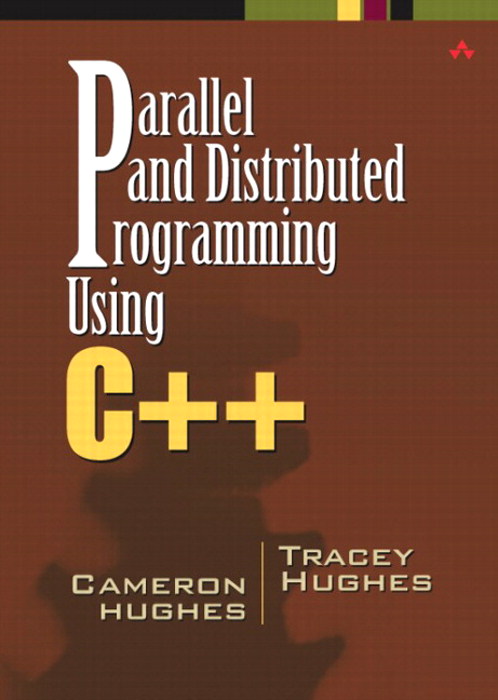
Related Posts with Thumbnails

Put Your Ads Here!