Thursday, October 7, 2010

Basic English Grammar (2nd Ed)


PREFACE TO THE SECOND EDITION ........................................................................................ ix
ACKNOWLEDGMENTS ............................................................................................................... x
51 f .
Chapter 1 USING BEAND HAVE
. . . . . . . . . . : U f l - NOUN + IS + NOUN: SINGULAR ........................................................................ 2
NOUN +ARE + NOUN: PLURAL ...........................................................................4.
PRONOUN + BE + NOUN ...................................................................................6. ....
CONTRACTIONS WITH BE ................................................................................... 7
NEGATIVE WITH BE ................................................................................................. 8
BE + ADJECTIVE ........................... ..... ...................................................................1..0.. .
BE + A LOCATION ................................................ ..........................................1...6
SUMMARY: SENTENCE PATTERNS WITH BE ................................................. 20
YESNO QUESTIONS WITH BE ............................ . .........................................2..1..
QUESTIONS WITH BE: USING WHERE. ..........................................................2..4..
USING HAVE AND HAS ......................................................................................2..6.
USING MY, YOUR, HIS, HER, OUR, THEIR ...................................................... 27
USING THIS AND THAT ........................................................................................ 30
USING THESE AND THOSE. ..............................................................................3..1
ASKING QUESTIONS WITH WHATAND WHO +BE. ................................ .....3.. 2
.I?'
Chapter 2 EXPRESSING PRESENT TIME (PART I ) '17'1
. L
FORM AND BASIC MEANING OF THE SIMPLE PRESENT TENSE ...............4. 4
USING FREQUENCY ADVERBS: ALWAYS. USUALLY. OFTEN. SOMETIMES. SEL.DOM. R.4REL.Y. N E W . ......................................................4..6
USING FREQUENCY ADVERBS WITH BE .......................................................4..7. .
PRONUNCIATION OF FINAL -S: /Z/ AND /S/ ....................................................4.9..
SPELLING AND PRONUNCIATION OF FINAL -ES ................... . ...............5 1
ADDING FINAL -S/-ES TO WORDS THAT END IN -Y .................................. . 1
IRREGULAR SINGULAR VERBS: HAS, DOES, GOES .......................................5. 2
SUMMARY: SPELLING AND PRONUNCIATION OF -SAND -ES ..................5. 4
THE SIMPLE PRESENT . NEGATIVE .................................................................. 57
2-10 THE SIMPLE PRESENT: YESNO QUESTIONS .................................................. 6 I
2-1 1 THE SIMPLE PRESENT: ASKING INFORMATION QUESTIONS
WITH WHERE. .......................................................................................................6..4
2-12 THE SIMPLE PRESENT: ASKING INFORMATION QUESTIONS
WITH WHEN AND WHAT TIME .......................................................................6..6.. .
2-13 SUMMARY: INFORMATION QUESTIONS WITH BE AND DO ........................6 7
2-14 USING lTTO TALK ABOUT TIME ...................................................................7..2. ..
2-1 5 PREPOSITIONS OF TIME ......................................................................................7.3
2-16 USING ITTO TALK ABOUT THE WEATHER ...................................................7..4
Chapter 3 EXPRESSING PRESENT TIME (PART 2) " . .
. . . . . . . . . . . . . . . .
BE + JNG: THE PRESENT PROGRESSIVE TENSE ...........................................8 4
SPELLING OF -ZNG .................. . .......................................................................8..7. ...
THE PRESENT PROGRESSIVE. QUESTIONS. ....................................................8..9
THE SIMPLE PRESENT vs . THE PRESENT PROGRESSIVE .............................. 92
NONACTION VERBS NOT USED IN THE PRESENT PROGRESSIVE .............9 5
SEE, LOOKAT, WATCH, HEAR, AND LISTEN TO .........................................9..7.
NEED AND WANT + A NOUN OR AN .........................................9..8.
WOULD LIKE ............................ . .............................................................1..0..0.
WOULDLIKEvs. LJKE .........................................................................................1 01
THINK ABOUT AND THINK THAT. ................................................................1..0. 2
THERE + BE ..........................................................................................................1. 06
THERE + B E YESNO QUESTIONS ......................................... i .......................1. 07
THERE + B E ASKING QUESTIONS WITH HOWMANY ...............................1.0 9
PREPOSITIONS OF LOCATION. ........................... ..... ........................................1...1
Chapter 4 NOUNS AND PRONOUNS
NOUNS: SUBJECTS AND OBJECTS .................................................................1..2..7.
ADJECTIVE + NOUN ...........................................................................................1..2. 9
SUBJECT PRONOUNS AND OBJECT PRONOUNS .......................................... 131
NOUNS: SINGULAR AND PLURAL ................................................................... 134
NOUNS: IRREGULAR PLURAL FORMS .........................................................1..3..9.
NOUNS: COUNT AND NONCOUNT ...............................................................1..4..1
USINGANvs .A ................................... ...............................................................1..4..3
USING A/AN vs . SOME ........................................................................................1.. 4 4
MEASUREMENTS WITH NONCOUNT NOUNS ............................................1..5.0
USING THE. ........................................................................................................1..5.6..
USING 0 (NO ARTICLE) TO MAKE GENERALIZATIONS ...........................1..6 0
USING SOME AND ANY .....................................................................................1. 6 1
INDEFINITE PRONOUNS: SOMETHING, SOMEONE,
ANYTHING, ANYONE ......................................................................................... 163
INDEFINITE PRONOUNS: NOTHING AND NO ONE .................................... 164
Chapter 5 EXPRESSING PAST TIME .v. ..
Chapter 6
USING BE: PAST TIME ........................ ... ....................................................... 171
PAST OF BE: NEGATIVE ..................................................................................... 172
PAST OF BE: QUESTIONS ..............................................................................1..7.3.. ..
THE SIMPLE PAST TENSE: USING -ED ................. . ......................................1. 77
PAST TIME WORDS: YESTERDAY, LAST, AND AGO ................................. 178
PRONUNCIATION OF -ED: It/, Id/, AND ladl .....................................................1 80
SPELLING OF -ED VERBS ..................... .......................................................... 183
SPELLING OF -ED AND -ING: TWO-SYLLABLE VERBS ...............................1 86
THE SIMPLE PAST: IRREGULAR VERBS .................... ... ................................... 190
THE SIMPLE PAST: NEGATIVE ............ .. ........................................................1 92
THE SIMPLE PAST: YES/NO QUESTIONS ..................................................... 9
MORE IRREGULAR VERBS .................................................................................... 198
THE SIMPLE PAST: USING WHERE, WHEN, WHAT TIME,
AND WHY ............................................................. ........ .......................................2.0..3..
QUESTIONS WITH WHAT ..................... .... ...............................................2..0..6.
QUESTIONS WITH WHO .................................................................................2..0 9
ASKING ABOUT THE MEANING OF A WORD ............................................... 212
MORE IRREGULAR VERBS ................ .. .........................................................2..1..3
BEFORE AND AFTER IN TIME CLAUSES ...................................................... 216
WHEN IN TIME CLAUSES ............................ ... ...........................................2.1..9.
. .. . -8
EXPRESSING FUTURE TlME
FUTURE TIME: USING BE GOING TO. ................:... ... :.L ...L . ........................2.3. 1
WORDS USED FOR PAST TIME AND FUTURE TIME ..................................2..3. 5
USING A COUPLE OF OR A FEW WITH AGO (PAST) AND
LV (EUTURE) ....................................................................................................... 238
USING TODAY, TONIGHT, AND THIS + MORNING,
AFTERNOON, EVENING, WEEK, MONTH, YEAR .......................................2.3..9
FUTURE TIME: USING WILL. ............................................................................2. 42
ASKING QUESTIONS WITH WIU. ..................................................................2..4. 3
VERB SUMMARY: PRESENT, PAST, AND FUTURE ................................... ....2..4 5
VERB SUMMARY: FORMS OF BE ..................................................................2..4..6
USING WHAT + A FORM OF DO ............................... .. .................................2..5. 1
MAYIMIGHTvs . WILL ........................................................................................2.5..3
MAYBE (ONE WORD) vs . MAYBE (TWO WORDS) ..................................... ....2. 55
FUTURE TIME CLAUSES WITH BEFORE, AFTER, AND WHEN ................2. 58
CLAUSES WITH IF .............................................................................................2..6. 0
EXPRESSING HABITUAL PRESENT WITH TIME CLAUSES AND
IF-CLAUSES .....................................................................................................2..6.3.. ....
MORE IRREGULAR VERBS ..............................................................................2..6.6.. .
MORE IRREGULAR VERBS ................... ... ...................................................2..7..0
Chapter 7 EXPRESSING ABILITY
USING CAN ..............................................................................................................2. 81
USING CAN: QUESTIONS ....................................................................................2. 82
USING KNOWHOW TO ........................................................................................2. 84
USING COULD: PAST OF CAN ............................................................................2. 85
USING VERY AND TOO + ADJECTIVE ............................................................. 287
USING TOO MANY AND TOO MUCH + NOUN ............................................... 290
USING TOO + ADJECTIVE + INKNITIW ......................................................2..9. 3
USING TOO + ADJECTIVE + FOR (SOMEONE) + INFINITIVE ..................... 294
USING ADJECTIVE + ENOUGH ........................................................................... 295
USING ENOUGH + NOUN AND MORE + NOUN ............................................. 297
USING ENOUGH + INFINITIVE ........................................................................... 299
USING BERBLB TO ..............................................................................................3. 01
POLITE QUESTIONS: MAYI. COULD I. AND CANI. .......................................3 02
POLITE QUESTIONS: COULD YOU AND WOULD YOU ................................, 304
IMPERATIVE SENTENCES ...................................................................................3. 07
USING TWO. TOO. AND TO ................................................................................3. 10
MORE ABOUT PREPOSITIONS: AT AND IN FOR LOCATIONS ....................3 11
MORE IRREGULAR VERBS .................................................................................... 321
Chapter 8 NOUNS . ADJECTIVES AND PRONOUNS . . ... > ., I - 1
MODIFYING NOUNS WITH ADJECTIVES AND NOUNS ......................... 325
WORD ORDER OF ADJECTIVES ................................................................3..2.9.
EXPRESSIONS OF QUANTITY: ALL OF. MOST OF. SOME OF .............3.3 4
EXPRESSIONS OF QUANTITY: SUBJECT-VERB AGREEMENT ............... 336
EXPRESSIONS OF QUANTJ3Y ONE OF. NONE OF ..............................3..3.7
USING EVERY ...............................................................................................3..4..1
POSSESSIVE NOUNS ...................................................................................3.4..3..
POSSESSIVE: IRREGULAR PLURAL NOUNS ..........................................3..4..5
POSSESSIVE PRONOUNS: MINE, YOURS. HIS. HERS,
OURS, THEIRS ....... ............... ...................................................................3..4..7
QUESTIONS WITH WHOS6 .......................................................................3..5..1
SUMMARY: USES OF THE APOSTROPHE ...............................................3..5.2..
SUMMARY: USES OF NOUNS .....................................................................3..5.5.
CONNECTED NOUNS: NOUN +AND/OR+ NOUN ..............................3..5..7
SUMMARY: USES OF ADJECTIVES ...........................................................3..6..0
SUMMARY.. PERSONAL PRONOUNS .........................................................3..6. 3
INDIRECT OBJECTS ....................................................................................3..6..4.
INDIRECT OBJECTS: USING FOR. ..........................................................3.6..7.. .
INDIRECT OBJECTS W m B UY,G ET, MAKE ............................ . ...........3 69
INDIRECT OBJECTS WITH EXFLAlN AND INTRODUCE .....................3. 70
MORE IRREGULAR VERBS ........................................................................3..7..5.
Chapter 9 MAKING COMPARISONS
COMPARISONS: USING THE SAME (AS). SIMILAR (TO).
AND DIFFERENT (PROM). .............................................................................3 79
COMPARISONS: USING LIKE AND ALIKE ................................................3. 82
THE COMPARATIVE: USING -ER AND MORE ........................ . ............3 83
USING AS ... AS; USING LESS ................................................................... 389
USING BUT ....................................................................................................3..9..3
USING VERBS AFTER BUT ........................................................................... 395
THE SUPERLATNE: USING -ESTAND MOST .........................................3. 98
USING ONE OF + SUPERLATIVE + PLURAL NOUN ................................ 405
ADJECTIVES AND ADVERBS ..........................................................................4 11
MAKING COMPARISONS WITH ADVERBS ..............................................4 14
USING AS ...A S WITH ADVERBS ...............................................................4. 16
Chapter 10 EXPRESSING IDEAS WITH VERBS
USING SHOULD ..............................................................................................4..2 0
USING LET'S ..................................................................................................4..2 3
USING HAVE + INFINITIVE (HAS TOIHAVE TO) ....................................... 424
USING MUST ...................................................................................................4..2 7
MODAL AUXILIARIES .................................................................................... 430
SUMMARY CHART: MODAL AUXILIARIES AND
SIMILAR EXPRESSIONS ................................................................................. 431
THE PRESENT PROGRESSIVE AND THE PAST PROGRESSIVE ............. 434
USING WHILE WITH THE PAST PROGRESSIVE ...................................... 438
WHILE vs . WHEN IN PAST TIME CLAUSES ................................................4 38
SIMPLE PAST vs . PAST PROGRESSIVE ........................................................4. 0
USING HAVE BEEN (THE PRESENT PERFECT) .......................................4 4
USING SINCE-CLAUSES ................................................................................4. 46
FORM OF THE PRESENT PERFECT ............................................................4. 48
USING NEVBR WITH THE PRESENT PERFECT .......................................4 49
PRESENT PERFECT: QUESTIONS AND NEGATIVES ............................... 450
USING EVBR WITH THE PRESENT PERFECT .........................................4. 51
THE PRESENT PERFECT: QUESTIONS WITH HOW LONG .................... 453
PAST PARTICIPLES OF COMMON IRREGULAR VERBS ..........................4 55
Appendix 1 THE ENGUSH ALPHABET .................................................................................. AI
Appendix 2 NUMBERS .......................................................................................................... ~2
Appendlx 3 DAYS OF THE WEEK AND MONTHS OF THE YEAR ...................................... A3
Appendlx 4 WAYS OF SAYING ME TIME ........................................................................... A4
Appendix 5 IRREGULAR VERBS ........................................................................................... AS
INDEX ..............................................................................................................................I. NDEX 1

Download
Another English Books
Continue Reading ...

Kick Andy


Download
Another Personality Books
Continue Reading ...

Asterix and the Secret Weapon


Download
Another Comics Books
Continue Reading ...

Wednesday, October 6, 2010

Object Oriented Perl


contents
foreword xi
preface xii
acknowledgments xviii
author online xx
1 What you need to know first (an object-orientation primer) 1
1.1 The essentials of object orientation 2
1.2 Other object-oriented concepts 13
1.3 Terminology: a few (too many) words 18
1.4 Where to find out more 18
1.5 Summary 20
2 What you need to know second (a Perl refresher) 21
2.1 Essential Perl 21
2.2 Non-essential (but very useful) Perl 51
2.3 The CPAN 65
2.4 Where to find out more 68
2.5 Summary 72
3 Getting started 73
3.1 Three little rules 73
3.2 A simple Perl class 80
3.3 Making life easier 89
3.4 The creation and destruction of objects 96
3.5 The CD::Music class, compleat 114
3.6 Summary 117
4 Blessing arrays and scalars 118
4.1 What’s wrong with a hash? 118
4.2 Blessing an array 119
4.3 Blessing a pseudo-hash 126
4.4 Blessing a scalar 135
4.5 Summary 142
5 Blessing other things 143
5.1 Blessing a regular expression 143
5.2 Blessing a subroutine 151
5.3 Blessing a typeglob 158
5.4 Summary 166
6 Inheritance 168
6.1 How Perl handles inheritance 168
6.2 Tricks and traps 178
6.3 Example: Inheriting the CD class 193
6.4 Where to find out more 201
6.5 Summary 202
7 Polymorphism 203
7.1 Polymorphism in Perl 203
7.2 Example: Polymorphic methods for the Lexer class 205
7.3 The simple pretty-printer objectified 208
7.4 Using interface polymorphism instead 210
7.5 Where to find out more 212
7.6 Summary 212
8 Automating class creation 213
8.1 The Class::Struct module 213
8.2 The Class::MethodMaker module 222
8.3 Where to find out more 234
8.4 Summary 235
9 Ties 236
9.1 A jacketing tie required 236
9.2 Tie-ing a scalar 238
9.3 Tie-ing a hash 243
9.4 Tie-ing an array 249
9.5 Tie-ing a filehandle 256
9.6 Inheriting from a tie’able package 262
9.7 Tied variables as objects 265
9.8 Where to find out more 274
9.9 Summary 275
10 Operator overloading 276
10.1 The problem 276
10.2 Perl’s operator overloading mechanism 278
10.3 Example: A Roman numerals class 284
10.4 Circumventing undesired reference semantics 291
10.5 The use and abuse of operators 292
10.6 Where to find out more 295
10.7 Summary 295
11 Encapsulation 296
11.1 The perils of trust 296
11.2 Encapsulation via closures 297
11.3 Encapsulation via scalars 302
11.4 Encapsulation via ties 309
11.5 Where to find out more 326
11.6 Summary 326
12 Genericity 327
12.1 Why Perl doesn’t need special generic mechanisms 327
12.2 Using specific mechanisms anyway 329
12.3 Implicit generics via polymorphism 336
12.4 Where to find out more 350
12.5 Summary 350
13 Multiple dispatch 351
13.1 What is multiple dispatch? 351
13.2 Multiple dispatch via single dispatch and cases 353
13.3 Multiple dispatch via a table 356
13.4 Comparing the two approaches 361
13.5 Dynamic dispatch tables 363
13.6 Some lingering difficulties 367
13.7 The Class::Multimethods module 367
13.8 Comparing the three approaches 385
13.9 Where to find out more 385
13.10 Summary 385
14 Persistent objects 387
14.1 The ingredients 387
14.2 Object-oriented persistence 398
14.3 Coarse-grained persistence 400
14.4 Fine-grained persistence 412
14.5 Where to find out more 427
14.6 Summary 428
A Quick reference guide 429
B What you might know instead 438
B.1 Perl and Smalltalk 438
B.2 Perl and C++ 443
B.3 Perl and Java 449
B.4 Perl and Eiffel 454
glossary 459
bibliography 466
index 468

Download
Another Web Programming Language Books
Another Perl Books
Continue Reading ...

Web Development with JavaServer Pages


1 Introduction 1
1.1 What is JSP? 2
1.2 Evolution of dynamic content technologies 2
Common Gateway Interface 3 ColdFusion 5
Active Server Pages 6 Server-Side JavaScript 6
PHP 7 Java servlets 7 JavaServer Pages 9
1.3 JSP and Java 2 Enterprise Edition 10
Java platform editions 11 Web-based applications 11
1.4 JSP benefits 13
Performance 13 Reusable components 16
Separating presentation and implementation 17
Achieving division of labor 19
2 Fundamentals 21
2.1 Writing your first JSP 22
About the examples 22 Hello, World! 22
Hello, World! revisited 23 Hello, World! the Bean
edition 25 Hello Real World 27
2.2 Tag conventions 28
Scripting-oriented tags 29 XML-based tags 29
2.3 Running JSP 31
Adding JSP support 32 How JSPs work 33
Buffered output 38 Session management 40
Scalability 43 Error handling 46
3 Programming JSP scripts 49
3.1 Scripting languages 50
3.2 JSP tags 52
3.3 JSP directives 52
Page directive 52 Include directive 63
Tag library directive 65
3.4 Scripting elements 67
Declarations 67 Expressions 71 Scriptlets 74
3.5 Flow of control 76
Conditionalization 76 Iteration 77 Exception
handling 77 A word of caution 80
3.6 Comments 81
Content comments 81 JSP comments 81
Scripting language comments 82
4 Actions and implicit objects 84
4.1 Implicit objects 85
Servlet-related objects 87 Input/Output 88
Contextual objects 95 Error handling 103
4.2 Actions 104
Forward 104 Include 108 Plug-in 110
Bean tags 110
5 Using JSP components 111
5.1 The JSP component model 112
Component architectures 112 Benefits of a component
architecture 112 Component design for web
projects 114 Building applictions from components 115
5.2 JavaBean fundamentals 117
The different types of JavaBeans 120
5.2 JSP Bean tags 122
Tag-based component programming 122 Accessing JSP
components 124 Initializing Beans 132
Controlling a Bean’s scope 139
6 Developing JSP components 147
6.1 What makes a Bean a Bean? 148
Bean conventions 148 The Bean constructor 149
Defining a Bean’s properties 150 Indexed
properties 154 Boolean properties 158
JSP type conversion 159 Configuring Beans 161
6.2 Some Examples 162
Example: a TimerBean 162
A Bean that calculates interest 165
6.3 Bean interfaces 169
The BeanInfo interface 169 The Serializable
interface 170 The HttpSessionBindingListener
interface 171 Other features of the Bean API 172
6.4 Mixing scriptlets and Bean tags 173
Accessing Beans through scriptlets 173
Accessing scriptlet created objects 173
7 Working with databases 178
7.1 JSP and JDBC 179
JNDI and data sources 180 Prepared statements 181
7.2 Database driven JSPs 182
Creating JSP components from table data 182
JSPs and JDBC data types 185 Maintaining persistent
connections 188 Handling large sets of results 191
Transaction processing 196
7.3 Example: JSP conference booking tool 197
Project overview 198 Our database 198
Design overview 198
8 Architecting JSP applications 209
8.1 Web applications 210
Web application flow 212
Architectural approaches 213
8.2 Page Centric Design 213
Role-based pages 213 Building composite pages 216
Limitations of the page-centric approach 218
8.3 Servlet-centric design 219
Hello, World—with servlets 220 JSP and the servlet
API 221 Servlets for application control 224 Servlets
for handling application logic 225 Servlets as single
entry points 226 Handling errors in the servlet 230
Example: servlet-centric employee browser 230
EmployeeBean 232 FetchEmployeeServlet 235
JSP employee list 238 JSP page viewer 239
8.4 Enterprise JavaBeans 241
What are Enterprise JavaBeans? 241 JavaBeans vs.
EJBs 241 Application servers and EJB containers 242
Application design with EJBs 243
8.5 Choosing an appropriate architecture 244
Application environment 244 Enterprise software
requirements 246 Performance, scalability, and
availability 246 Technical considerations 247
Organizational considerations 248
9 An example JSP project 250
9.1 Introduction 251
Project motivations 251 Application requirements 251
Application modules 253 Building a FAQ
component 254
9.2 The storage module 256
Database schema 257 The FaqRepository class 257
Storage module exceptions 263
9.3 The administration module 264
The administration servlet 265 The main menu 272
Adding an FAQ 275 Deleting an FAQ 279
Updating an FAQ 285
9.4 The web access module 290
The FaqServlet 290 Viewing a single FAQ 292
Viewing all the FAQs 293 A table of contents view 294
Plain text view 296
10 Deploying JSP applications 297
10.1 This means WAR 298
WAR is XML 299 Waging WAR 301
10.2 The art of WAR 302
WAR materiel 303
Drafting deployment descriptors 307
10.3 Maintaining a WAR footing 319
11 Performing common JSP tasks 321
11.1 Handling cookies 322
Managing cookies 322 The Cookie class 323
Example 1: setting a cookie 324
Example 2: retrieving a cookie 326
11.2 Creating error pages 329
An erroneous page 330 Data collection methods 330
Sending electronic mail 335 The error page 337
11.3 Mixing JSP and JavaScript 340
11.4 Building interactive interfaces 344
Sticky widgets 344 Utility methods 345 The example
form 347 Setting up the form 349 Text and hidden
fields 349 Text areas 350 Radio buttons 350
Select boxes 351 Check boxes 352 Form source 352
11.5 Validating form data 354
Client- and server-side validation 355
Example: server-side validation 356
11.6 Miscellaneous tasks 361
Determining the last modification date 362
Executing system commands 363
Generating XML 364
12 JSP by example 366
12.1 A rotating banner ad 367
The BannerBean 367 Using the Bean 368
12.2 A random quote generator 370
The QuoteBean 370 Using the Bean 371
12.3 The Tell a Friend! sticker 372
The sticker 373 The MailForm page 375
Sending the mail 376
12.4 A JSP Whois client 378
The Whois protocol 378 Requirements and design
considerations 380 The WhoisBean 380
Building the front end 388
12.5 An index generator 391
A basic implementation 391 An improved version 394
Going further 398
12.6 A button to view JSP source 398
Displaying the source 399 Limitations of the view source
program 401 Adding a view source button to a
page 401 Viewing source through a bookmark 401
13 Creating custom tags 403
13.1 Role of custom tags 404
13.2 How tag libraries work 405
13.3 Tag library descriptors 408
Library elements 409 Tag elements 410
Attribute elements 411
13.4 API overview 412
Tag handlers 412 Helper classes 416
Auxiliary classes 418
13.5 Example tag library 419
13.6 Content substitution 420
13.7 Tag attributes 422
13.8 Content translation 427
URL rewriting 427 HTML encoding 431
13.9 To be continued 435
14 Implementing advanced custom tags 436
14.1 Interacting tags 437
Interaction mechanisms 437 Outlining tags 439
14.2 Flow of control 449
Conditionalization 450 Iteration 458
14.3 Packaging the tag library 475
14.4 For further information 476
A Running the reference implementation 477
A.1 Prerequisites 478
A.2 Installation 478
A.3 Constructing an application 485
B Incorporating Java applets 489
B.1 Browser support for Java 2 489
B.2 The plug-in action 491
B.3 Example: applet configuration 496
C JSP resources 503
C.1 Java implementations 503
C.2 JSP-related web sites 504
C.3 JSP FAQs and tutorials 504
C.4 JSP containers 505
C.5 Java application servers with JSP support 505
C.6 JSP development tools 506
C.7 Tools for performance testing 506
C.8 Mailing lists and newsgroups 507
D JSP syntax reference 508
D.1 Content comments 508
D.2 JSP comments 509
D.3 510
D.4 511
D.5 512
D.6 513
D.7 514
D.8 515
D.9 516
D.10 517
D.11 518
D.12 520
D.13 521
D.14 522
E JSP API reference 524
E.1 JSP Implicit Objects 525
E.2 Package javax.servlet 525
E.3 Package javax.servlet.http 530
E.4 Package javax.servlet.jsp 535
E.5 Package javax.servlet.jsp.tagext 539
index 545

Download
Another Web Programming Books
Continue Reading ...

Monday, October 4, 2010

Python 2.1 Bible


Book Description
The Python 2.1 Bible provides the only complete Python language reference on the market and includes all the information and software that developers need to use Python as a rapid application development tool. The Python 2.1 Bible fills a critical void in the Python reference market. Although it includes a complete Python language reference section, it is still geared towards those of you who already have some programming experience. This book explains each piece of technology in depth and shows through clear examples why each feature is useful. This is the manual you've been waiting for -- the one that covers all major Python components without glossing over how the various pieces fit together.

Reviews From AMAZON.COM
The best kept secret of Python books
I am a fan of this book! First and foremost, all the information I needed to write Python programs was there and it was easy to find. This means the book is well organized and the index is great. Don't forget to check out the book's website too.Secondly, the book covers topics no other book that I know touches. Read the TOC of Parts IV and V by clicking the book cover picture at the top of this page and you will agree. Thirdly, the authors have a concise style, which you will learn to appreciate after reading chatty Pythonist folks like Lutz. Bruek and Tanner tell you just what you need to know and they use only as many words as needed for this purpose. Finally, I like the fonts used in this book. They are special, even the one used for Python scripts, and they set the apparence of this book apart from your typical computer language book. The coverage of the OOP could indeed be expanded, and, most impotantly, the book needs a new edition to cover the latest Python version (2.4 as I write this). I would buy a copy of the second edition on the spot.


A good introduction
With a background of C/C++ and Java, I was dropped in the Python deep-end by a client who had a systems monitoring tool written in Python that needed urgent enhancements made. I ordered the Python 2.1 Bible and the client provided Programming Python 2nd edition (pub. O'Reilly). The O'Reilly book looked at first sight more useful, but I choked on it as it assumed prior knowledge of Python. The Python 2.1 Bible, on the other hand, assumed no prior knowledge of Python and within 3 days (whilst waiting for a Linux box to arrive !) I had written a number of powerful disk utilities, socket-based clients and servers, small GUI-based programs etc that ran on my Windows-based PC and which should run on Linux too (still waiting for the box !!). For me it was an excellent introduction to Python. After reading the Python 2.1 Bible I felt able to read Programming Python. Still waiting for the Linux box though so still haven't written the "urgent" enhancements...The only negatives I would have for Python 2.1 Bible are: (1) that it assumed C/C++ knowledge (which was fine for me but might not be for other people) (2) a (very) few areas could have done with a bit more explanation, raising questions that experienced OO people would want answered

Download
Another Programming Language Books
Continue Reading ...

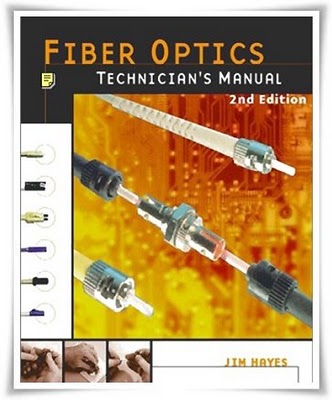
Fiber Optics Technicians Manual (2nd Ed.)


Fiber Optic Technician's Manual, now in its second edition, continues to serve as a practical guide for the designer, installer, and troubleshooter of fiber optic cable plants and networks used in today's communications systems. Comprehensive in scope, this book addresses applications of fiber optics including telephone, CATV, and computer networks. Discussion centers on the basics of the technology, the components used, and their installation. Based on materials developed by trainers for their own training programs, including the successful “Fiber U” program, Fiber Optic Technician’s Manual, 2nd Edition has been thoughtfully updated and now features new applications, plus new components and processes that have become widely used in the industry. Hints at the future of this rapidly evolving technology are also included.


Download
Another Network Books
Continue Reading ...

Wireless Communication Technology


Delmar Cengage Learning 2000 | 640 | ISBN: 0766812669 | PDF | 10
As we enter the 21st century, the use of wireless communication technologies - including cellular radio, personal communication systems (PCS), satellite phones, paging systems, wireless models and local-area networks (LANs), plus multipoint distribution systems (LMDS) for wireless delivery of television and internet service - is exploding rapidly! Wireless Communication Technology, provides the basic and straightforward electronics information users need to understand the ins and outs of each of these new and emerging wireless communications technologies. The in-depth technical discussions, combined with numerous examples and problems, provide ideal preparation for anyone seeking "hot" jobs in this rapidly expanding segment of the communications field. ...


Download
Another Wireless Network Books
Continue Reading ...

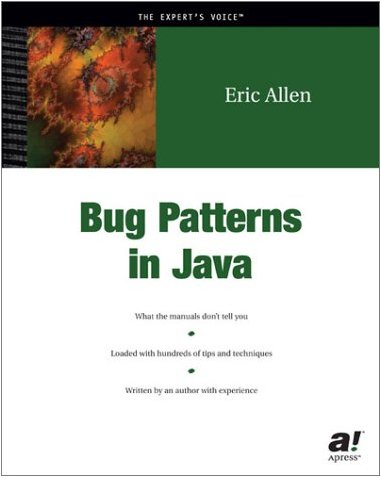
Bug Patterns in Java


byEric Allen ISBN:1590590619
Apress ?2002 (234 pages)

This text lays out a methodology for diagnosing and debugging computer programs, presenting the act of debugging as an ideal application of the scientific method, then presents various “bug patterns” that occur frequently in computer programs.

Table of Contents
Bug Patterns in Java
Preface
Chapter 1 - Agile Methods in a Chaotic Environment
Chapter 2 - Bugs, Specifications, and Implementations
Chapter 3 - Debugging and the Development Process
Chapter 4 - Debugging and the Testing Process
Chapter 5 - The Scientific Method of Debugging
Chapter 6 - About the Bug Patterns
Chapter 7 - The Rogue Tile
Chapter 8 - Null Pointers Everywhere!
Chapter 9 - The Dangling Composite
Chapter 10 - The Null Flag
Chapter 11 - The Double Descent
Chapter 12 - The Liar View
Chapter 13 - Saboteur Data
Chapter 14 - The Broken Dispatch
Chapter 15 - The Impostor Type
Chapter 16 - The Split Cleaner
Chapter 17 - The Fictitious Implementation
Chapter 18 - The Orphaned Thread
Chapter 19 - The Run-On Initialization
Chapter 20 - Platform-Dependent Patterns
Chapter 21 - A Diagnostic Checklist
Chapter 22 - Design Patterns for Debugging
Chapter 23 - References
Appendix A - String-Parsing List Constructor
Glossary of Terms
List of Figures
List of Tables
List of Listings
List of Sidebars


Download

Another Java Boooks
Continue Reading ...

Programming Dot NET Security


By Adam Freeman, Allen Jones

Publisher : O'Reilly
Pub Date : June 2003
ISBN : 0-596-00442-7
Pages : 714


With the spread of web-enabled desktop clients and web-server based applications, developers can no longer afford to treat security as an afterthought. It's one topic, in fact, that .NET forces you to address, since Microsoft has placed security-related features at the core of the .NET Framework. Yet, because a developer's carelessness or lack of experience can still allow a program to be used in an unintended way, Programming .NET Security shows you how the various tools will help you write secure applications.

Copyright
Dedication
Preface
How This Book Is Organized
Who Should Read This Book
Assumptions This Book Makes
Conventions Used in This Book
How to Contact Us
Part I: Fundamentals
Chapter 1. Security Fundamentals
Section 1.1. The Need for Security
Section 1.2. Roles in Security
Section 1.3. Understanding Software Security
Section 1.4. End-to-End Security
Chapter 2. Assemblies
Section 2.1. Assemblies Explained
Section 2.2. Creating Assemblies
Section 2.3. Shared Assemblies
Section 2.4. Strong Names
Section 2.5. Publisher Certificates
Section 2.6. Decompiling Explained
Chapter 3. Application Domains
Section 3.1. Application Domains Explained
Chapter 4. The Lifetime of a Secure Application
Section 4.1. Designing a Secure .NET Application
Section 4.2. Developing a Secure .NET Application
Section 4.3. Security Testing a .NET Application
Section 4.4. Deploying a .NET Application
Section 4.5. Executing a .NET Application
Section 4.6. Monitoring a .NET Application
Part II: .NET Security
Chapter 5. Introduction to Runtime Security
Section 5.1. Runtime Security Explained
Section 5.2. Introducing Role-Based Security
Section 5.3. Introducing Code-Access Security
Section 5.4. Introducing Isolated Storage
Chapter 6. Evidence and Code Identity
Section 6.1. Evidence Explained
Section 6.2. Programming Evidence
Section 6.3. Extending the .NET Framework
Chapter 7. Permissions
Section 7.1. Permissions Explained
Section 7.2. Programming Code-Access Security
Section 7.3. Extending the .NET Framework
Chapter 8. Security Policy
Section 8.1. Security Policy Explained
Section 8.2. Programming Security Policy
Section 8.3. Extending the .NET Framework
Chapter 9. Administering Code-Access Security
Section 9.1. Default Security Policy
Section 9.2. Inspecting Declarative Security Statements
Section 9.3. Using the .NET Framework Configuration Tool
Section 9.4. Using the Code-Access Security Policy Tool
Chapter 10. Role-Based Security
Section 10.1. Role-Based Security Explained
Section 10.2. Programming Role-Based Security
Chapter 11. Isolated Storage
Section 11.1. Isolated Storage Explained
Section 11.2. Programming Isolated Storage
Section 11.3. Administering Isolated Storage
Part III: .NET Cryptography
Chapter 12. Introduction to Cryptography
Section 12.1. Cryptography Explained
Section 12.2. Cryptography Is Key Management
Section 12.3. Cryptographic Attacks
Chapter 13. Hashing Algorithms
Section 13.1. Hashing Algorithms Explained
Section 13.2. Programming Hashing Algorithms
Section 13.3. Keyed Hashing Algorithms Explained
Section 13.4. Programming Keyed Hashing Algorithms
Section 13.5. Extending the .NET Framework
Chapter 14. Symmetric Encryption
Section 14.1. Encryption Revisited
Section 14.2. Symmetric Encryption Explained
Section 14.3. Programming Symmetrical Encryption
Section 14.4. Extending the .NET Framework
Chapter 15. Asymmetric Encryption
Section 15.1. Asymmetric Encryption Explained
Section 15.2. Programming Asymmetrical Encryption
Section 15.3. Extending the .NET Framework
Chapter 16. Digital Signatures
Section 16.1. Digital Signatures Explained
Section 16.2. Programming Digital Signatures
Section 16.3. Programming XML Signatures
Section 16.4. Extending the .NET Framework
Chapter 17. Cryptographic Keys
Section 17.1. Cryptographic Keys Explained
Section 17.2. Programming Cryptographic Keys
Section 17.3. Extending the .NET Framework
Part IV: .NET Application Frameworks
Chapter 18. ASP.NET Application Security
Section 18.1. ASP.NET Security Explained
Section 18.2. Configuring the ASP.NET Worker Process Identity
Section 18.3. Authentication
Section 18.4. Authorization
Section 18.5. Impersonation
Section 18.6. ASP.NET and Code-Access Security
Chapter 19. COM+ Security
Section 19.1. COM+ Security Explained
Section 19.2. Programming COM+ Security
Section 19.3. Administering COM+ Security
Chapter 20. The Event Log Service
Section 20.1. The Event Log Service Explained
Section 20.2. Programming the Event Log Service
Part V: API Quick Reference
Chapter 21. How to Use This Quick Reference
Section 21.1. Finding a Quick-Reference Entry
Section 21.2. Reading a Quick-Reference Entry
Chapter 22. Converting from C# to VB Syntax
Section 22.1. General Considerations
Section 22.2. Classes
Section 22.3. Structures
Section 22.4. Interfaces
Section 22.5. Class, Structure, and Interface Members
Section 22.6. Delegates
Section 22.7. Enumerations
Chapter 23. The System.Security Namespace
AllowPartiallyTrustedCallersAttribute
CodeAccessPermission
IEvidenceFactory
IPermission
ISecurityEncodable
ISecurityPolicyEncodable
IStackWalk
NamedPermissionSet
PermissionSet
PolicyLevelType
SecurityElement
SecurityException
SecurityManager
SecurityZone
SuppressUnmanagedCodeSecurityAttribute
UnverifiableCodeAttribute
VerificationException
XmlSyntaxException
Chapter 24. The System.Security.Cryptography Namespace
AsymmetricAlgorithm
AsymmetricKeyExchangeDeformatter
AsymmetricKeyExchangeFormatter
AsymmetricSignatureDeformatter
AsymmetricSignatureFormatter
CipherMode
CryptoAPITransform
CryptoConfig
CryptographicException
CryptographicUnexpectedOperationException
CryptoStream
CryptoStreamMode
CspParameters
CspProviderFlags
DeriveBytes
DES
DESCryptoServiceProvider
DSA
DSACryptoServiceProvider
DSAParameters
DSASignatureDeformatter
DSASignatureFormatter
FromBase64Transform
FromBase64TransformMode
HashAlgorithm
HMACSHA1
ICryptoTransform
KeyedHashAlgorithm
KeySizes
MACTripleDES
MaskGenerationMethod
MD5
MD5CryptoServiceProvider
PaddingMode
PasswordDeriveBytes
PKCS1MaskGenerationMethod
RandomNumberGenerator
RC2
RC2CryptoServiceProvider
Rijndael
RijndaelManaged
RNGCryptoServiceProvider
RSA
RSACryptoServiceProvider
RSAOAEPKeyExchangeDeformatter
RSAOAEPKeyExchangeFormatter
RSAParameters
RSAPKCS1KeyExchangeDeformatter
RSAPKCS1KeyExchangeFormatter
RSAPKCS1SignatureDeformatter
RSAPKCS1SignatureFormatter
SHA1
SHA1CryptoServiceProvider
SHA1Managed
SHA256
SHA256Managed
SHA384
SHA384Managed
SHA512
SHA512Managed
SignatureDescription
SymmetricAlgorithm
ToBase64Transform
TripleDES
TripleDESCryptoServiceProvider
Chapter 25. The System.Security.Cryptography.X509Certificates Namespace
X509Certificate
X509CertificateCollection
X509CertificateCollection.X509CertificateEnumerator
Chapter 26. The System.Security.Cryptography.Xml Namespace
DataObject
DSAKeyValue
KeyInfo
KeyInfoClause
KeyInfoName
KeyInfoNode
KeyInfoRetrievalMethod
KeyInfoX509Data
Reference
RSAKeyValue
Signature
SignedInfo
SignedXml
Transform
TransformChain
XmlDsigBase64Transform
XmlDsigC14NTransform
XmlDsigC14NWithCommentsTransform
XmlDsigEnvelopedSignatureTransform
XmlDsigXPathTransform
XmlDsigXsltTransform
Chapter 27. The System.Security.Permissions Namespace
CodeAccessSecurityAttribute
EnvironmentPermission
EnvironmentPermissionAccess
EnvironmentPermissionAttribute
FileDialogPermission
FileDialogPermissionAccess
FileDialogPermissionAttribute
FileIOPermission
FileIOPermissionAccess
FileIOPermissionAttribute
IsolatedStorageContainment
IsolatedStorageFilePermission
IsolatedStorageFilePermissionAttribute
IsolatedStoragePermission
IsolatedStoragePermissionAttribute
IUnrestrictedPermission
PermissionSetAttribute
PermissionState
PrincipalPermission
PrincipalPermissionAttribute
PublisherIdentityPermission
PublisherIdentityPermissionAttribute
ReflectionPermission
ReflectionPermissionAttribute
ReflectionPermissionFlag
RegistryPermission
RegistryPermissionAccess
RegistryPermissionAttribute
ResourcePermissionBase
ResourcePermissionBaseEntry
SecurityAction
SecurityAttribute
SecurityPermission
SecurityPermissionAttribute
SecurityPermissionFlag
SiteIdentityPermission
SiteIdentityPermissionAttribute
StrongNameIdentityPermission
StrongNameIdentityPermissionAttribute
StrongNamePublicKeyBlob
UIPermission
UIPermissionAttribute
UIPermissionClipboard
UIPermissionWindow
UrlIdentityPermission
UrlIdentityPermissionAttribute
ZoneIdentityPermission
ZoneIdentityPermissionAttribute
Chapter 28. The System.Security.Policy Namespace
AllMembershipCondition
ApplicationDirectory
ApplicationDirectoryMembershipCondition
CodeGroup
Evidence
FileCodeGroup
FirstMatchCodeGroup
Hash
HashMembershipCondition
IIdentityPermissionFactory
IMembershipCondition
NetCodeGroup
PermissionRequestEvidence
PolicyException
PolicyLevel
PolicyStatement
PolicyStatementAttribute
Publisher
PublisherMembershipCondition
Site
SiteMembershipCondition
StrongName
StrongNameMembershipCondition
UnionCodeGroup
Url
UrlMembershipCondition
Zone
ZoneMembershipCondition
Chapter 29. The System.Security.Principal Namespace
GenericIdentity
GenericPrincipal
IIdentity
IPrincipal
PrincipalPolicy
WindowsAccountType
WindowsBuiltInRole
WindowsIdentity
WindowsImpersonationContext
WindowsPrincipal
Colophon
Index

Download
Another .NET Books
Another Computer Security Books
Continue Reading ...

Java Examples in a Nutshell


Working with the Examples
The Java examples are all defined in sub-packages of the package com.davidflanagan.examples. This means that you'll find the example source code in subdirectories of the directory com/davidflanagan/examples/ In order to work most easily with the examples, you'll need to add the current directory (the directory that you're reading this file from) into your CLASSPATH environment variable. In the book, the title of each example gives its file name, and the package statement in each example shows what package it is a part of. With this information, you can easily find the source code for the example you want. For browsing convenience, however, the examples are also listed here by chapter, number, and name:
Chapter 1: Java Basics
1-1 Hello.java
1-2 FizzBuzz.java
1-3 Fibonacci.java
1-4 Echo.java
1-5 Reverse.java
1-6 FizzBuzz2.java
1-7 Factorial.java
1-8 Factorial2.java
1-9 Factorial3.java
1-10 Factorial4.java
1-11 FactComputer.java
1-12 FactQuoter.java
1-13 Rot13Input.java
1-14 SortNumbers.java
1-15 Sieve.java
Chapter 2: Objects, Classes, and Interfaces
2-1 Rect.java
2-2 RectTest.java
2-3 DrawableRect.java
2-4 ColoredRect.java
2-5 ComplexNumber.java
2-6 Randomizer.java
2-7 Averager.java
2-8 LinkedList.java
2-9 Sorter.java
Chapter 3: Input/Output
3-1 Delete.java
3-2 FileCopy.java
3-3 FileViewer.java
3-4 FileLister.java
3-5 Compress.java
3-6 RemoveHTMLReader.java
3-7 GrepReader.java
3-8 HTMLWriter.java
Chapter 4: Threads
4-1 ThreadDemo.java
4-2 ThreadLister.java
4-3 Deadlock.java
4-4 TimerTask.java
4-5 Timer.java
Chapter 5: Networking
5-1 GetURL.java
5-2 GetURLInfo.java
5-3 SendMail.java
5-4 HttpClient.java
5-5 HttpMirror.java
5-6 SimpleProxyServer.java
5-7 Who.java
5-8 GenericClient.java
5-9 Server.java
5-10 ProxyServer.java
5-11 UDPSend.java
5-12 UDPReceive.java
Chapter 6: Security and Cryptography
6-1 SafeServer.java
6-2 SafeServer.policy
6-3 SecureService.java
6-4 Manifest.java
6-5 TripleDES.java
Chapter 7: Internationalization
7-1 UnicodeDisplay.java
7-2 ConvertEncoding.java
7-3 Portfolio.java
7-4 SimpleMenu.java
7-5 LocalizedError.java
Chapter 8: Reflection
8-1 ShowClass.java
8-2 Command.java
Chapter 9: Object Serialization
9-1 Serializer.java
9-2 IntList.java
9-3 CompactIntList.java
Chapter 10: Graphical User Interfaces
10-1 ShowComponent.java
10-2 Containers.java
10-3 FlowLayoutPane.java
10-4 GridLayoutPane.java
10-5 BorderLayoutPane.java
10-6 BoxLayoutPane.java
10-7 GridBagLayoutPane.java
10-8 NullLayoutPane.java
10-9 ColumnLayout.java
10-10 ColumnLayoutPane.java
10-11 ScribblePane1.java
10-12 ScribblePane2.java
10-13 ScribblePane3.java
10-14 ScribblePane4.java
10-15 ItemChooser.java
10-16 Scribble.java
10-17 CommandAction.java
10-18 FontChooser.java
10-19 PropertyTable.java
10-20 ComponentTree.java
10-21 WebBrowser.java
10-22 GUIResourceBundle.java
10-23 ResourceParser.java
10-24 CommandParser.java
10-25 ActionParser.java
10-26 MenuBarParser.java
10-27 MenuParser.java
10-28 ThemeManager.java
10-29 AppletMenuBar.java
Chapter 11: Graphics
11-1 GraphicsSampler.java
11-2 FontList.java
11-3 ColorGradient.java
11-4 BouncingCircle.java
11-5 GraphicsExample.java
11-6 Shapes.java
11-7 Transforms.java
11-8 LineStyles.java
11-9 Stroking.java
11-10 Paints.java
11-11 AntiAlias.java
11-12 CompositeEffects.java
11-13 ImageOps.java
11-14 Spiral.java
11-15 CustomStrokes.java
11-16 GenericPaint.java
11-17 Hypnosis.java
11-18 GraphicsExampleFrame.java
Chapter 12: Printing
12-1 ScribblePrinter1.java
12-2 ScribblePrinter2.java
12-3 HardcopyWriter.java
12-4 PrintableDocument.java
Chapter 13: Data Transfer
13-1 S impleCutAndPaste.java
13-2 Scribble.java
13-3 ScribbleCutAndPaste.java
13-4 ScribbleDragAndDrop.java
Chapter 14: JavaBeans
14-1 MultiLineLabel.java
14-2 Alignment.java
14-3 YesNoPanel.java
14-4 AnswerEvent.java
14-5 AnswerListener.java
14-6 YesNoPanelBeanInfo.java
14-7 AlignmentEditor.java
14-8 YesNoPanelMessageEditor.java
14-9 YesNoPanelCustomizer.java
Chapter 15: Applets
15-1 FirstApplet.java
15-2 Clock.java
15-3 Scribble.java
15-4 EventTester.java
15-5 ColorScribble.java
15-6 Soundmap.java
Chapter 16: Remote Method Invocation
16-1 Bank.java
16-2 RemoteBankServer.java
16-3 Mud.java
16-4 MudServer.java
16-5 MudPlace.java
16-6 MudPerson.java
16-7 MudClient.java
Chapter 17: Database Access with SQL
17-1 ExecuteSQL.java
17-2 GetDBInfo.java
17-3 MakeAPIDB.java
17-4 LookupAPI.java
17-5 RemoteDBBankServer.java
Chapter 18: Servlets and JSP
18-1 Hello.java
18-2 Counter.java
18-3 Query.java
18-4 login.jsp
18-5 forcelogin.jsp
18-6 portal.jsp
18-7 UserBean.java
18-8 Logout.java
18-9 DecorBox.java
18-10 WEB-INF/tlds/decor_0_1.tld
18-11 web.xml
18-12 makewar.sh: a script for packaging a web application
Chapter 19: XML
19-1 ListServlets1.java
19-2 ListServlets2.java
19-3 WebAppConfig.java
19-4 XMLDocumentWriter.java
19-5 DOMTreeWalkerTreeModel.java
19-6 WebAppConfig2.java

Download
Another Java Books
Continue Reading ...

Sunday, October 3, 2010

Mastering Oracle SQL


By Alan Beaulieu, Sanjay Mishra

Publisher : O'Reilly
Pub Date : April 2002
ISBN : 0-596-00129-0
Pages : 336
Slots : 1


Few books on the market today go beyond discussing syntax and the barest rudiments of using Oracle SQL. This book changes that. The authors cover the full range of Oracle SQL features that apply to query writing. Learn to write UNION queries that take full advantage of SQL's set orientation, and ways to use Oracle's new analytic SQL features to write ranking queries, lag and lead queries, and more.

Copyright
Dedication
Preface
Why We Wrote This Book
Objectives of This Book
Audience for This Book
Platform and Version
Structure of This Book
Conventions Used in This Book
Comments and Questions
Acknowledgments

Chapter 1. Introduction to SQL
Section 1.1. What Is SQL?
Section 1.2. A Brief History of SQL
Section 1.3. A Simple Database
Section 1.4. DML Statements

Chapter 2. The WHERE Clause
Section 2.1. Life Without WHERE
Section 2.2. WHERE to the Rescue
Section 2.3. WHERE Clause Evaluation
Section 2.4. Conditions and Expressions
Section 2.5. WHERE to Go from Here

Chapter 3. Joins
Section 3.1. Inner Joins
Section 3.2. Outer Joins
Section 3.3. Self Joins
Section 3.4. Joins and Subqueries
Section 3.5. DML Statements on a Join View
Section 3.6. ANSI-Standard Join Syntax in Oracle9i

Chapter 4. Group Operations
Section 4.1. Aggregate Functions
Section 4.2. The GROUP BY Clause
Section 4.3. The HAVING Clause

Chapter 5. Subqueries
Section 5.1. What Is a Subquery?
Section 5.2. Noncorrelated Subqueries
Section 5.3. Correlated Subqueries
Section 5.4. Inline Views
Section 5.5. Subquery Case Study: The Top N Performers

Chapter 6. Handling Temporal Data
Section 6.1. Internal DATE Storage Format
Section 6.2. Getting Dates In and Out of a Database
Section 6.3. Date Manipulation
Section 6.4. Oracle9i New DATETIME Features
Section 6.5. INTERVAL Literals

Chapter 7. Set Operations
Section 7.1. Set Operators
Section 7.2. Using Set Operations to Compare Two Tables
Section 7.3. Using NULLs in Compound Queries
Section 7.4. Rules and Restrictions on Set Operations

Chapter 8. Hierarchical Queries
Section 8.1. Representing Hierarchical Information
Section 8.2. Simple Hierarchy Operations
Section 8.3. Oracle SQL Extensions
Section 8.4. Complex Hierarchy Operations
Section 8.5. Restrictions on Hierarchical Queries

Chapter 9. DECODE and CASE
Section 9.1. DECODE, NVL, and NVL2
Section 9.2. The Case for CASE
Section 9.3. DECODE and CASE Examples

Chapter 10. Partitions, Objects, and Collections
Section 10.1. Table Partitioning
Section 10.2. Objects and Collections

Chapter 11. PL/SQL
Section 11.1. What Is PL/SQL?
Section 11.2. Procedures, Functions, and Packages
Section 11.3. Calling Stored Functions from Queries
Section 11.4. Restrictions on Calling PL/SQL from SQL
Section 11.5. Stored Functions in DML Statements
Section 11.6. The SQL Inside Your PL/SQL

Chapter 12. Advanced Group Operations
Section 12.1. ROLLUP
Section 12.2. CUBE
Section 12.3. The GROUPING Function
Section 12.4. GROUPING SETS
Section 12.5. Oracle9i Grouping Features
Section 12.6. The GROUPING_ID and GROUP_ID Functions

Chapter 13. Advanced Analytic SQL
Section 13.1. Analytic SQL Overview
Section 13.2. Ranking Functions
Section 13.3. Windowing Functions
Section 13.4. Reporting Functions
Section 13.5. Summary

Chapter 14. SQL Best Practices
Section 14.1. Know When to Use Specific Constructs
Section 14.2. Avoid Unnecessary Parsing
Section 14.3. Consider Literal SQL for Decision Support Systems

Colophon
Index

Download
Another Database Books
Continue Reading ...

Windows Forms Programming In Visual Basic .Net


By Chris Sells, Justin Gehtland

Publisher : Addison Wesley
Pub Date : October 24, 2003
ISBN : 0-321-12519-3
Pages : 736


"If you are just beginning to use WinForms, or even if you are already an experienced hand, you will find this book an antidote for confusion and a friendly companion on the road to writing modern applications."
—Alan Cooper, Father of Visual Basic

Windows Forms Programming in Visual Basic .NET is the ultimate guide to using the Microsoft .NET forms package. Readers will learn how to build applications that take full advantage of both the rich user interface features of the Microsoft Windows operating system and the deployment features traditionally associated with HTML-based applications.

Authors Chris Sells and Justin Gehtland draw upon their WinForms research and programming experience to go beyond the Windows Forms documentation to give you a clear picture of exactly how Visual Basic .NET programmers can use WinForms. Readers will gain an understanding of the rationale behind aspects of WinForms design and learn how to avoid or solve common problems. Throughout the book, detailed illustrations of WinForms user interface features and working code samples demonstrate best practices. All code has been tested with Visual Studio .NET 1.1 and is available at www.sellsbrothers.com, where readers will also find updates to the book.

This book focuses on the topics developers need to know in order to build real-world applications, including:
* Form layout
* Multiple top-level and non-rectangular windows
* Classes outside the System.Windows.Forms namespace, including System.Drawing and System.Security
* Custom drawing
* Hosting and building controls
* Design-time integration of controls and components
* Data binding
* Multithreaded user interfaces
* Deploying WinForms controls and applications over the Web
* Moving from Visual Basic 6

Well-written and easy to navigate, Windows Forms Programming in Visual Basic .NET is the tutorial for Windows programmers who are serious about mastering Windows Forms.

Copyright
Praise Page for Windows Forms Programming in Visual Basic .NET
Microsoft .NET Development Series
Titles in the Series
Figures
Tables
Foreword by Alan Cooper
Foreword by Ted Pattison
Preface
Who Should Read This Book?
Contact
Acknowledgments
Color Section
Chapter 1. Hello, Windows Forms
WinForms from Scratch
Windows Forms in Visual Studio .NET
Arranging Controls
Controls
Application Settings
Resources
Dialogs
Drawing and Printing
Data Binding
Multithreaded User Interfaces
Deployment
Moving from VB6
Where Are We?
Chapter 2. Forms
Showing Forms
Form Lifetime
Form Size and Location
Form Adornments
Form Transparency
Form Menus
Child Controls
Layout
Multiple Document Interface
Visual Inheritance
Where Are We?
Chapter 3. Dialogs
Standard Dialogs
Styles
Data Exchange
Data Validation
Help
Where Are We?
Chapter 4. Drawing Basics
Drawing to the Screen
Colors
Brushes
Pens
Shapes
Paths
Images
Where Are We?
Chapter 5. Drawing Text
Fonts
Strings
Where Are We?
Chapter 6. Advanced Drawing
Page Units
Transforms
Regions
Optimized Drawing
Where Are We?
Chapter 7. Printing
Print Documents
Print Controllers
Basic Print Events
Margins
Page Settings
Printer Settings
Where Are We?
Chapter 8. Controls
Standard Controls
Custom Controls
User Controls
Drag and Drop
Where Are We?
Chapter 9. Design-Time Integration
Components
Design-Time Integration Basics
Extender Property Providers
Type Converters
UI Type Editors
Custom Designers
Where Are We?
Chapter 10. Resources
Resource Basics
Resource Localization
Where Are We?
Chapter 11. Applications and Settings
Applications
Environment
Settings
Where Are We?
Chapter 12. Data Sets and Designer Support
Data Sets
Designer Support
Typed Data Sets
Where Are We?
Chapter 13. Data Binding and Data Grids
Data Binding
Data Grids
Custom Data Sources
Where Are We?
Chapter 14. Multithreaded User Interfaces
Long-Running Operations
Asynchronous Web Services
Where Are We?
Chapter 15. Web Deployment
Hosting Controls in Internet Explorer
Code Access Security
No-Touch Deployment
Partially Trusted Assembly Considerations
Increasing Permissions
Authenticode
Where Are We?
Appendix A. Moving from VB6
A Few Words about Visual Basic 6.0
VB6 versus WinForms
Where Are We?
Appendix B. Delegates and Events
Delegates
Events
Happiness in the Universe
Appendix C. Serialization Basics
Streams
Formatters
ISerializable
Data Versioning
Appendix D. Standard WinForms Components and Controls
Components and Controls Defined
Standard Components
Standard Controls
Bibliography

Download
Another .NET Books
Another Visual Basic Books
Continue Reading ...

Friday, October 1, 2010

Asterix and the Magic Carpet


Download
Another Comic Books
Continue Reading ...

Strategi Sukses Mengelola Karier dan Bisnis


DAFTAR ISI
UCAPAN TERIMA KASIH vii
PROLOG ix
BAGIAN I:
PERSPEKTIF DAN KIAT SUKSES YANG BENAR 1
1. Kegagalan, Penderitaan, dan Sukses 3
2. Pikiran, Karakter, dan Sukses 15
3. Uang dan Sukses 22
4. Cara Mengembangkan Mental Sukses 29
5. Mental dan Karakter Pecundang 36
6. Sukses Karier dan Bisnis 43
7. Mengapa Kita Perlu Sukses? 47
8. Cara Mengundang Nasib Baik untuk Sukses 52
9. Business Performance Revolution: Cara Revolusioner untuk
Meningkatkan Kinerja Bisnis 59
10. Operational Audit 66
BAGIAN II:
STRATEGI SUKSES ORANG-ORANG INDONESIA 81
1. Drs. A. Rachman Pasha 83
2. Drs. Ahmad Banam, Ak, MM 89
3. Aidar Prakoso, S.Psi 95
4. Anne Patricia Sutanto, MBA 105
5. Ir. Bajoe Narbito 115
6. Gunawan Tjokro, MBA 124
7. Ir. Hari Kartana 131
8. Jeffa Djarot, S.Psi 137
9. Dr. Kahar Tjandra 143
10. Drs. Sidik Murdiono 155
BAGIAN III
BEDAH BISNIS:
Cara Mentransformasi Perusahaan
Gurem Menjadi Bisnis Bervisi dan
Berdaya Saing Global,
oleh Darmawan Tas'an, SE, SH, MM 163
EPILOG:
LET'S MAKE BEST THINGS HAPPEN! 195
TENTANG PENULIS 201

Download
Another Layman Books
Another Leaderships Books
Continue Reading ...

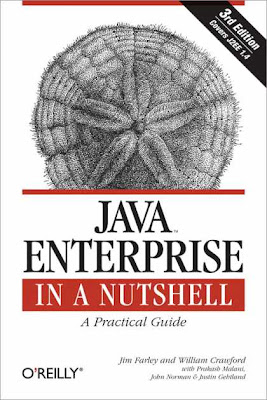
Java Enterprise In A Nutshell


Table of Contents
Preface.................................................................................................................................................................1
0.1. Contents of This Book......................................................................................................................1
0.2. Related Books..................................................................................................................................2
0.3. Java Programming Resources Online...............................................................................................2
0.4. Examples Online..............................................................................................................................3
0.5. Conventions Used in This Book.......................................................................................................4
0.6. We'd Like to Hear from You............................................................................................................5
0.7. Acknowledgments............................................................................................................................6
0.7.1. David Flanagan.................................................................................................................6
0.7.2. Jim Farley.........................................................................................................................6
0.7.3. William Crawford.............................................................................................................6
0.7.4. Kris Magnusson................................................................................................................6
1.1. Enterprise Computing Defined.........................................................................................................8
1.2. Enterprise Computing Demystified..................................................................................................8
1.3. The Java Enterprise APIs..................................................................................................................9
1.3.1. JDBC: Working with Databases.....................................................................................10
1.3.2. RMI: Remote Method Invocation...................................................................................10
1.3.3. Java IDL: CORBA Distributed Objects..........................................................................11
1.3.4. JNDI: Accessing Naming and Directory Services..........................................................11
1.3.5. Enterprise JavaBeans......................................................................................................12
1.3.6. Servlets...........................................................................................................................12
1.3.7. JMS: Enterprise Messaging............................................................................................13
1.3.8. JTA: Managing Distributed Transactions.......................................................................13
1.4.1. Enabling E−Commerce for a Mail−Order Enterprise.....................................................14
1.4.2. Updating CornCo with Enterprise JavaBeans................................................................15
1.4. Enterprise Computing Scenarios.....................................................................................................16
1.5. Java Enterprise APIs Versus Jini....................................................................................................17
2.1. JDBC Architecture.........................................................................................................................18
2.2. JDBC Basics..................................................................................................................................20
2.3. JDBC Drivers.................................................................................................................................20
2.3.1. JDBC URLs....................................................................................................................21
2.3.2. The JDBC−ODBC Bridge..............................................................................................23
2.4. Connecting to the Database............................................................................................................24
2.5. Statements......................................................................................................................................24
2.5.1. Multiple Result Sets........................................................................................................25
2.6.1. Handling Nulls................................................................................................................26
2.6.2. Large Data Types............................................................................................................27
2.6.3. Dates and Times..............................................................................................................28
2.6. Results............................................................................................................................................29
2.7. Handling Errors..............................................................................................................................30
2.7.1. SQL Warnings................................................................................................................31
2.8. Prepared Statements.......................................................................................................................31
2.9. Metadata.........................................................................................................................................32
2.9.1. DatabaseMetaData..........................................................................................................33
2.9.2. ResultSetMetaData.........................................................................................................34
2.10. Transactions.................................................................................................................................34
2.11. Stored Procedures........................................................................................................................36
2.12. Escape Sequences........................................................................................................................38
2.13. JDBC 2.0......................................................................................................................................40
2.13.1. Results Handling...........................................................................................................41
2.13.2. Batch Updates...............................................................................................................43
2.13.3. Java−Aware Databases.................................................................................................43
2.13.4. BLOBs and CLOBs......................................................................................................45
2.13.5. The JDBC Standard Extension.....................................................................................46
3.1. Introduction to RMI........................................................................................................................47
3.1.1. RMI in Action.................................................................................................................47
3.1.2. RMI Architecture............................................................................................................49
3.1.3. RMI Object Services.......................................................................................................49
3.1.3.1. Naming/registry service...............................................................................................50
3.1.3.2. Object activation service..............................................................................................53
3.1.3.3. Distributed garbage collection.....................................................................................55
3.2.1. Key RMI Classes for Remote Object Implementations..................................................55
3.2. Defining Remote Objects................................................................................................................55
3.3. Creating the Stubs and Skeletons....................................................................................................56
3.4. Accessing Remote Objects as a Client............................................................................................56
3.4.1. The Registry and Naming Services................................................................................59
3.4.2. Remote Method Arguments and Return Values.............................................................60
3.4.3. Factory Classes...............................................................................................................61
3.5. Dynamically Loaded Classes..........................................................................................................61
3.5.1. Configuring Clients and Servers for Remote Class Loading..........................................63
3.5.2. Loading Classes from Applets........................................................................................64
3.6. Remote Object Activation...............................................................................................................65
3.6.1. Persistent Remote References.........................................................................................66
3.6.2. Defining an Activatable Remote Object.........................................................................68
3.6.2.1. The Activatable class...................................................................................................68
3.6.2.2. Implementing an activatable object.............................................................................70
3.6.3. Registering Activatable Objects.....................................................................................70
3.6.3.1. Registering an activatable object without instantiating...............................................70
3.6.3.2. Passing data with the MarshalledObject......................................................................71
3.6.4. Activation Groups...........................................................................................................73
3.6.4.1. Registering activation groups......................................................................................74
3.6.4.2. Assigning activatable objects to groups.......................................................................75
3.6.5. The Activation Daemon..................................................................................................75
3.6.5.1. The daemon's dual personality.....................................................................................76
3.7.1. RMI with JNI Versus CORBA.......................................................................................76
3.7. RMI and Native Method Calls........................................................................................................77
3.8. RMI over IIOP...............................................................................................................................78
3.8.1. Accessing RMI Objects from CORBA...........................................................................78
4.1. The CORBA Architecture...............................................................................................................81
4.1.1. Interface Definition Language........................................................................................81
4.1.2. Object Request Broker....................................................................................................84
4.1.3. The Naming Service.......................................................................................................85
4.1.4. Inter−ORB Communication............................................................................................85
4.2. Creating CORBA Objects...............................................................................................................86
4.2.1. An IDL Primer................................................................................................................86
4.2.1.1. Modules.......................................................................................................................87
4.2.1.2. Interfaces.....................................................................................................................88
4.2.1.3. Data members and methods.........................................................................................89
4.2.1.4. A complete IDL example.............................................................................................89
4.2.2. Turning IDL Into Java....................................................................................................90
4.2.2.1. A simple server class...................................................................................................90
4.2.2.2. The helper class...........................................................................................................90
4.2.2.3. The holder class...........................................................................................................91
4.2.2.4. The client and server stubs...........................................................................................91
4.2.3. Writing the Implementation............................................................................................92
4.3. Putting It in the Public Eye.............................................................................................................93
4.3.1. Initializing the ORB........................................................................................................95
4.3.2. Registering with a Naming Service................................................................................96
4.3.3. Adding Objects to a Naming Context.............................................................................98
4.4. Finding Remote Objects.................................................................................................................99
4.4.1. Initial ORB References.................................................................................................100
4.4.2. Getting Objects from Other Remote Objects................................................................101
4.4.2.1. Using a naming context.............................................................................................102
4.4.2.2. Using multiple naming services.................................................................................104
4.4.3. Stringified Object References.......................................................................................106
4.5. What If I Don't Know the Interface?............................................................................................106
4.5.1. Dynamic Invocation Interface......................................................................................106
5.1. The Servlet Life Cycle..................................................................................................................107
5.2. Servlet Basics...............................................................................................................................109
5.2.1. HTTP Servlets...............................................................................................................111
5.2.2. Forms and Interaction...................................................................................................112
5.2.3. POST, HEAD, and Other Requests..............................................................................115
5.2.4. Servlet Responses.........................................................................................................115
5.2.5. Servlet Requests............................................................................................................117
5.2.6. Error Handling..............................................................................................................118
5.2.6.1. Status codes................................................................................................................119
5.2.6.2. Servlet exceptions......................................................................................................120
5.2.6.3. A file serving servlet..................................................................................................121
5.2.7. Security........................................................................................................................121
5.8.1. HttpSessionBindingListener.........................................................................................122
5.8.2. Session Contexts...........................................................................................................123
5.3. Servlet Chaining..........................................................................................................................124
5.4. Custom Servlet Initialization........................................................................................................124
5.5. Thread Safety...............................................................................................................................125
5.6. Server−Side Includes....................................................................................................................126
5.7. Cookies........................................................................................................................................127
5.8. Session Tracking..........................................................................................................................130
5.9. Databases and Non−HTML Content............................................................................................132
5.10. The Servlet API 2.1.....................................................................................................................134
5.10.1. Request Dispatching...................................................................................................136
5.10.2. Shared Attributes........................................................................................................138
5.10.3. Resource Abstraction..................................................................................................138
6.1. JNDI Architecture........................................................................................................................139
6.2. A JNDI Example..........................................................................................................................141
6.3. Introducing the Context................................................................................................................141
6.3.1. Using the InitialContext Class......................................................................................142
6.3.2. Other Naming Systems.................................................................................................142
6.5.1. The Command Interface...............................................................................................144
6.5.2. Loading an Initial Context............................................................................................144
6.5.3. Running the Shell..........................................................................................................146
6.6.1. How Names Work........................................................................................................147
6.6.2. Browsing a Naming System.........................................................................................148
6.6.3. Listing the Bindings of a Context.................................................................................148
6.4. Looking Up Objects in a Context.................................................................................................149
6.5. The NamingShell Application......................................................................................................150
6.6. Listing the Children of a Context.................................................................................................153
6.7. Creating and Destroying Contexts................................................................................................153
6.8. Binding Objects...........................................................................................................................154
6.9. Accessing Directory Services.......................................................................................................155
6.9.1. X.500 Directories..........................................................................................................157
6.9.2. The DirContext Interface..............................................................................................158
6.9.3. The Attributes Interface................................................................................................159
6.9.4. The Attribute Interface..................................................................................................160
6.10. Modifying Directory Entries.......................................................................................................162
6.11. Creating Directory Entries..........................................................................................................163
6.12. Searching a Directory.................................................................................................................163
6.12.1. Search Criteria............................................................................................................164
6.12.2. Search Results.............................................................................................................164
6.12.3. Search Controls...........................................................................................................166
6.12.4. A Search Command....................................................................................................168
7.2.1. The EJB Client..............................................................................................................169
7.2.2. The Enterprise JavaBeans Object.................................................................................171
7.2.3. The EJB Container........................................................................................................171
7.1. A Note on Evolving Standards.....................................................................................................172
7.2. EJB Roles.....................................................................................................................................172
7.3. Transaction Management..............................................................................................................173
7.3.1. Making the EJB Server Aware of Database Transactions............................................175
7.3.2. Transaction Isolation Levels.........................................................................................176
7.4.1. Home Interface.............................................................................................................176
7.4.2. Remote Interface...........................................................................................................177
7.4.3. The Bean Implementation.............................................................................................178
7.4. Implementing a Basic EJB Object................................................................................................180
7.5. Implementing Session Beans........................................................................................................182
7.5.1. Stateless Versus Stateful Session Beans.......................................................................184
7.5.2. Optional Transaction Support.......................................................................................185
7.6. Implementing Entity Beans..........................................................................................................186
7.6.1. Primary Keys................................................................................................................187
7.6.2. Finder Methods.............................................................................................................188
7.6.3. Entity Bean Implementation.........................................................................................188
7.6.3.1. A persistent ProfileBean............................................................................................191
7.6.4. The Entity Context........................................................................................................192
7.6.5. Life Cycle of an Entity Bean........................................................................................194
7.6.6. Handles on Entity Beans...............................................................................................195
7.6.7. Container−Managed Persistence..................................................................................196
7.6.7.1. Handling complex data structures..............................................................................197
7.7. Deploying an Enterprise JavaBeans Object..................................................................................198
7.7.1. Container−Managed Data Mapping.............................................................................199
7.7.2. Access−Control Deployment Attributes.......................................................................204
7.7.3. Generating the Container Classes and Deployment Descriptor....................................204
7.7.4. Packaging Enterprise JavaBeans..................................................................................205
7.8. Using an Enterprise JavaBeans Object.........................................................................................205
7.8.1. Finding Home Interfaces Through JNDI......................................................................209
7.8.2. Creating/Finding Beans................................................................................................210
7.8.3. Using Client−Side Transactions...................................................................................212
7.9. Changes in EJB 1.1 Specification.................................................................................................212
7.9.1. XML−Based Deployment Descriptors.........................................................................213
7.9.2. Entity Beans Required..................................................................................................214
7.9.3. Home Handles...............................................................................................................215
7.9.4. Detailed Programming Restrictions for Bean Implementations...................................215
7.9.5. Assorted Other Changes...............................................................................................216
8.1. Relational Databases.....................................................................................................................217
8.2. Data Types...................................................................................................................................218
8.3. Schema Manipulation Commands................................................................................................219
8.3.1. CREATE TABLE.........................................................................................................219
8.3.2. ALTER TABLE............................................................................................................219
8.3.3. DROP...........................................................................................................................219
8.4. Data Manipulation Commands.....................................................................................................219
8.4.1. SELECT........................................................................................................................221
8.4.1.1. String comparisons....................................................................................................221
8.4.1.2. Subqueries and joins..................................................................................................223
8.4.1.3. Groups........................................................................................................................224
8.4.2. INSERT........................................................................................................................224
8.4.3. UPDATE.......................................................................................................................225
8.4.4. DELETE.......................................................................................................................226
8.5. Functions......................................................................................................................................227
8.5.1. Aggregate Functions.....................................................................................................227
8.5.2. Value Functions............................................................................................................228
8.5.2.1. Date/time functions....................................................................................................229
8.5.2.2. String manipulation functions....................................................................................230
8.6. Return Codes................................................................................................................................231
10.1. IDL Keywords...........................................................................................................................231
10.2. Identifiers...................................................................................................................................232
10.2.1. Mapping Identifiers to Java........................................................................................233
10.3. Comments..................................................................................................................................233
10.3.1. Mapping Comments to Java.......................................................................................233
10.4.1. Strings and Characters................................................................................................233
10.4.1.1. Mapping strings and characters to Java...................................................................234
10.4. Basic Data Types........................................................................................................................235
10.5. Constants and Literals.................................................................................................................238
10.5.1. Mapping Constants to Java.........................................................................................243
10.5.2. Boolean Literals..........................................................................................................244
10.5.3. Numeric Literals.........................................................................................................245
10.5.3.1. Integer literals..........................................................................................................245
10.5.3.2. Floating−point literals..............................................................................................246
10.5.3.3. Fixed−point literals..................................................................................................246
10.5.3.4. Mapping numeric literals to Java.............................................................................247
10.5.4. Character Literals........................................................................................................247
10.5.5. String Literals.............................................................................................................248
10.6. Naming Scopes..........................................................................................................................248
10.7. User−Defined Data Types..........................................................................................................249
10.7.1. Typedefs......................................................................................................................249
10.7.1.1. Mapping typedefs to Java........................................................................................249
10.7.2. Arrays.........................................................................................................................249
10.7.2.1. Mapping arrays to Java............................................................................................249
10.7.3. Sequences....................................................................................................................250
10.7.3.1. Mapping sequences to Java......................................................................................250
10.7.4. Structs........................................................................................................................250
10.7.4.1. Mapping structs to Java...........................................................................................251
10.7.5. Enumerations..............................................................................................................252
10.7.5.1. Mapping enumerations to Java................................................................................253
10.7.6. Unions.........................................................................................................................254
10.7.6.1. Mapping unions to Java...........................................................................................254
10.8. Exceptions..................................................................................................................................254
10.8.1. Standard Exceptions...................................................................................................255
10.8.2. Mapping Exceptions to Java.......................................................................................255
10.9. Module Declarations...................................................................................................................256
10.9.1. Mapping Modules to Java...........................................................................................256
10.10. Interface Declarations...............................................................................................................256
10.10.1. Attributes..................................................................................................................257
10.10.2. Methods....................................................................................................................257
10.10.2.1. Parameters..............................................................................................................258
10.10.2.2. Exceptions..............................................................................................................259
10.10.2.3. Context values........................................................................................................262
10.10.2.4. Call semantics........................................................................................................262
10.10.3. Interface Inheritance.................................................................................................263
10.10.3.1. Method and attribute inheritance...........................................................................264
10.10.3.2. Constant, type, and exception inheritance.............................................................264
10.10.3.3. IDL early binding...................................................................................................265
10.10.4. Mapping Interfaces to Java.......................................................................................265
10.10.4.1. Helper and holder classes......................................................................................266
10.10.4.2. Attributes...............................................................................................................267
10.10.4.3. Methods.................................................................................................................267
11.1. Naming Service..........................................................................................................................268
11.2. Security Service.........................................................................................................................269
11.3. Event Service.............................................................................................................................269
11.4. Persistent Object Service............................................................................................................269
11.5. Life Cycle Service.......................................................................................................................270
11.6. Concurrency Control Service......................................................................................................270
11.7. Externalization Service...............................................................................................................271
11.8. Relationship Service...................................................................................................................271
11.9. Transaction Service.....................................................................................................................272
11.10. Query Service...........................................................................................................................272
11.11. Licensing Service......................................................................................................................274
11.12. Property Service........................................................................................................................274
11.13. Time Service............................................................................................................................275
11.14. Trading Service........................................................................................................................276
11.15. Collection Service.....................................................................................................................276
1. Finding a Quick−Reference Entry...................................................................................................277
2. Reading a Quick−Reference Entry..................................................................................................278
2.1. Class Name, Package Name, Availability, and Flags......................................................278
2.2. Description......................................................................................................................279
2.3. Synopsis..........................................................................................................................280
2.3.1. Member availability and flags......................................................................................281
2.3.2. Functional grouping of members..................................................................................282
2.4. Class Hierarchy................................................................................................................282
2.5. Cross References..............................................................................................................283
2.6. A Note About Class Names.............................................................................................284
Colophon.............................................................................................................................................284
Copyright © 2001 O'Reilly & Associates, Inc. All rights reserved....................................286
Logos and Trademarks............................................................................................................289
Disclaimer..............................................................................................................................299
1. Finding a Quick−Reference Entry...................................................................................................310
2. Reading a Quick−Reference Entry..................................................................................................312
2.1. Class Name, Package Name, Availability, and Flags......................................................315
2.2. Description......................................................................................................................329
2.3. Synopsis..........................................................................................................................356
2.3.1. Member availability and flags......................................................................................365
2.3.2. Functional grouping of members..................................................................................370
2.4. Class Hierarchy................................................................................................................400
2.5. Cross References..............................................................................................................422
2.6. A Note About Class Names.............................................................................................434
Table of Contents....................................................................................................................438
Part 1: Introducing the Java Enterprise APIs.........................................................................446
Part 2: Enterprise Reference..................................................................................................454
Part 3: API Quick Reference.................................................................................................462
Chapter 1. Introduction.................................................................................................................................470
Chapter 2. JDBC............................................................................................................................................474
Chapter 3. Remote Method Invocation.........................................................................................................529
Chapter 4. Java IDL......................................................................................................................................532
Chapter 5. Java Servlets................................................................................................................................534
Chapter 6. JNDI.............................................................................................................................................543
Chapter 7. Enterprise JavaBeans..................................................................................................................545
Chapter 8. SQL Reference............................................................................................................................559
Chapter 9. RMI Tools....................................................................................................................................569
Chapter 10. IDL Reference...........................................................................................................................651
Chapter 11. CORBA Services Reference......................................................................................................651
Chapter 12. Java IDL Tools..........................................................................................................................651
Chapter 13. The java.rmi Package................................................................................................................652
Chapter 14. The java.rmi.activation Package..............................................................................................653
Chapter 15. The java.rmi.dgc Package.........................................................................................................653
Chapter 16. The java.rmi.registry Package..................................................................................................653
Chapter 17. The java.rmi.server Package....................................................................................................656
Chapter 18. The java.sql Package.................................................................................................................657
Chapter 19. The javax.ejb Package...............................................................................................................657
Chapter 20. The javax.ejb.deployment Package..........................................................................................658
Chapter 21. The javax.jms Package..............................................................................................................659
Chapter 22. The javax.naming Package.......................................................................................................659
Chapter 23. The javax.naming.directory Package......................................................................................660
Chapter 24. The javax.naming.spi Package.................................................................................................660
Chapter 25. The javax.servlet Package.........................................................................................................661
Chapter 26. The javax.servlet.http Package.................................................................................................661
Chapter 27. The javax.sql Package...............................................................................................................661
Chapter 28. The javax.transaction Package.................................................................................................662
Chapter 29. The javax.transaction.xa Package............................................................................................663
Chapter 30. The org.omg.CORBA Package.................................................................................................663
Chapter 31. The org.omg.CORBA.DynAnyPackage Package...................................................................663
Chapter 32. The org.omg.CORBA.ORBPackage Package.........................................................................666
Chapter 33. The org.omg.CORBA.portable Package.................................................................................667
Chapter 34. The org.omg.CORBA.TypeCodePackage Package................................................................667
Chapter 35. The org.omg.CosNaming Package...........................................................................................668
Chapter 36. The org.omg.CosNaming. NamingContextPackage Package................................................669
Chapter 37. Class, Method, and Field Index................................................................................................669
How to Use This Quick Reference.................................................................................................................669
Part 1. Introducing the Java Enterprise APIs..............................................................................................671
Part 2. Enterprise Reference.........................................................................................................................672
Part 3. API Quick Reference.........................................................................................................................673

Download
Another Java Books
Continue Reading ...

Related Posts with Thumbnails

Put Your Ads Here!

Recent Posts