Showing posts with label Bioinformatic. Show all posts

Thursday, April 21, 2011

Health Informatics 2009


CONTENTS
INVITED SPEAKERS
KEYNOTE LECTURES
BIOMEDICAL INFORMATICS - Its Scientific Evolution and Future Promise IS-5
Edward H. Shortliffe
COGNITIVE SCIENCE APPROACH TO UNDERSTANDING HUMAN-COMPUTER
INTERACTION IN MEDICINE IS-7
Vimla L. Patel
TECHNOLOGY FOR THE INDEPENDENT LIVING OF PEOPLE WITH ACTIVITY
LIMITATIONS IS-9
Pier Luigi Emiliani
PATTERN RECOGNITION AND STATISTICAL LEARNING TECHNIQUES FOR APPLICATIONS
IN SKIN CANCER DIAGNOSIS IS-13
Maciej Ogorzalek
BIOSIGNALS AS AN ADVANCED MAN-MACHINE INTERFACE IS-15
Egon L. van den Broek, Viliam Lisý, Joyce H. D. M. Westerink, Marleen H. Schut and Kees Tuinenbreijer
PAPERS
FULL PAPERS
A DOCUMENT MANAGEMENT SYSTEM AND WORKFLOW TO HELP AT THE DIAGNOSIS
OF HYPERTROPHIC CARDIOMYOPATHY
Lorenzo Montserrat, Jose Antonio Cotelo-Lema, Miguel R. Luaces and Diego Seco 3
COORDINATE-BASED META-ANALYTIC SEARCH FOR THE SPM NEUROIMAGING PIPELINE
- The BredeQuery Plugin for SPM5
Bartłomiej Wilkowski, Marcin Szewczyk, Peter Mondrup Rasmussen, Lars Kai Hansen and Finn Årup Nielsen 11
ECG SIMULATION WITH IMPROVED MODEL OF CELL ACTION POTENTIALS
Roman Trobec, Matjaž Depolli and Viktor Avbelj 18
AN APPROACH TO ENFORCE CONTEXT-AWARE ACCESS CONTROL TO PROCESS-BASED
HEALTHCARE SYSTEMS BUILD ON A GRID INFRASTRUCTURE
Vassiliki Koufi, Flora Malamateniou and George Vassilacopoulos 22
AN ADVANCED HOME ELDERCARE SERVICE
Tarik Taleb, Dario Bottazzi, Nidal Nasser and Hammadi Nait-Charif 30
CREATING A LOC BASED PORTABLE HEALTH-CARE PLATFORM - Using a Universal Mobile
NFC Host Environment
Babak Akhgar, Fazilatur Rahman, Lukasz Jopek, Jawed I. Siddiqi, Sally Atkinson, Alberto Savoldelli, Doris Prato,
Secondo Montrucchio, Federico Guella, Brian James, Mike Pinkerton and András Vilmos 38
A CAD SYSTEM FOR IIF TESTS
Paolo Soda and Giulio Iannello 43
TOWARDS AN AUTOMATIC DIAGNOSIS SYSTEM FOR ACUTE ABDOMINAL PAIN - Support
Vector Machines for the Diagnosis of Diverticulitis and Non-specific Abdominal Pain
Malin Björnsdotter Åberg, Kajsa Nalin, Lars-Erik Hansson and Helge Malmgren 51
NFCARE - Possible Applications of NFC Technology in Sanitary Environments
Giuliano Benelli and Alessandro Pozzebon 58
BACKTRAINER - Computer-aided Therapy System with Augmented Feedback for the Lower Back
Dominique Brodbeck, Markus Degen, Michael Stanimirov, Jan Kool, Mandy Scheermesser, Peter Oesch
and Cornelia Neuhaus 66
A VIRTUAL REALITY SIMULATOR FOR TRAINING WRIST ARTHROSCOPIC SURGERY
Fadi Yaacoub, Yskandar Hamam and Antoine Abche 74
AMBIENT HEALTHCARE SYSTEMS - Using the Hydra Embedded Middleware for Implementing
an Ambient Disease Management System
Heinz-Josef Eikerling, Gernot Gräfe, Florian Röhr and Walter Schneider 82
COMPARISON OF ANALYTIC APPROACHES FOR DETERMINING VARIABLES - A Case Study
in Predicting the Likelihood of Sepsis
Femida Gwadry-Sridhar, Benoit Lewden, Selam Mequanint and Michael Bauer 90
SHORT PAPERS
OPHTHALMOLOGIC ELECTRONIC HEALTH RECORDS SYSTEM USING HL7/CDA
AND DICOM - TELEOFTALWEB
Isabel de la Torre, Roberto Hornero, Miguel López and María Isabel López 99
MANAGING MEDICINAL INSTRUCTIONS
Juha Puustjärvi and Leena Puustjärvi 105
DATA VISUALIZATION IN A PERSONAL HEALTH RECORD USING RICH INTERNET
APPLICATION GRAPHIC COMPONENTS
Francois Andry, Goutham Naval, Daren Nicholson, Michelle Lee, Igor Kosoy and Liliya Puzankov 111
MOBILE APPLICATIONS IN THE GERMAN HEALTH INSURANCE SYSTEM TO IMPROVE
THE MARKET POSITION
Michael Malik, Dirk Frosch-Wilke, Sebastian Beck, Christian Hartmann, Timo Sturm and Thomas Wieben 117
SECURING HEALTH INFORMATION INFRASTRUCTURES THROUGH OVERLAYS
Fabrizio Baiardi, Dario Maggiari and Daniele Sgandurra 123
PREDICTING THE OUTCOME OF TUBERCULOSIS TREATMENT COURSE IN FRAME
OF DOTS - From Demographic Data to Logistic Regression Model
Sharareh R. Niakan Kalhori and Xiao-Jun Zeng 129
CLINICAL AND TRANSLATIONAL SCIENCE INFORMATICS - Translating Information
to Transform Health Care
Arkalgud Ramaprasad, Annette L. Valenta and Ian Brooks 135
DESIGN AND ANALYSIS OF AN AMBIENT INTELLIGENT SYSTEM SUPPORTING
DEPRESSION THERAPY
Fiemke Both, Mark Hoogendoorn, Michel Klein and Jan Treur 142
USING A CLASSIFICATION SCHEME TO FACILITATE OUTSOURCING OF RADIOLOGY
SERVICES
Ulrik Schønnemann and Uffe Kock Wiil 149
CONSISTENT CORTICAL RESPONSES FROM SUBCORTICALY DELIVERED ELECTRICAL
STIMULI - A Study Oriented to Visual Prostheses
Fivos Panetsos, Elena Diaz-de Cerio, Abel Sanchez-Jimenez, Juan Jose Navarro-Valls, Jose A. Vega
and Idoia Diaz-Guemes 155
A TAXONOMY OF INFORMATION NEEDS OF INFORMAL CARERS - An Empirical Investigation
Basil Alzougool, Shanton Chang and Kathleen Gray 161
HIGH ANGULAR FIBER TRACKING ON THE GRID
Jasper van Leeuwen and Anca Bucur 168
USING AUDEMES AS A LEARNING MEDIUM FOR THE VISUALLY IMPAIRED
Steve Mannheimer, Mexhid Ferati, Donald Huckleberry and Mathew Palakal 175
ADAPTIVE SERVICES FOR ELDERLY PEOPLE AND CAREGIVERS IN ‘ASSISTED LIVING’
HOMES
Stéphane Betgé-Brezetz, Marie-Pascale Dupont, Guy-Bertrand Kamga, Sophie Piekarec, Xavier Andrieu
and Arnaud Vergnol 181
UNDERSTANDING NEEDS AND REQUIREMENTS IN APPLICATIONS FOR IDENTIFYING
CLINICALLY RELEVANT SIMILARITIES BETWEEN PATIENTS WITH LIVER RELATED
DISEASES
Christina Engström and Kristina Groth 187
DESCRIPTION LOGIC FOR AUTOMATIC CLASSIFICATION OF MAMMOGRAM REPORTS
Amel Boustil and Zaidi Sahnoun 193
A NEW SOFTWARE TOOL FOR MANAGING AND QUERYING THE PERSONAL MEDICAL
DIGITAL IMAGERY
Liana Stanescu, Dumitru Dan Burdescu, Marius Brezovan, Cosmin Stoica Spahiu and Anca Ion 199
TOWARDS INTEROPERABILITY IN e-HEALTH SYSTEMS - A Three-Dimensional Approach based
on Standards and Semantics
Jose Manuel Gómez-Pérez, Sandra Kohler, Ricardo Melero, Pablo Serrano, Leonardo Lezcano, Miguel Angel Sicilia,
Ana Iglesias, Elena Castro, Margarita Rubio and Manuel De Buenaga 205
THE NATIONAL PROGRAMME FOR IT (NPFIT) IN ENGLAND - How Can Clinicians be
Encouraged to Use the Choose and Book Service?
Reza Rabiei, Allen Hutchinson and Peter A. Bath 211
ARCHETYPE ALIGNMENT - A Two-level Driven Semantic Matching Approach to Interoperability
in the Clinical Domain
Jesús Bisbal and Damon Berry 216
POA_S@UDE - A New Collaborative Tele-ultrasonography System over PLC
Alécio Pedro Delazari Binotto, Valter Roesler, Cirano Iochpe, André Campos da Cunha, Ronaldo Husemann
and Carlos Eduardo Pereira 222
IMPLEMENTATION OF RESTRICTION AND VALIDATION RULES
Olegas Vasilecas and Evaldas Lebedys 230
DIFFERENTIATED ACCESS TO EHRS FROM EMERGENCY MOBILE UNITS, CONSULTING
ROOMS AND HOSPITALS
Cristina De Castro, Giacomo Leonardi and Paolo Toppan 237
BSN MIDDLEWARE - Abstracting Resources to Human Models
Pedro Brandão and Jean Bacon 245
COMPUTER AIDED LUNG SOUND ANALYSIS - A Preliminary Study to Assess its Potential
as a New Outcome Measure for Respiratory Therapy
Alda Marques, Anne Bruton and Anna Barney 251
HOW TO PRESERVE PATIENT’S PRIVACY AND ANONYMITY IN WEB-BASED ELECTRONIC
HEALTH RECORDS
Daniel Slamanig and Christian Stingl 257
A TOOL FOR ENDOSCOPIC CAPSULE DATASET PREPARATION FOR CLINICAL VIDEO
EVENT DETECTOR ALGORITHMS
Sérgio Lima, João Paulo Cunha, Miguel Coimbra and José M. Soares 265
A SIMPLE METHOD OF CORTICAL BONE THICKNESS EVALUATION BASED
ON RADIOGRAPHIC IMAGES FOR OSTEOPOROSIS INVESTIGATION
Przemysław Maćkowiak, Ryszard Stasiński and Tomasz Kulczyk 270
A SYSTEM ARCHITECTURE FOR THE BING - Brain Image Network Grid
Micael Pedrosa, Luís Alves, Ilídio C. Oliveira, José Maria Fernandes and João Paulo Silva Cunha 276
INFORMATION VISUALIZATION OF DRUG REGIMENS FROM HEALTH MESSAGES
Brant Chee, Richard Berlin and Bruce Schatz 282
ADAPTATION DRIVEN CHANGE MANAGEMENT
Lai Xu, Paul de Vrieze, Athman Bouguettaya and Jian Yang 288
CONTEXT-DRIVEN ONTOLOGICAL ANNOTATIONS IN DICOM IMAGES - Towards Semantic
PACS
Manuel Möller and Saikat Mukherjee 294
A MONITORING TOOLKIT FOR A DISTRIBUTED CLINICAL DATA INTEGRATION ENGINE
Vânia Santos, Daniel Oliveira, Ilídio C. Oliveira and J. P. S. Cunha 300
BRAZILIAN HEALTH-RELATED CONTENT WEB SEARCH PORTAL - Presentation on a Method
for its Development and Preliminary Results
Felipe Mancini, Alex Esteves Jaccoud Falcão, Anderson Diniz Hummel, Thiago Martini Costa,
Cristina Lucia Feijo Ortolani, Fabio Teixeira and Ivan Torres Pisa 306
MEDICAL DEVICE PERFORMANCE IN IEEE 802.11 NETWORKS - Evaluating IEEE P11073.1.1
Use Case Scenarios in Wireless LANs
Amjad Soomro and Ruediger Schmitt 311
TOWARDS AN AUTOMATED NOSOCOMIAL INFECTION CASE REPORTING - Framework to
Build a Computer-aided Detection of Nosocomial Infection
Jimison Iavindrasana, Gilles Cohen, Adrien Depeursinge, Henning Müeller, Rodolphe Meyer and Antoine Geissbuhler 317
SPOKEN LANGUAGE INPUT FOR A PATIENT NOTE SYSTEM
Sasha Caskey, Kathleen McKeown, Desmond Jordan and Julia Hirschberg 323
INTEGRATING ICTS TO PBL METHODOLOGY WITH APPLICATION IN THE FIELD
OF GYNECOLOGY AND OBSTETRICS
Valdecir Bertoncello, Laudelino Cordeiro Bastos, Flávio Bortolozzi and Ana Paula Rodrigues 329
SIMULATION AS A DECISION SUPPORT TOOL - Estimating the Impacts of using RFID Technologies
within Biobanks
Sylvain Housseman, Nabil Absi, Stéphane Dauzère-Pérès, Christian Chabannon and Paul Hofman 337
eHEALTH - Transporting Information to Transform Health Care
Arkalgud Ramaprasad, Sridhar S. Papagari and Joy Keeler 344
HEALTH –MIC: WORTH THE EFFORT? - The Argument for an R and D Agenda in Support of
Healthcare Management Informatics and Computing
Christopher Bain 351
COMPANION: SOCIAL SUPPORT NETWORKING TECHNOLOGY FOR SURVIVORS
OF SUICIDE
Elizabeth M. LaRue, Ann M. Mitchell, Hassan Karimi, Piyawan Kasemsuppakom and Duangduen Roongpiboonsopit 357
A DISTRIBUTED ADAPTATION MODEL FOR AMBIENT ASSISTIVE LIVING APPLICATIONS
M. T. Segarra and F. André 363
ACQUISITION, ANNOTATION AND INTERACTIVE EXPLORATION OF STEREO IMAGES
WITH VIRTUAL REALITY
Mohammed Haouach, Karim Benzeroual, Christiane Guinot and Gilles Venturini 369
MEDICAL TUTORIAL: PORTING OF A CLINICAL PORTAL BETWEEN HEALTHCARE
ORGANIZATIONS - Reuse of an Application in Health Informatics
Paolo Locatelli, Emanuele Baj, Gianni Origgi and Silvia Bragagia 375
MULTI-MODAL PLATFORM FOR IN-HOME HEALTHCARE MONITORING (EMUTEM)
Wided Souidene, Dan Istrate, Hamid Medjahed, Jérôme Boudy, Jean-Louis Baldinger, Imad Belfeki, François Delavault
and François Steenkeste 381
AN EXTENSIBLE BIOMARKER CURATION APPROACH AND SOFTWARE INFRASTRUCTURE
FOR THE EARLY DETECTION OF CANCER
Andrew F. Hart, John J. Tran, Daniel J. Crichton, Kristen Anton, Heather Kincaid, Sean Kelly, J. S. Hughes
and Chris A. Mattmann 387
AUTOMATED RISK DETECTION - What are the Key Elements Needed to Create a Multi-source,
Pattern-based Risk Detection System?
Ian Blunt, Xavier Chitnis and Adam Roberts 393
POSTERS
A COMPUTERIZED TESTING SYSTEM FOR SCREENING DEMENTIA IN COMMUNITY-BASED
SETTINGS
Masashi Inoue, Yuka Okayama, Toru Horie, Tomomi Miki, Daiki Jinbo, Miyako Taniguchi and Katsuya Urakami 401
IT SUPPORT FOR THE AUSTRALIAN SCHIZOPHRENIA RESEARCH BANK
Frans Henskens, Carmel Loughland, Mukta Aphale, David Paul, Jacqueline Richards, Paul Rasser, Vaughan Carr,
Stanley Catts, Assen Jablensky, Patricia Michie, Bryan Mowry, Christos Pantelis, Ulrich Schall and Rodney Scott 405
INTEGRATING R MODELS WITH WEB TECHNOLOGIES
Mingrui Zhang, Scott Olson, Joan Francioni, Tim Gegg-Harrison, Nan Meng, Zhifu Sun and Ping Yang 411
CHANGING PERSPECTIVES ON INFORMATICS? - A Comparison of Three National Electronic
Health Records
Bettine Pluut and Arre Zuurmond 416
AmIE - Towards Ambient Intelligence for the Ageing Citizens
Julia Kantorovitch, Jouni Kaartinen, Luis Collantes Abril, Ricardo de las Heras Martín, José Alberto Martínez Cantera,
Johan Criel and Marcel Gielen 421
A SURVEY OF AUDIO PROCESSING ALGORITHMS FOR DIGITAL STETHOSCOPES
Fabio de Lima Hedayioglu, Miguel Tavares Coimbra and Sandra da Silva Mattos 425
EXPERIMENTS OF LIFE MONITORING SYSTEMS FOR ELDERLY PEOPLE LIVING IN RURAL
AREAS
Jun Sasaki, Keizo Yamada, Michiru Tanaka and Yutaka Funyu 430
IMPROVEMENT OF BUSINESS PROCESS SURGERY USING SIMULATION
Nadja Damij and Talib Damij 434
REUSABILITY IN PATIENT REGISTRIES - Implementation of a Generic Extensible Web-based Patient
Registry System
Eric Tröger, Elena Prokofyeva, Robert Wilke and Eberhart Zrenner 438
A CONCEPTUAL DATA MODEL FOR DISEASE SURVEILLANCE, MONITORING
AND PREDICTION IN NIGERIA
Peter Idowu, Dan Cornford and Lucy Bastin 442
QUALITY IMPROVEMENTS FOR READING CENTRES - Methods to Improve Quality
and Compliance using Computerised Systems
Gunnar Lotz, Torsten Strasser, Eric Tröger, Eberhart Zrenner, Tobias Peters and Robert Wilke 450
IT IN THE EMERGENCY DEPARTMENT - What is the Impact of Technology?
Haleh Ayatollahi, Peter A. Bath and Steve Goodacre 454
OPEN PLATFORM FOR e-HEALTH SERVICES
Jaime Martín, Ralf Seepold and Natividad Martínez Madrid 458
THE CAPLA MODEL FOR MULTI-CULTURAL ADAPTATION OF LEARNING RESOURCES
FOR ALZHEIMER’S DISEASE
Nathalie Bricon-Souf and Jean-Marie Renard 462
AN ARCHITECTURAL PLATFORM TO PROVIDE INTEGRAL CARE FOR COGNITIVE
IMPAIRED CHILDREN THROUGH NEUROPEDAGOGICAL METACOGNITION
Carlo Emmanoel Tolla de Oliveira, Carla V. M. Marques, Cleonice Weber, Paula Prata and Mariana Souza 466
APPLICABILITY OF MOBILE PHONES FOR TELE-DERMATOLOGY - A Pilot Study
Scheibböck Christian, Dreiseitl Stephan and Binder Michael 474
AN MRP-BASED ARCHITECTURE TO PLAN RESOURCES AND TO MANAGE WAITING
QUEUE IN HOSPITAL SYSTEMS
Raffaele Iannone, Claudia Pepe and Stefano Riemma 478
THE USE OF GRID STORAGE PROTOCOLS FOR HEALTHCARE APPLICATIONS
Flavia Donno and Elisabetta Ronchieri 484
EXPRESSIVE SPEECH IDENTIFICATIONS BASED ON HIDDEN MARKOV MODEL
Syaheerah L. Lutfi, J. M. Montero, R. Barra-Chicote, J. M. Lucas-Cuesta and A. Gallardo-Antolin 488
ICT SUPPORTED COMMUNICATION IN HEALTHCARE - Benefits and Risks
Herman Lodder and Bertie Zwetsloot-Schonk 495
EVALUATING GLOBAL LINK STRUCTURE OF THE WEB FOR FOCUSED CRAWLING
IN THE GENOMICS AND GENETICS DOMAINS
Ari Pirkola and Tuomas Talvensaari 499
DISTRIBUTED MULTIAGENT APPROACH FOR HYDROCEPHALUS TREATMENT
AND MANAGEMENT USING ELECTRONIC SHUNTING
N. Al-Zu’bi, A. Al-kharabsheh, L. Momani and W. Al-Nuaimy 503
DEVELOPPING AN E-COMMERCE MODEL (B2E) WITHIN A MULTI-SITE UNIVERSITY
HEALTH CARE CENTER - A Solution to Promote Knowledge and Information Exchange
Lise Pouliot, Marie-Claire Richer, Charles Sounan and Stella Lopreste 508
BIOMEDICAL ONTOLOGIES AND GRID COMPUTING - As New Resources for Cancer Registries
Giulio Napolitano, Alejandra González Beltrán, Colin Fox, Adele Marshall, Anthony Finkelstein and Peter McCarron 512
AUTHOR INDEX 519

Another Bioinformatics Books
Download

Wednesday, April 13, 2011

Bioinformatics Technologies


Contents
Preface ................................................................................................... V
1 Introduction to Bioinformatics............................................................1
1.1 Introduction ...................................................................................1
1.2 Needs of Bioinformatics Technologies...........................................2
1.3 An Overview of Bioinformatics Technologies................................5
1.4 A Brief Discussion on the Chapters................................................8
References.........................................................................................12
2 Overview of Structural Bioinformatics.............................................15
2.1 Introduction .................................................................................15
2.2 Organization of Structural Bioinformatics ....................................17
2.3 Primary Resource: Protein Data Bank ..........................................18
2.3.1 Data Format..........................................................................18
2.3.2 Growth of Data .....................................................................18
2.3.3 Data Processing and Quality Control.....................................20
2.3.4 The Future of the PDB ..........................................................21
2.3.5 Visualization.........................................................................21
2.4 Secondary Resources and Applications ........................................22
2.4.1 Structural Classification ........................................................22
2.4.2 Structure Prediction ..............................................................28
2.4.3 Functional Assignments in Structural Genomics....................30
2.4.4 Protein-Protein Interactions...................................................32
2.4.5 Protein-Ligand Interactions ...................................................34
2.5 Using Structural Bioinformatics Approaches in Drug Design .......37
2.6 The Future...................................................................................39
2.6.1 Integration over Multiple Resources ......................................39
2.6.2 The Impact of Structural Genomics .......................................39
2.6.3 The Role of Structural Bioinformatics in Systems Biology ....39
References.........................................................................................40
3 Database Warehousing in Bioinformatics.........................................45
3.1 Introduction .................................................................................45
3.2 Bioinformatics Data.....................................................................48
3.3 Transforming Data to Knowledge ................................................51
3.4 Data Warehousing .......................................................................54
3.5 Data Warehouse Architecture.......................................................56
3.6 Data Quality ................................................................................58
3.7 Concluding Remarks....................................................................60
References.........................................................................................61
4 Data Mining for Bioinformatics ........................................................63
4.1 Introduction .................................................................................63
4.2 Biomedical Data Analysis............................................................64
4.2.1 Major Nucleotide Sequence Database, Protein Sequence
Database, and Gene Expression Database..............................65
4.2.2 Software Tools for Bioinformatics Research .........................68
4.3 DNA Data Analysis .....................................................................71
4.3.1 DNA Sequence .....................................................................71
4.3.2 DNA Data Analysis ..............................................................76
4.4 Protein Data Analysis ..................................................................92
4.4.1 Protein and Amino Acid Sequence ........................................92
4.4.2 Protein Data Analysis............................................................99
References....................................................................................... 109
5 Machine Learning in Bioinformatics .............................................. 117
5.1 Introduction ............................................................................... 117
5.2 Artificial Neural Network .......................................................... 120
5.3 Neural Network Architectures and Applications......................... 128
5.3.1 Neural Network Architecture .............................................. 128
5.3.2 Neural Network Learning Algorithms ................................. 131
5.3.3 Neural Network Applications in Bioinformatics .................. 134
5.4 Genetic Algorithm ..................................................................... 135
5.5 Fuzzy System ............................................................................ 141
References....................................................................................... 147
6 Systems Biotechnology: a New Paradigm in Biotechnology
Development .................................................................................... 155
6.1 Introduction ............................................................................... 155
6.2 Why Systems Biotechnology?.................................................... 156
6.3 Tools for Systems Biotechnology............................................... 158
6.3.1 Genome Analyses ............................................................... 158
6.3.2 Transcriptome Analyses ...................................................... 159
6.3.3 Proteome Analyses.............................................................. 161
6.3.4 Metabolome/Fluxome Analyses .......................................... 163
6.4 Integrative Approaches .............................................................. 164
6.5 In Silico Modeling and Simulation of Cellular Processes............ 166
6.5.1 Statistical Modeling ............................................................ 167
6.5.2 Dynamic Modeling ............................................................. 169
6.6 Conclusion ................................................................................ 170
References....................................................................................... 171
7 Computational Modeling of Biological Processes with Petri Net-
Based Architecture .......................................................................... 179
7.1 Introduction ............................................................................... 179
7.2 Hybrid Petri Net and Hybrid Dynamic Net................................. 183
7.3 Hybrid Functional Petri Net ....................................................... 190
7.4 Hybrid Functional Petri Net with Extension ............................... 191
7.4.1 Definitions .......................................................................... 191
7.4.2 Relationships with Other Petri Nets..................................... 197
7.4.3 Implementation of HFPNe in Genomic Object Net.............. 198
7.5 Modeling of Biological Processes with HFPNe .......................... 198
7.5.1 From DNA to mRNA in Eucaryotes – Alternative Splicing . 199
7.5.2 Translation of mRNA – Frameshift ..................................... 203
7.5.3 Huntington’s Disease .......................................................... 203
7.5.4 Protein Modification – p53.................................................. 207
7.6 Related Works with HFPNe....................................................... 211
7.7 Genomic Object Net: GON ........................................................ 212
7.7.1 GON Features That Derived from HFPNe Features ............. 214
7.7.2 GON GUI and Other Features ............................................. 214
7.7.3 GONML and Related Works with GONML ........................ 220
7.7.4 Related Works with GON ................................................... 222
7.8 Visualizer .................................................................................. 224
7.8.1 Bio-processes on Visualizer ................................................ 226
7.8.2 Related Works with Visualizer ............................................ 231
7.9 BPE........................................................................................... 233
7.10 Conclusion............................................................................... 236
References....................................................................................... 236
8 Biological Sequence Assembly and Alignment ............................... 243
8.1 Introduction ............................................................................... 243
8.2 Large-Scale Sequence Assembly................................................ 245
8.2.1 Related Research................................................................. 245
8.2.2 Euler Sequence Assembly ................................................... 249
8.2.3 PESA Sequence Assembly Algorithm ................................. 249
8.3 Large-Scale Pairwise Sequence Alignment ................................ 254
8.3.1 Pairwise Sequence Alignment ............................................. 254
8.3.2 Large Smith-Waterman Pairwise Sequence Alignment ........ 256
8.4 Large-Scale Multiple Sequence Alignment ................................ 257
8.4.1 Multiple Sequence Alignment ............................................. 257
8.4.2 Large-Scale Clustal W Multiple Sequence Alignment ......... 258
8.5 Load Balancing and Communication Overhead.......................... 259
8.6 Conclusion ................................................................................ 259
References....................................................................................... 260
9 Modeling for Bioinformatics ........................................................... 263
9.1 Introduction ............................................................................... 263
9.2 Hidden Markov Modeling for Biological Data Analysis ............. 264
9.2.1 Hidden Markov Modeling for Sequence Identification......... 264
9.2.2 Hidden Markov Modeling for Sequence Classification ........ 273
9.2.3 Hidden Markov Modeling for Multiple Alignment
Generation .......................................................................... 278
9.2.4 Conclusion.......................................................................... 280
9.3 Comparative Modeling .............................................................. 281
9.3.1 Protein Comparative Modeling............................................ 281
9.3.2 Comparative Genomic Modeling......................................... 284
9.4 Probabilistic Modeling............................................................... 287
9.4.1 Bayesian Networks ............................................................. 287
9.4.2 Stochastic Context-Free Grammars ..................................... 288
9.4.3 Probabilistic Boolean Networks .......................................... 288
9.5 Molecular Modeling .................................................................. 290
9.5.1 Molecular and Related Visualization Applications............... 290
9.5.2 Molecular Mechanics .......................................................... 294
9.5.3 Modern Computer Programs for Molecular Modeling ......... 295
References....................................................................................... 297
10 Pattern Matching for Motifs ......................................................... 299
10.1 Introduction ............................................................................. 299
10.2 Gene Regulation ...................................................................... 301
10.2.1 Promoter Organization ...................................................... 302
10.3 Motif Recognition.................................................................... 303
10.4 Motif Detection Strategies ....................................................... 305
10.4.1 Multi-genes, Single Species Approach .............................. 306
10.5 Single Gene, Multi-species Approach....................................... 307
10.6 Multi-genes, Multi-species Approach....................................... 309
10.7 Summary ................................................................................. 309
References....................................................................................... 310
11 Visualization and Fractal Analysis of Biological Sequences......... 313
11.1 Introduction ............................................................................. 313
11.2 Fractal Analysis ....................................................................... 317
11.2.1 What Is a Fractal? ............................................................. 317
11.2.2 Recurrent Iterated Function System Model........................ 319
11.2.3 Moment Method to Estimate the Parameters of the IFS
(RIFS) Model.................................................................... 320
11.2.4 Multifractal Analysis......................................................... 321
11.3 DNA Walk Models .................................................................. 323
11.3.1 One-Dimensional DNA Walk............................................ 323
11.3.2 Two-Dimensional DNA Walk ........................................... 324
11.3.3 Higher-Dimensional DNA Walk ....................................... 325
11.4 Chaos Game Representation of Biological Sequences .............. 325
11.4.1 Chaos Game Representation of DNA Sequences ............... 325
11.4.2 Chaos Game Representation of Protein Sequences............. 326
11.4.3 Chaos Game Representation of Protein Structures ............. 326
11.4.4 Chaos Game Representation of Amino Acid Sequences Based
on the Detailed HP Model............................................................ 327
11.5 Two-Dimensional Portrait Representation of DNA Sequences . 330
11.5.1 Graphical Representation of Counters ............................... 330
11.5.2 Fractal Dimension of the Fractal Set for a Given Tag......... 332
11.6 One-Dimensional Measure Representation of Biological
Sequences................................................................................ 335
11.6.1 Measure Representation of Complete Genomes ................. 335
11.6.2 Measure Representation of Linked Protein Sequences ....... 340
11.6.3 Measure Representation of Protein Sequences Based on
Detailed HP Model............................................................ 344
References....................................................................................... 348
12 Microarray Data Analysis ............................................................. 353
12.1 Introduction ............................................................................. 353
12.2 Microarray Technology for Genome Expression Study............. 354
12.3 Image Analysis for Data Extraction.......................................... 356
12.3.1 Image Preprocessing ......................................................... 357
12.3.2 Block Segmentation .......................................................... 359
12.3.3 Automatic Gridding .......................................................... 360
12.3.4 Spot Extraction ................................................................. 360
12.3.5 Background Correction, Data Normalization and Filtering,
and Missing Value Estimation........................................... 361
12.4 Data Analysis for Pattern Discovery......................................... 363
12.4.1 Cluster Analysis ................................................................ 363
12.4.2 Temporal Expression Profile Analysis and Gene
Regulation ........................................................................ 371
12.4.3 Gene Regulatory Network Analysis................................... 382
References....................................................................................... 384
Index ................................................................................................... 389


Another Bioinformatics Books
Download

Monday, April 11, 2011

Weak Links Stabilizers of Complex Systems from Proteins to Social Networks


Contents
A Principle is Born: The Granovetter Study . . . . . . . . 1
1
Why Do We Like Networks? . . . . . . . . . . . . . . . . . . . . . . . . 5
2
2.1 Small-Worldness . . . . . . . . . . . . . . . . . . . . . . . . . . . . . . . . . . 7
2.2 Scale-Freeness . . . . . . . . . . . . . . . . . . . . . . . . . . . . . . . . . . . . 13
2.2.1 Scale-Free Degree Distribution of Networks . . . . . 14
2.2.2 Underlying Reason for Scale-Freeness:
Self-Organisation . . . . . . . . . . . . . . . . . . . . . . . . . . . . 18
2.2.3 Scale-Free Distribution in Time: Probabilities . . . 24
2.2.4 Scale-Free Survival Strategies: Levy Flights . . . . . 27
2.2.5 Scale-Free Pleasures . . . . . . . . . . . . . . . . . . . . . . . . . . 29
2.3 Nestedness . . . . . . . . . . . . . . . . . . . . . . . . . . . . . . . . . . . . . . . 32
2.4 Weak-Linkness . . . . . . . . . . . . . . . . . . . . . . . . . . . . . . . . . . . . 43
Network Stability . . . . . . . . . . . . . . . . . . . . . . . . . . . . . . . . . . . 47
3
3.1 Perturbations. Good and Bad Noise . . . . . . . . . . . . . . . . . 47
3.2 Life as a Relaxation Phenomenon: Dissipate Locally,
Connect Globally . . . . . . . . . . . . . . . . . . . . . . . . . . . . . . . . . 56
3.2.1 Confined Relaxation with Global Connection . . . . 56
3.2.2 Self-Organised Criticality . . . . . . . . . . . . . . . . . . . . . 59
3.3 Network Failures . . . . . . . . . . . . . . . . . . . . . . . . . . . . . . . . . . 68
3.4 Topological Phase Transitions of Networks . . . . . . . . . . . 74
3.5 Nestedness and Stability: Sync . . . . . . . . . . . . . . . . . . . . . . 79
3.6 How Can We Stabilize Networks?
Engineers or Tinkerers . . . . . . . . . . . . . . . . . . . . . . . . . . . . . 90
Weak Links as Stabilizers of Complex Systems . . . . . . 95
4
4.1 An Emerging Synthesis:
Weak Links Stabilize Complex Systems . . . . . . . . . . . . . . 95
4.2 Weak Links: A Starting Definition . . . . . . . . . . . . . . . . . . . 100
4.3 Stability: A Starting Definition . . . . . . . . . . . . . . . . . . . . . 103
4.4 Complex Systems . . . . . . . . . . . . . . . . . . . . . . . . . . . . . . . . . 106
4.5 Weak Links and System Degeneracy . . . . . . . . . . . . . . . . . 108
Atoms, Molecules and Macromolecules . . . . . . . . . . . . . . 111
5
5.1 Protein Folding Problems . . . . . . . . . . . . . . . . . . . . . . . . . . 111
5.2 Energy Landscapes . . . . . . . . . . . . . . . . . . . . . . . . . . . . . . . . 115
5.3 Weak Bonds in Protein and RNA Folding . . . . . . . . . . . . 119
Weak Links and Cellular Stability . . . . . . . . . . . . . . . . . . . 125
6
6.1 Cellular Networks . . . . . . . . . . . . . . . . . . . . . . . . . . . . . . . . . 125
6.2 Stability of the Cellular Net . . . . . . . . . . . . . . . . . . . . . . . . 128
6.3 Stress, Diversity and Jumps in Evolution . . . . . . . . . . . . . 139
6.4 Cancer, Disease and Aging . . . . . . . . . . . . . . . . . . . . . . . . . 150
6.4.1 Cancer . . . . . . . . . . . . . . . . . . . . . . . . . . . . . . . . . . . . . 150
6.4.2 Disease . . . . . . . . . . . . . . . . . . . . . . . . . . . . . . . . . . . . . 151
6.4.3 Aging . . . . . . . . . . . . . . . . . . . . . . . . . . . . . . . . . . . . . . 152
Weak Links and the Stability of Organisms . . . . . . . . . 157
7
7.1 Immunological Networks . . . . . . . . . . . . . . . . . . . . . . . . . . . 157
7.2 Transport Systems . . . . . . . . . . . . . . . . . . . . . . . . . . . . . . . . 162
7.3 Muscle Net . . . . . . . . . . . . . . . . . . . . . . . . . . . . . . . . . . . . . . . 163
7.4 The Neuro-Glial Network . . . . . . . . . . . . . . . . . . . . . . . . . . 166
7.5 Psycho Net . . . . . . . . . . . . . . . . . . . . . . . . . . . . . . . . . . . . . . . 170
Social Nets . . . . . . . . . . . . . . . . . . . . . . . . . . . . . . . . . . . . . . . . . . 181
8
8.1 Animal Communities . . . . . . . . . . . . . . . . . . . . . . . . . . . . . . 181
8.2 A Novel Explanation of the Menopause . . . . . . . . . . . . . . 184
8.3 Stability of Human Societies . . . . . . . . . . . . . . . . . . . . . . . . 186
8.4 Firms and Human Organisations . . . . . . . . . . . . . . . . . . . . 201
8.5 Dark Networks and Terror Nets . . . . . . . . . . . . . . . . . . . . . 207
8.6 Pseudo-Grooming . . . . . . . . . . . . . . . . . . . . . . . . . . . . . . . . . 209
Networks of Human Culture . . . . . . . . . . . . . . . . . . . . . . . . 219
9
9.1 The Language Net . . . . . . . . . . . . . . . . . . . . . . . . . . . . . . . . 219
9.2 Novels, Plays, and Films as Networks . . . . . . . . . . . . . . . . 224
9.3 Our Engineered Space . . . . . . . . . . . . . . . . . . . . . . . . . . . . . 231
9.4 Software Nets . . . . . . . . . . . . . . . . . . . . . . . . . . . . . . . . . . . . . 238
9.5 Engineers and Tinkerers: An Emerging Synthesis . . . . . . 240
10 The Global Web . . . . . . . . . . . . . . . . . . . . . . . . . . . . . . . . . . . . 243
10.1 The World Trade Web . . . . . . . . . . . . . . . . . . . . . . . . . . . . . 243
10.2 Turning Points in History . . . . . . . . . . . . . . . . . . . . . . . . . . 247
10.3 Weak Links: A Part of Social Capital . . . . . . . . . . . . . . . . 258
11 The Ecoweb . . . . . . . . . . . . . . . . . . . . . . . . . . . . . . . . . . . . . . . . . 263
11.1 Weak Links and the Stability of Ecosystems . . . . . . . . . . 263
11.2 Omnivory . . . . . . . . . . . . . . . . . . . . . . . . . . . . . . . . . . . . . . . . 267
11.3 The Weak Links of Gaia . . . . . . . . . . . . . . . . . . . . . . . . . . . 270
12 Conclusions and Perspectives . . . . . . . . . . . . . . . . . . . . . . . 275
12.1 The Unity of the Weakly-Linked World: A Summary . . 275
12.2 Revisiting the Definitions: A Synthesis . . . . . . . . . . . . . . . 281
12.3 Prospects and Extensions . . . . . . . . . . . . . . . . . . . . . . . . . . 304
12.4 Weak Links and Our Lives . . . . . . . . . . . . . . . . . . . . . . . . . 307
A Useful Links . . . . . . . . . . . . . . . . . . . . . . . . . . . . . . . . . . . . . . . . 313
Glossary . . . . . . . . . . . . . . . . . . . . . . . . . . . . . . . . . . . . . . . . . . . . 317
B
References . . . . . . . . . . . . . . . . . . . . . . . . . . . . . . . . . . . . . . . . . . . . . . 329
Index . . . . . . . . . . . . . . . . . . . . . . . . . . . . . . . . . . . . . . . . . . . . . . . . . . . 377


Another Bioinformatic Books
Download

Biological Networks


CONTENTS
Preface v
Contributors xiii
Chapter 1 Scale-Free Networks in Biology 1
Eivind Almaas, Alexei Vázquez and
Albert-László Barabási
Chapter 2 Modularity in Biological Networks 21
Ricard V. Solé, Sergi Valverde and
Carlos Rodriguez-Caso
Chapter 3 Inference of Biological Regulatory Networks: 41
Machine Learning Approaches
Florence d'Alché-Buc
Chapter 4 Transcriptional Networks 83
François Képès
Chapter 5 Protein Interaction Networks 133
Kai Tan and Trey Ideker
Chapter 6 Metabolic Networks 163
David A. Fell
Chapter 7 Heterogeneous Molecular Networks 199
Vincent Schächter
Chapter 8 Evolution of Regulatory Networks 257
Amélie Veron, Dion Whitehead and
Erich Bornberg-Bauer
Chapter 9 Complexity in Neuronal Networks 291
Yves Frégnac, Michelle Rudolph,
Andrew P. Davison and Alain Destexhe
Chapter 10 Networks of the Immune System 341
Robin E. Callard and Jaroslav Stark
Chapter 11 A History of the Study of Ecological Networks 365
Louis-Félix Bersier
Chapter 12 Dynamic Network Models of Ecological Diversity, 423
Complexity, and Nonlinear Persistence
Richard J. Williams and Neo D. Martinez
Chapter 13 Infection Transmission through Networks 449
James S. Koopman
Index 507


Another Bioinformatic Books
Download

Friday, February 11, 2011

Database Annotation in Molecular Biology


Contents
Preface ix
List of Contributors xi
1 Annotation and Databases: Status and Prospects 1
`
M. Hoebeke, H. Chiapello, J.-F. Gibrat, Ph. Bessieres
and J. Garnier
1.1 Introduction 1
1.2 Annotation of Genomic Data 3
1.3 Databases: Concepts and Definitions 9
1.4 Access to Annotation Databases 12
Glossary 19
References 20
I THE DATABANKS
2 Survey of Sequence Databases: Archival Projects 25
M. Magrane, M. Garcia-Pastor and R. Apweiler
2.1 Introduction 25
2.2 Nucleotide Sequence Databases 27
2.3 Swiss-Prot 33
2.4 TrEMBL 39
2.5 PIR 40
2.6 UniProt 42
References 43
3 Survey of Sequence Databases: Derived Databases 45
M. Pruess, N. Mulder and R. Apweiler
3.1 Introduction 45
3.2 Protein and Gene Family Databases 47
3.3 Discussion 58
References 60
4 Databanks of Macromolecular Structure 63
H. J. Bernstein and F. C. Bernstein
4.1 Introduction 63
4.2 Background 64
4.3 Archival Structural Databases Now 68
4.4 Contextual Databases 73
4.5 Derived Structural Data Databases 74
4.6 Summary and View of the Future 76
References 77
5 Gene Expression Databases 81
H. Parkinson
5.1 Introduction 81
5.2 What Do We Mean by Microarray Gene Expression Data? 83
5.3 Data Complexity 83
5.4 Minimum Information About a Microarray Experiment (MIAME) 85
5.5 Journals and MIAME 88
5.6 Storage and Exchange Formats: MAGE-OM and MAGE-ML 89
5.7 ArrayExpress 91
5.8 Annotation Tools 92
5.9 Curation 92
5.10 Standardization and Semantics 93
5.11 Public Microarray Databases 94
5.12 ArrayExpress, an Example of a Public Repository 94
5.13 Submissions to ArrayExpress 94
5.14 MIAMExpress and Other MIAME Compliant Annotation Systems 95
5.15 Databases of Protein Expression Patterns 95
5.16 The Gene Expression Database (GXD) 96
5.17 Conclusion 97
References 97
II THE BASIS OF ANNOTATION
6 Taxonomy: a Moving Target for Sequence Data 101
M. I. Krichevsky
6.1 Introduction 102
6.2 Nomenclature 104
6.3 Operational Definitions 106
6.4 Searching for the Taxonomic Gold Standard 109
6.5 Conclusions 112
References 112
7 Genomics and Proteomics: Design and Sources of Annotation 113
K. Mayer and G. Mannhaupt
7.1 Beyond the Sequence: the Challenge of Complete Genome Analysis 114
7.2 Extracting the Genes 114
7.3 Organism Specific Peculiarities 116
7.4 Topology of Genomes 117
7.5 Gene Extraction Pipelines 118
7.6 Added Value and Knowledge 121
7.7 Beyond the Parts List 124
References 126
8 Annotation of Protein Sequences 131
W. C. Barker and C. H. Wu
8.1 Introduction 132
8.2 What is Annotation? 132
8.3 UniProt: Universal Protein Resource 133
8.4 Protein Family Classification 134
8.5 InterPro: Integrated Resource of Protein Families, Domains and Sites 134
8.6 PIR Protein Families and Superfamilies 135
8.7 Ontologies 136
8.8 Protein Names, Source Information and Unique Identifiers 137
8.9 Common Identification Errors 138
8.10 Evidence Attribution 139
8.11 Position Specific Annotations 141
8.12 Rule-based Annotation 142
8.13 Conclusions 144
Acknowledgements 145
References 145
9 Issues in the Annotation of Protein Structures 149
G. J. Swaminathan, J. Tate, R. Newman, A. Hussain,
J. Ionides, K. Henrick and S. Velankar
9.1 Data Harvesting 151
9.2 Identification of the Biologically Relevant Assembly 152
9.3 Taxonomy 154
9.4 Sequence Recognition and Cross-reference 155
9.5 Recognition of Secondary Structure Elements 156
9.6 Validation of Structures 157
9.7 Residue Identification 158
9.8 Hetgroup Identification 159
9.9 Solvent Handling 161
9.10 Miscellaneous Annotation Issues 161
9.11 Conclusions 163
References 163
10 Classification of Protein Function 167
A. M. Lesk, H. Parkinson and J. C. Whisstock
10.1 Introduction 167
10.2 Mechanisms of Divergence of Protein Function 169
10.3 Classification of Protein Functions 171
10.4 Methods for Assigning Protein Function 175
10.5 Applications of Full-organism Information: Inferences from
Genomic Context and Protein Interaction Patterns 179
10.6 Conclusions 180
References 180
III DATABASE DESIGN AND INTEGRATION
11 Information Flow and Data Integration of Databanks 187
C. H. Wu and W. C. Barker
11.1 Introduction 187
11.2 Information Flow Among Databanks 188
11.3 Database Distribution Format 192
11.4 Genome Annotation Errors and Error Propagation 195
11.5 Data Integration and Knowledge Discovery: iProClass Case Study 196
11.6 Conclusions 198
Acknowledgements 199
References 199
12 Models of Database Interconnectivity 203
G. J. L. Kemp
12.1 Introduction 203
12.2 Heterogeneity in Bioinformatics Data Management 204
12.3 Data Models 206
12.4 Architectures for Data Integration 211
12.5 Implementing a Database Federation 214
12.6 Conclusions 218
References 219
13 The European Bioinformatics Institute Macromolecular
Structure Relational Database Technology 223
H. Boutselakis, D. Dimitropoulos, K. Henrick, J. Ionides, M. John,
P. A. Keller, P. McNeil, J. Pineda and A. Suarez-Uruena
13.1 Database Design Process 225
13.2 Loading and Exporting Data in mmCIF 226
13.3 Exporting mmCIFs or XML Files from the Deposition Database 229
13.4 Subtypes and ‘Leaf Views’ 229
13.5 Maintenance Aspects 230
13.6 Data Clean-up 231
13.7 The Search Database 232
13.8 Transformation 234
13.9 Incremental Transformation 234
13.10 Replication 235
13.11 Oracle Cartridge Applications 236
13.12 Related Data Warehouse 238
Acknowledgements 238
References 238
IV CONCLUSIONS AND PROSPECTS
14 Looking Around, Looking Ahead 243
A. M. Lesk
Index 245


Another Bioinformatic Books
Download

Friday, February 4, 2011

Computational Methods in Systems Biology


Table of Contents
Modal Logics for Brane Calculus . . . . . . . . . . . . . . . . . . . . . . . . . . . . . . . . . . . . 1
M. Miculan, G. Bacci
Deciding Behavioural Properties in Brane Calculi . . . . . . . . . . . . . . . . . . . . . 17
N. Busi
Probabilistic Model Checking of Complex Biological Pathways . . . . . . . . . . 32
J. Heath, M. Kwiatkowska, G. Norman, D. Parker,
O. Tymchyshyn
Type Inference in Systems Biology . . . . . . . . . . . . . . . . . . . . . . . . . . . . . . . . . . 48
F. Fages, S. Soliman
Stronger Computational Modelling of Signalling Pathways Using Both
Continuous and Discrete-State Methods . . . . . . . . . . . . . . . . . . . . . . . . . . . . . 63
M. Calder, A. Duguid, S. Gilmore, J. Hillston
A Formal Approach to Molecular Docking . . . . . . . . . . . . . . . . . . . . . . . . . . . . 78
D. Prandi
Feedbacks and Oscillations in the Virtual Cell VICE . . . . . . . . . . . . . . . . . . 93
D. Chiarugi, M. Chinellato, P. Degano, G. Lo Brutto,
R. Marangoni
Modelling Cellular Processes Using Membrane Systems with Peripheral
and Integral Proteins . . . . . . . . . . . . . . . . . . . . . . . . . . . . . . . . . . . . . . . . . . . . . . 108
M. Cavaliere, S. Sedwards
Modelling and Analysing Genetic Networks: From Boolean Networks
to Petri Nets . . . . . . . . . . . . . . . . . . . . . . . . . . . . . . . . . . . . . . . . . . . . . . . . . . . . . 127
L.J. Steggles, R. Banks, A. Wipat
Regulatory Network Reconstruction Using Stochastic Logical
Networks . . . . . . . . . . . . . . . . . . . . . . . . . . . . . . . . . . . . . . . . . . . . . . . . . . . . . . . . 142
B. Wilczy ́ski, J. Tiuryn
n
Identifying Submodules of Cellular Regulatory Networks . . . . . . . . . . . . . . . 155
G. Sanguinetti, M. Rattray, N.D. Lawrence
Incorporating Time Delays into the Logical Analysis of Gene Regulatory
Networks . . . . . . . . . . . . . . . . . . . . . . . . . . . . . . . . . . . . . . . . . . . . . . . . . . . . . . . . 169
H. Siebert, A. Bockmayr
A Computational Model for Eukaryotic Directional Sensing . . . . . . . . . . . . 184
A. Gamba, A. de Candia, F. Cavalli, S. Di Talia, A. Coniglio,
F. Bussolino, G. Serini
Modeling Evolutionary Dynamics of HIV Infection . . . . . . . . . . . . . . . . . . . . 196
L. Sguanci, P. Li`, F. Bagnoli
o
Compositional Reachability Analysis of Genetic Networks . . . . . . . . . . . . . . 212
G. G ̈ssler
o
Randomization and Feedback Properties of Directed Graphs Inspired
by Gene Networks . . . . . . . . . . . . . . . . . . . . . . . . . . . . . . . . . . . . . . . . . . . . . . . . 227
M. Cosentino Lagomarsino, P. Jona, B. Bassetti
Computational Model of a Central Pattern Generator . . . . . . . . . . . . . . . . . 242
E. Cataldo, J.H. Byrne, D.A. Baxter
Rewriting Game Theory as a Foundation for State-Based Models of
Gene Regulation . . . . . . . . . . . . . . . . . . . . . . . . . . . . . . . . . . . . . . . . . . . . . . . . . 257
C. Chettaoui, F. Delaplace, P. Lescanne, M. Vestergaard,
R. Vestergaard
Condition Transition Analysis Reveals TF Activity Related to
Nutrient-Limitation-Specific Effects of Oxygen Presence in Yeast . . . . . . . . 271
T.A. Knijnenburg, L.F.A. Wessels, M.J.T. Reinders
An In Silico Analogue of In Vitro Systems Used to Study Epithelial
Cell Morphogenesis . . . . . . . . . . . . . . . . . . . . . . . . . . . . . . . . . . . . . . . . . . . . . . . . 285
M.R. Grant, C.A. Hunt
A Numerical Aggregation Algorithm for the Enzyme-Catalyzed
Substrate Conversion . . . . . . . . . . . . . . . . . . . . . . . . . . . . . . . . . . . . . . . . . . . . . . 298
H. Busch, W. Sandmann, V. Wolf
Possibilistic Approach to Biclustering: An Application to
Oligonucleotide Microarray Data Analysis . . . . . . . . . . . . . . . . . . . . . . . . . . . . 312
M. Filippone, F. Masulli, S. Rovetta, S. Mitra, H. Banka
Author Index . . . . . . . . . . . . . . . . . . . . . . . . . . . . . . . . . . . . . . . . . . . . . . . . . . . 323


Another Bioinformatic Books
Download

Tuesday, February 1, 2011

Bioinformatics for Geneticists


CONTENTS
List of contributors xi
Foreword xiii
SECTION I. AN INTRODUCTION TO BIOINFORMATICS FOR THE
GENETICIST 1
Chapter 1 Introduction: The Role of Genetic Bioinformatics 3
Michael R. Barnes and Ian C. Gray
1.1 Introduction 3
1.2 Genetics in the post-genome era — the role of bioinformatics 6
1.3 Knowledge management and expansion 6
1.4 Data management and mining 6
1.5 Genetic study designs 8
1.6 Physical locus analysis 12
1.7 Selecting candidate genes for analysis 14
1.8 Progressing from candidate gene to disease-susceptibility gene 14
1.9 Comparative genetics and genomics 15
1.10 Conclusions 17
References 18
Chapter 2 Internet Resources for the Geneticist 21
Michael R. Barnes and Christopher Southan
2.1 Introduction 22
2.2 Sub-division of biological data on the internet 23
2.3 Searching the internet for genetic information 24
2.4 Which web search engine? 24
2.5 Search syntax: the mathematics of search engine use 26
2.6 Boolean searching 27
2.7 Searching scientific literature — getting to ‘state of the art’ 28
2.8 Searching full-text journals 29
2.9 Searching the heart of the biological internet — sequences and genomic
data 30
2.10 Nucleotide and protein sequence databases 30
2.11 Biological sequence databases — primary and secondary 31
2.12 Conclusions 36
References 37
Chapter 3 Human Genetic Variation: Databases and Concepts 39
Michael R. Barnes
3.1 Introduction 40
3.2 Forms and mechanisms of genetic variation 43
3.3 Databases of human genetic variation 50
3.4 SNP databases 51
3.5 Mutation databases 57
3.6 Genetic marker and microsatellite databases 60
3.7 Non-nuclear and somatic mutation databases 61
3.8 Tools for SNP and mutation visualization — the genomic context 63
3.9 Tools for SNP and mutation visualization — the gene context 63
3.10 Conclusions 67
References 67
Chapter 4 Finding, Delineating and Analysing Genes 71
Christopher Southan
4.1 Introduction 71
4.2 The evidence cascade for gene products 72
4.3 Shortcomings of the standard gene model 75
4.4 Locating known genes on the Golden Path 76
4.5 Gene portal inspection 79
4.6 Locating genes which are not present in the Golden Path 80
4.7 Analysing a novel gene 81
4.8 Comprehensive database searching 88
4.9 Conclusions and prospects 90
References 90
SECTION II. THE IMPACT OF COMPLETE GENOME SEQUENCES
ON GENETICS 93
Chapter 5 Assembling a View of the Human Genome 95
Colin A. Semple
5.1 Introduction 95
5.2 Genomic sequence assembly 98
5.3 Annotation from a distance: the generalities 101
5.4 Annotation up close and personal: the specifics 105
5.5 Annotation: the next generation 113
Acknowledgements 114
References 114
Chapter 6 Mouse and Rat Genome Informatics 119
Judith A. Blake, Janan Eppig and Carol J. Bult
6.1 Introduction 120
6.2 The model organism databases for mouse and rat 122
6.3 Mouse genetic and physical maps 124
6.4 Rat genetic and physical maps 127
6.5 Genome sequence resources 128
6.6 Comparative genomics 131
6.7 From genotype to phenotype 132
6.8 Functional genomics 135
6.9 Rodent disease models 137
137
6.10 Summary
137
Acknowledgements
References 138
Chapter 7 Genetic and Physical Map Resources — An Integrated View 143
Michael R. Barnes
7.1 Introduction 144
7.2 Genetic maps 145
7.3 Physical maps 148
7.4 Physical contig maps 151
7.5 The role of physical and genetic maps in draft sequence curation 152
7.6 The human genome sequence — the ultimate physical map? 153
7.7 QC of genomic DNA — resolution of marker order and gap sizes 154
7.8 Tools and databases for map analysis and integration 155
7.9 Conclusions 159
References 160
SECTION III. BIOINFORMATICS FOR GENETIC STUDY DESIGN 163
Chapter 8 From Linkage Peak to Culprit Gene: Following Up Linkage
Analysis of Complex Phenotypes with Population-based Association Studies 165
Ian C. Gray
8.1 Introduction 165
8.2 Theoretical and practical considerations 166
8.3 A practical approach to locus refinement and candidate gene identification 173
8.4 Conclusion 176
Acknowledgements 176
References 177
Chapter 9 Genetic Studies from Genomic Sequence 179
Michael R. Barnes
9.1 Introduction 180
9.2 Defining the locus 180
9.3 Case study 1: Identification and extraction of a genomic sequence between
two markers 184
9.4 Case study 2: Checking the integrity of a genomic sequence between two
markers 185
9.5 Case study 3: Definition of known and novel genes across a genomic
region 188
9.6 Case study 4: Candidate gene selection — building biological rationale
around genes 190
9.7 Case study 5: Known and novel marker identification 195
9.8 Case study 6: Genetic/physical locus characterization and marker
panel design 199
9.9 Conclusions 201
References 201
Chapter 10 SNP Discovery and PCR-based Assay Design: From In Silico
Data to the Laboratory Experiment 203
Ellen Vieux, Gabor Marth and Pui Kwok
10.1 Introduction 204
10.2 SNP identification 205
10.3 PCR primer design 207
10.4 Broader PCR assay design issues 208
10.5 Primer selection 210
10.6 Problems related to SNP assay validation 212
10.7 Conclusion 213
References 213
Chapter 11 Tools for Statistical Analysis of Genetic Data 217
Aruna Bansal, Peter R. Boyd and Ralph McGinnis
11.1 Introduction 218
11.2 Linkage analysis 218
11.3 Association analysis 223
11.4 Haplotype Reconstruction 226
11.5 Linkage disequilibrium 229
11.6 Quantitative Trait Locus (QTL) mapping in experimental crosses 235
Acknowledgements 240
References 240
SECTION IV. BIOLOGICAL SEQUENCE ANALYSIS AND
CHARACTERIZATION 247
Chapter 12 Predictive Functional Analysis of Polymorphisms:
An Overview 249
Michael R. Barnes
12.1 Introduction 250
12.2 Principles of predictive functional analysis of polymorphisms 252
12.3 The anatomy of promoter regions and regulatory elements 257
12.4 The anatomy of genes 258
12.5 Pseudogenes and regulatory mRNA 264
12.6 Analysis of novel regulatory elements and motifs in nucleotide
sequences 264
12.7 Functional analysis on non-synonymous coding polymorphisms 266
12.8 A note of caution on the prioritization of in silico predictions for further
laboratory investigation 268
12.9 Conclusions 268
References 269
Chapter 13 Functional In Silico Analysis of Non-coding SNPs 273
Thomas Werner
13.1 Introduction 273
13.2 General structure of chromatin-associated DNA 275
13.3 General functions of regulatory regions 276
13.4 Transcription Factor binding sites (TF-sites) 276
13.5 Structural elements 276
13.6 Organizational principles of regulatory regions 277
13.7 RNA processing 279
13.8 SNPs in regulatory regions 279
13.9 Evaluation of non-coding SNPs 280
13.10 SNPs and regulatory networks 281
13.11 SNPs may affect the expression of a gene only in specific tissues 281
13.12 In silico detection and evaluation of regulatory SNPs 281
13.13 Getting promoter sequences 282
13.14 Identification of relevant regulatory elements 283
13.15 Estimation of functional consequences of regulatory SNPs 284
13.16 Conclusion 285
References 285
Chapter 14 Amino Acid Properties and Consequences of Substitutions 289
Matthew J. Betts and Robert B. Russell
14.1 Introduction 291
14.2 Protein features relevant to amino acid behaviour 292
14.3 Amino acid classifications 296
14.4 Properties of the amino acids 298
14.5 Amino acid quick reference 299
14.6 Studies of how mutations affect function 311
14.7 A summary of the thought process 313
References 314
SECTION V. GENETICS/GENOMICS INTERFACES 317
Chapter 15 Gene Expression Informatics and Analysis 319
Antoine H. C. van Kampen, Jan M. Ruijter, Barbera D. C. van Schaik, Huib N.
Caron and Rogier Versteeg
15.1 Introduction 320
15.2 Technologies for the measurement of gene expression 322
15.3 The Cancer Genome Anatomy Project (CGAP) 324
15.4 Processing of SAGE data 325
15.5 Integration of biological databases for the construction of the HTM 334
15.6 The Human Transcriptome Map 336
15.7 Regions of Increased Gene Expression (RIDGES) 339
15.8 Discussion 340
References 341
Chapter 16 Proteomic Informatics 345
J ́ rˆ me Wojcik and Alexandre Hamburger
eo
16.1 Introduction 346
16.2 Proteomic informatics 347
16.3 Experimental workflow: classical proteomics 347
16.4 Protein interaction networks 351
16.5 Building protein interaction networks 354
16.6 False negatives and false positives
16.7 Analysing interaction networks 355
16.8 Cell pathways 356
16.9 Prediction of protein networks
16.10 Assessment and validation of predictions 363
16.11 Exploiting protein networks 366
16.12 Deducing prediction rules from networks 367
16.13 Conclusion
Acknowledgements
References
AM
FL
Y
354
359
368
369
369
Chapter 17 Concluding Remarks: Final Thoughts and Future Trends 373
Michael R. Barnes and Ian C. Gray
17.1 How many genes?
TE
374
17.2 Mapping the genome and gaining a view of the full depth of human
variation
375
17.3 Holistic analysis of complex traits 376
17.4 A final word on bioinformatics
376
Acknowledgements 376
References 376
Appendix I 379
Appendix II 381
Glossary 387
Index 391

Another Bioinfomatic Books
Download

Thursday, January 27, 2011

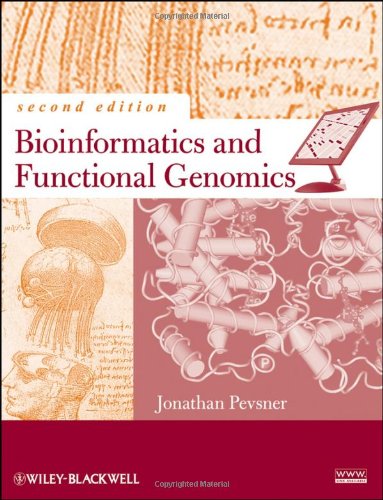
Bioinformatics and Functional Genomics


Eagerly awaited, the second edition of the best-selling Bioinformatics and Functional Genomics has been thoroughly updated and enhanced. The text continues to offer the most broad-based introduction to this explosive new discipline, combining theoretical context with practical applications.

Bioinformatics and Functional Genomics is a textbook for undergraduate students, graduate students, and anyone involved in biomedical research. The first third of this book covers bioinformatics, a new field at the interface of the ongoing revolutions in molecular biology and computers. A focus of this new discipline is the use of computer databases and computer algorithms to study proteins and genes, including sequence alignment, database searches, and phylogeny. The middle third of this book focuses on functional genomics including approaches such as gene expression profiling and proteomics that are used to study cellular function. The last third of the book is on genomics which is the study of the collection of DNA that comprises an organism, using the tools of bioinformatics. This portion of the book spans the tree of life from viruses to prokaryotes and eukaryotes, including a description of the human genome in health and disease.

Highlight features:

•Attractive two-color design throughout, with a section of full-color figures
•Lavishly illustrated, featuring over 500 figures and tables with 50 NEW figures and tables in this edition
•Highlights how the tools of bioinformatics can be used to further our understanding of basic processes in cell and molecular biology and genomics
•NEW to the second edition: Several fundamentally imprtant proteins (such as histones, insulin, globins, and albumins) are included to better show how to apply bioinformatics tools to basic biological questions
•Strong focus on the relevance of bioinformatics tools to the understanding of human disease
•Each chapter includes a Problem Set, Pitfalls section, Boxes explaining key techniques and math/stats principles, Summary, Recommended Reading, and a list of freely available Software
Praise for the first edition:
"...ideal both for biologists who want to master the application of bioinformatics to real-world problems and for computer scientists who need to understand the biological questions that motivate algorithms." Quarterly Review of Biology
"… an excellent textbook for graduate students and upper level undergraduate students." Annals of Biomedical Engineering
"…highly recommended for academic and medical libraries, and for researchers as an introduction and reference…" E-Streams


Another Bioinformatic Books
Download
Related Posts with Thumbnails

Put Your Ads Here!